
Berger defeat highlights an issue on which right and left should make common purpose
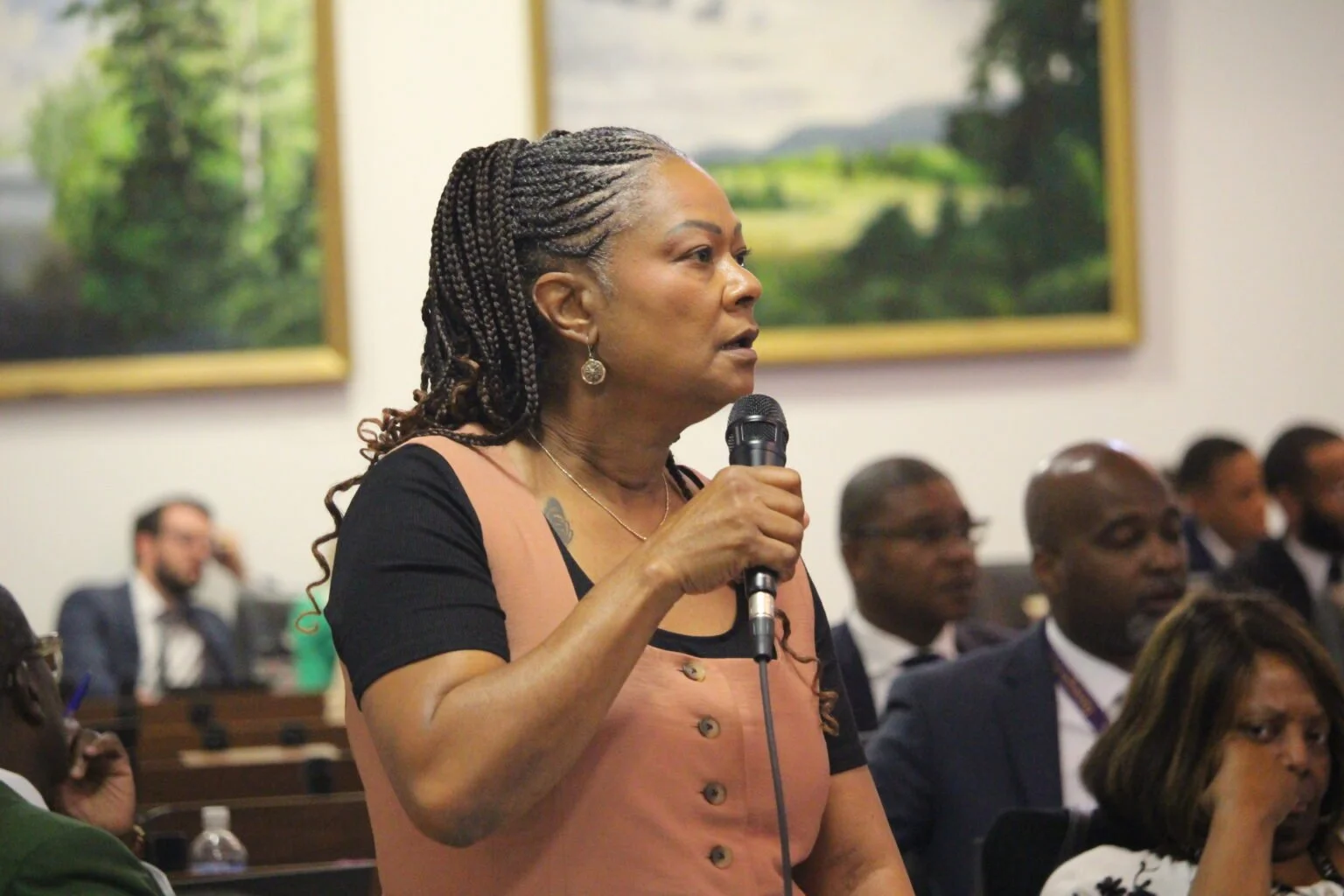
North Carolina Senate President Pro Tem Phil Berger (R-Rockingham) waits ahead of Gov. Josh Stein’s State of the State address in the House chamber on March 12, 2025. (Photo: Galen Bacharier/NC Newsline)
Berger defeat highlights an issue on which right and left should make common purpose
by Rob Schofield, NC Newsline
April 7, 2026
There were undoubtedly several factors that contributed to the stunning defeat of North Carolina’s most powerful politician, longtime Republican state Senate leader Phil Berger, in the recent Republican primary.
Especially in a mostly rural and small-town district in which personal histories, relationships and grudges can play a major role, it’s risky to draw too many overarching conclusions about the state of our politics. Indeed, had just a dozen individuals switched their votes in the contest to Berger from winner Sam Page, most political observers would now have already moved on to declare the election a validation of the status quo.
All that said, it’s indisputable that voter attitudes on one very important and somewhat unique policy issue did play an outsized role in Page’s remarkable and nationally noticed victory, and that it is a rare subject on which conservatives and progressives can and should unite in common purpose.
The issue is corporate gambling and the massive and destructive way it is overtaking and rapidly remaking our society.
As numerous news reports have documented, one of the important contributing factors to Berger’s defeat was his attempt a few years back to bring casino gambling to his home county of Rockingham. After Berger attempted unsuccessfully to include a provision in the 2023 state budget that would have provided for the establishment of casinos in Anson, Nash, and Rockingham counties (as well as on land controlled by the Lumbee Tribe in the state’s southeast), a revolt of sorts arose in his district that was led in part by Page, the Rockingham County sheriff.
Indeed, even before Berger gave up on his effort, Page was speaking up loudly against the casino idea by criticizing the negative “slippery slope” that expanded gambling would lead to in surrounding communities and demanding that voters have the ultimate say on any casino plan. And in the end, gambling – or, at least, the public perception of the two candidates’ stances on the issue — was perhaps the only noteworthy difference in the platforms of the two hard right, Trump-loyal politicians. And it was also one of the reasons that more than a few unaffiliated voters in the district opted for Republican ballots to support Page.
Of course, while Berger’s defeat constitutes a massive earthquake inside the state Legislative Building, the practical policy implications in most areas are likely to be minimal – at least in the near term. If Page wins in the heavily GOP gerrymandered district in the fall over the Democratic candidate, veteran physician and longtime Medicaid expansion champion Steve Luking, he’s likely to become a loyal member of a Republican majority caucus.
The one extremely important exception to this business-as-usual outcome, however, could be (and one hopes will be) on the gambling issue.
Though casinos remain somewhat in check in North Carolina in the aftermath of Berger’s failed effort and being confined thus far to lands held by a pair of Native American tribes, gambling is otherwise rapidly exploding. It’s been just two years since sports betting became legal in the state, but as critics predicted, it’s quickly contributed to a massive spike in all kinds of gambling.
And unfortunately, despite its rapid growth and sudden omnipresence, gambling is quickly leading to an array of deeply troubling trends – both for the sporting games that fill such an important role in our culture, and for millions of average people – especially young people – for whom gambling has rapidly become an expensive and often destructive addiction.
A new WRAL-TV documentary called “The Gamble: Sports Betting in North Carolina” explains some of these developments in painful detail – including the ways in which a large percentage of male college students are incurring massive loses and debt at the same time that college athletes are being subjected to threats and harassment for their failure to satisfy the predictions of so-called “prop” bettors.
Now add the direct and corrupting influences that gambling is having on even highly paid professional athletes, the explosive growth of so-called “prediction markets” and 24/7 online non-sports gambling, and the astounding profits that gambling corporations are extracting from the state (as well as the massive power this provides to them win further political influence), and it’s clear that we find ourselves in the midst of a hugely momentous societal overhaul that runs counter to the wishes of millions of North Carolinians like those who voted for Sam Page.
And so it is that, if it does nothing else of particular note, one hopes Phil Berger’s defeat sends a message to North Carolinians of all persuasions – from evangelical conservatives to “No Kings” anti-Trumpers – that, at least on this one issue, there is a chance for finding common ground to push back against the destructive gambling tide.
And who knows? If that miracle ever occurred, perhaps North Carolinians of both the right and left would discover they have more in common (and more power to combat greed, corruption, and the immoral predations of powerful elites on a host of issues) than they ever imagined.
NC Newsline is part of States Newsroom, a nonprofit news network supported by grants and a coalition of donors as a 501c(3) public charity. NC Newsline maintains editorial independence. Contact Editor Laura Leslie for questions: info@ncnewsline.com.