
Bottom Line with Brad: Cryptocurrency

I bet each of you reading this has a piece of paper that you are certain is worth something. It’s about two and half inches wide and 6 inches long and is made of a cotton and linen blend. It’s green and has all sorts of symbols on it that probably need a lot of explanation. They print them all the time, more and more every year, and everyone already has some. If you really think about it, it is rather a strange thing to think that this piece of paper would have a lot of value – after all, what can you practically do with it?
I am of course talking about the U.S. dollar. We don’t think of the dollar in pragmatic terms – we just accept that it has value and that everyone else thinks so, too.
Economists define a currency as something that possesses three traits:
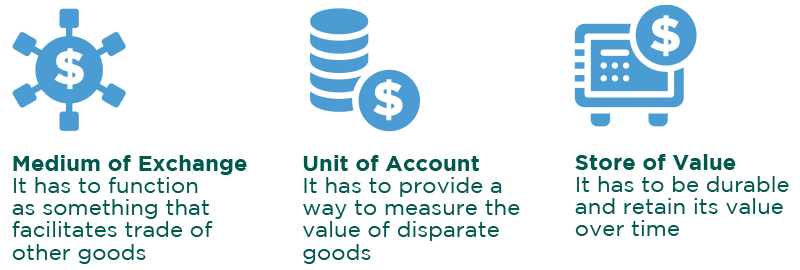
So, the U.S. dollar obviously qualifies since we use it in these ways all the time. But what about cryptocurrencies?
The OG cryptocurrency is Bitcoin. It was started in 2009 after the global financial crisis to create a decentralized currency that didn’t require the holder to trust a government or a traditional bank. For those of you who weren’t in the financial services industry back then, I can tell you from personal experience it was a tough time for institutions that depend on trust – all manner of banks, asset managers, insurance companies and other venerable firms failed due to their poor ability to manage risk. And their clients were justifiably mad: They had placed their trust in these companies who, in turn prioritized their own corporate self-interests ahead of their clients. You can particularly understand the appeal of a “trust-less” payment system at that time.
In addition to being trustless, Bitcoin has a limited supply and also protects the identity of the owner, while making every transaction available to the public. It has evolved to become very well known, is commonly used for transactions and has more than retained its value over time. So, is it actually a currency?
The main hesitation I have always had in answering "yes" to that question is governmental regulation. At least nine countries, China being the biggest, ban bitcoin, and many others limit its usage. But here in the United States, with our strong tradition of individual liberty, we have historically allowed them, and more recently have fully embraced them from a regulatory perspective. That, for me, was the final thing I needed to see to convince myself that bitcoin and a couple other digital assets are real, and should be considered currencies. Whether you agree with that or not, it’s inarguable that the underlying technology from bitcoin, the digital ledger, is here to stay.
We did something a little different in this month. Because this financial literacy topic is in the news all the time, we asked some of the folks making that news to also share a bit about the parts of cryptocurrency they believe all of us should be learning and thinking about. So, I hope you enjoy this month’s newsletter and our informative articles about digital assets, take a look at the editorials to help you understand the headlines, and share with me your view at some point on whether bitcoin is a currency!
For more helpful information on how to manage money, build wealth and skillfully navigate the complex world of financial matters, subscribe to the Department of State Treasurer’s monthly Finance Fridays newsletter by clicking here.
Are you tired of being bombarded by paywalls and pop-up ads when trying to read the news? Do you believe that access to reliable political news should be free and accessible to everyone? Then we urge you to support NC Political News, a weekly electronic political news outlet.
NC Political News is committed to providing high-quality, unbiased political reporting with columnists from all political sides. Unlike other news outlets, NC Political News is free to read and supported by businesses who purchase ad space on our website and in our newsletter, which goes out Monday through Friday at 7:00 am. This means that readers like you can access the news without being asked to pay a cent or dealing with frustrating advertisements.
However, to continue providing this valuable service, NC Political News needs your support. If you believe in the importance of accessible, free news, we urge you to click the image below. Any amount of support is appreciated.
Together, we can keep the news free and help ensure our state stays informed and connected.