DEQ releases final Neuse flood strategy with 113 priority actions
The final basin strategy is the first of its kind under North Carolina’s Flood Resiliency Blueprint program.
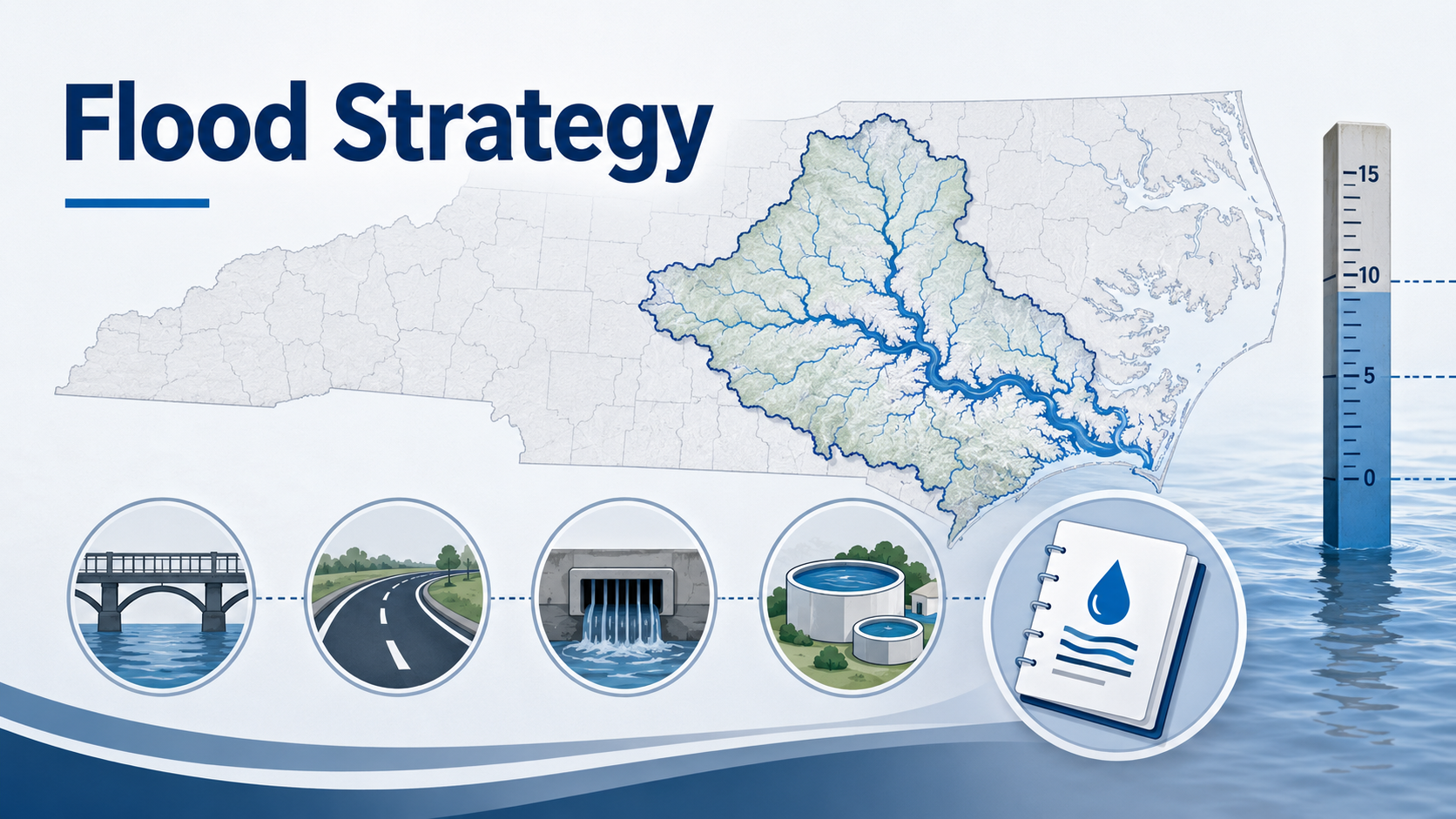
RALEIGH — North Carolina environmental officials have released a final flood resilience strategy for the Neuse River Basin, identifying 113 priority actions intended to help communities reduce flood risk and guide future planning.
The North Carolina Department of Environmental Quality announced July 21 that its Flood Resiliency Blueprint program released the final Neuse River Basin Action Strategy. The department described the document as a comprehensive framework to support flood resilience planning and decision-making across the basin.
DEQ said the strategy is the first of its kind in North Carolina. The Flood Resiliency Blueprint currently serves six of the state’s 17 river basins.
“The Neuse River Basin Action Strategy will help communities keep their residents and critical infrastructure safe in the face of more frequent and severe flooding,” DEQ Secretary Reid Wilson said in the release. “This strategy, the first of its kind in North Carolina, prioritizes resilience actions so that communities can make smart investments to reduce their flooding risk.”
The 113 actions met baseline criteria that included potential to reduce flood risk and support from local input, planning efforts and vulnerability assessment findings, according to DEQ.
The actions include structural and nonstructural projects, such as stormwater system improvements, transportation and roadway upgrades, critical infrastructure protection, nature-based solutions, building elevation or floodproofing, and policy and planning actions.
DEQ said further evaluation and consultation with local leaders identified 29 high-priority actions recommended for early consideration. Those actions were selected based on local buy-in, feasibility and capacity, and potential impact and benefit.
The strategy is informed by a basinwide vulnerability assessment, community capacity assessment, gap analysis and engagement with local governments, state and federal agencies, nonprofit organizations and other partners.
Local governments developed Local Action Plans and submitted them through the Flood Resiliency Blueprint Tool. DEQ said the tool will continue to store and maintain recommended actions and will allow communities to update plans as new information and funding opportunities develop.
The remaining five River Basin Action Strategies — Tar-Pamlico, Lumber, Cape Fear, White Oak and French Broad — are expected to be released in the coming months.
Editor’s note: This article was drafted with the assistance of artificial intelligence and was reviewed and fact-checked by a member of the NC Political News editorial team before publication.