
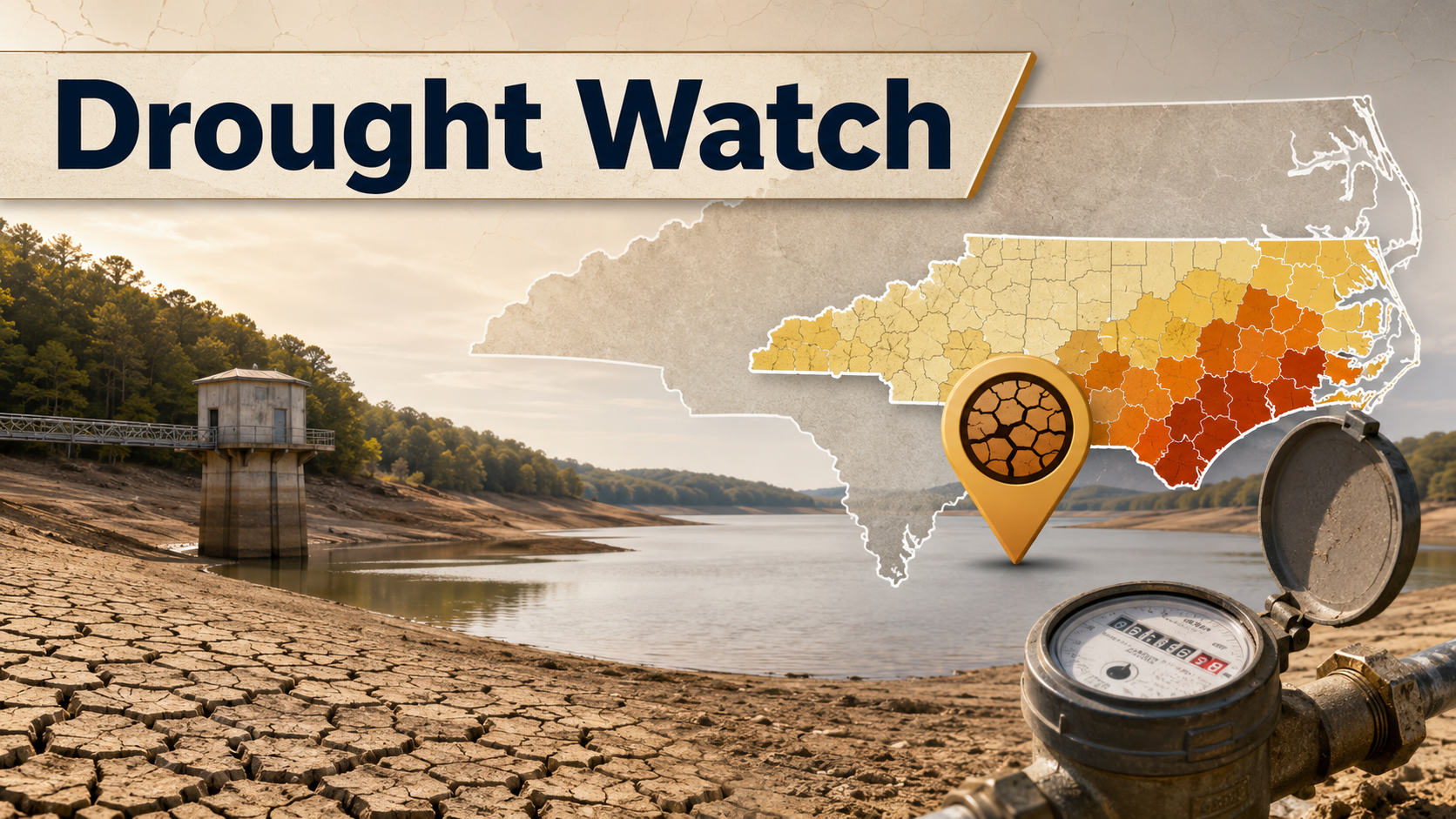
DEQ says drought continues across North Carolina
Water systems in extreme and exceptional drought areas are advised to follow shortage response plans and report weekly water use and conservation status.
RALEIGH — Drought conditions continue across North Carolina, with eight counties largely in the Triangle and eastern Triad classified in exceptional drought and dozens more facing severe or extreme drought, according to the North Carolina Department of Environmental Quality.
DEQ said the classifications were released by the North Carolina Drought Management Advisory Council based on conditions observed from July 7 through July 14. Exceptional drought is the highest drought classification.
Brunswick County also remains in exceptional drought, according to DEQ. The agency said 38 counties are in extreme drought, 37 counties are in severe drought, 13 counties are in moderate drought and four counties are abnormally dry.
The update has statewide implications for water systems and local governments. DEQ said water systems in exceptional or extreme drought, also known as D4 and D3 classifications, are advised to follow their Water Shortage Response Plans and adhere to water-use reduction measures. Those systems must report weekly water use and conservation status online through the Division of Water Resources’ Water Use Reporting website.
DEQ said recent rainfall has had only a minor effect on precipitation deficits that have been worsening since last fall. The agency also said reservoirs around the state continue to fall below normal levels.
The Drought Management Advisory Council is organized by the Division of Water Resources and includes drought experts from government agencies in North Carolina, Virginia and South Carolina. Members meet weekly and submit drought recommendations to federal partners for updates to the U.S. Drought Monitor.
DEQ said the state drought map is updated weekly on Thursdays based on conditions through the previous Tuesday. The agency advised residents to check with their local water supply system for any water-use restrictions.
Editor’s note: This article was drafted with the assistance of artificial intelligence and was reviewed and fact-checked by a member of the NC Political News editorial team before publication.