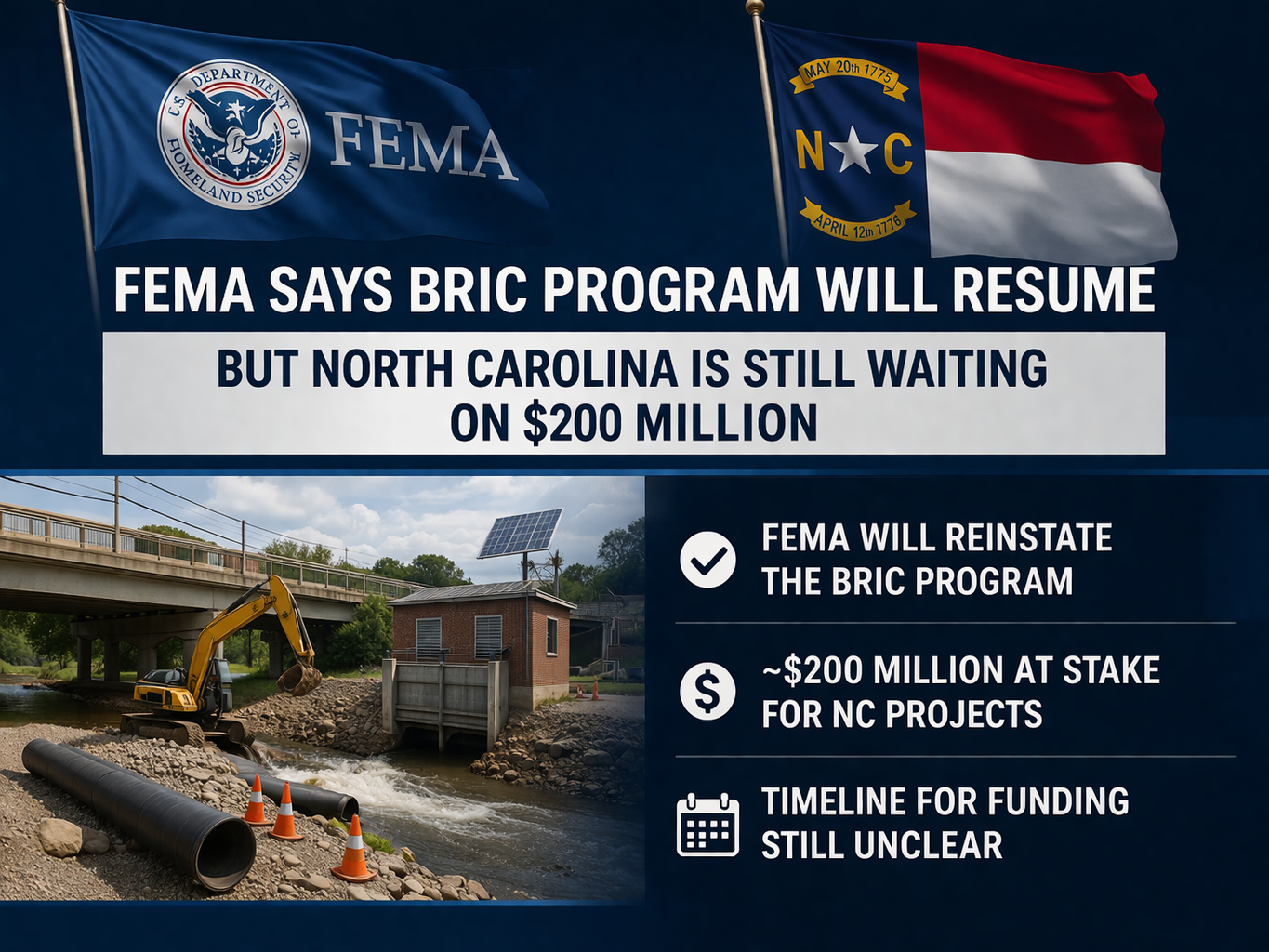

FEMA to revive resilience grants after courts intervene
The federal government appears poised to restart a disaster-mitigation program that many North Carolina communities rely on to prepare for extreme weather.
The Building Resilient Infrastructure and Communities, or BRIC, program helps fund projects such as sewer upgrades, riverbank stabilization and the relocation of vulnerable public infrastructure. FEMA halted the program last year, leaving about $200 million in previously awarded grants for North Carolina in limbo.
Since then, the money has been tied up in a prolonged legal battle. A federal court ordered FEMA in December 2025 to restore the funding, but communities said the agency did not begin releasing the money. In February, North Carolina joined more than 20 other states in asking the court to force FEMA to comply with that order.
Now FEMA says it plans to restart the program. In a public statement, the agency said it would fully resume support for BRIC awards and subapplications, including award monitoring, closeouts and pre-award reviews once the lapse in appropriations ends. FEMA also said it plans to rebuild the program in the coming months and issue a new funding opportunity.
Even with that announcement, North Carolina officials say they have not yet seen the money flow. A spokesperson for the state Department of Justice said FEMA has publicly indicated it will restart BRIC, but that promise has not yet taken effect on the ground.
Projects still awaiting funding include flood-protection work tied to a wastewater treatment facility in Hickory, a flood-vulnerability study in Buncombe County and a project in Hillsborough to move a water pump station out of a floodplain. The delays have left some communities trying to prepare for another hurricane season without the federal support they had expected.
The dispute has underscored how much local governments depend on disaster-mitigation funding before storms hit, not just after damage is done. For North Carolina communities facing repeated flood and storm threats, access to BRIC money could shape whether they strengthen key infrastructure now or pay far more later in recovery costs.
Editor’s note: This article was drafted with the assistance of artificial intelligence and was reviewed and fact-checked by a member of the NC Political News editorial team before publication.
Are you tired of being bombarded by paywalls and pop-up ads when trying to read the news? Do you believe that access to reliable political news should be free and accessible to everyone? Then we urge you to support NC Political News, a weekly electronic political news outlet.
NC Political News is committed to providing high-quality, unbiased political reporting with columnists from all political sides. Unlike other news outlets, NC Political News is free to read and supported by businesses who purchase ad space on our website and in our newsletter, which goes out Monday through Friday at 7:00 am. This means that readers like you can access the news without being asked to pay a cent or dealing with frustrating advertisements.
However, to continue providing this valuable service, NC Political News needs your support. If you believe in the importance of accessible, free news, we urge you to click the image below. Any amount of support is appreciated.
Together, we can keep the news free and help ensure our state stays informed and connected.