House calendar keeps vetoed DEI, guns and immigration bills in play
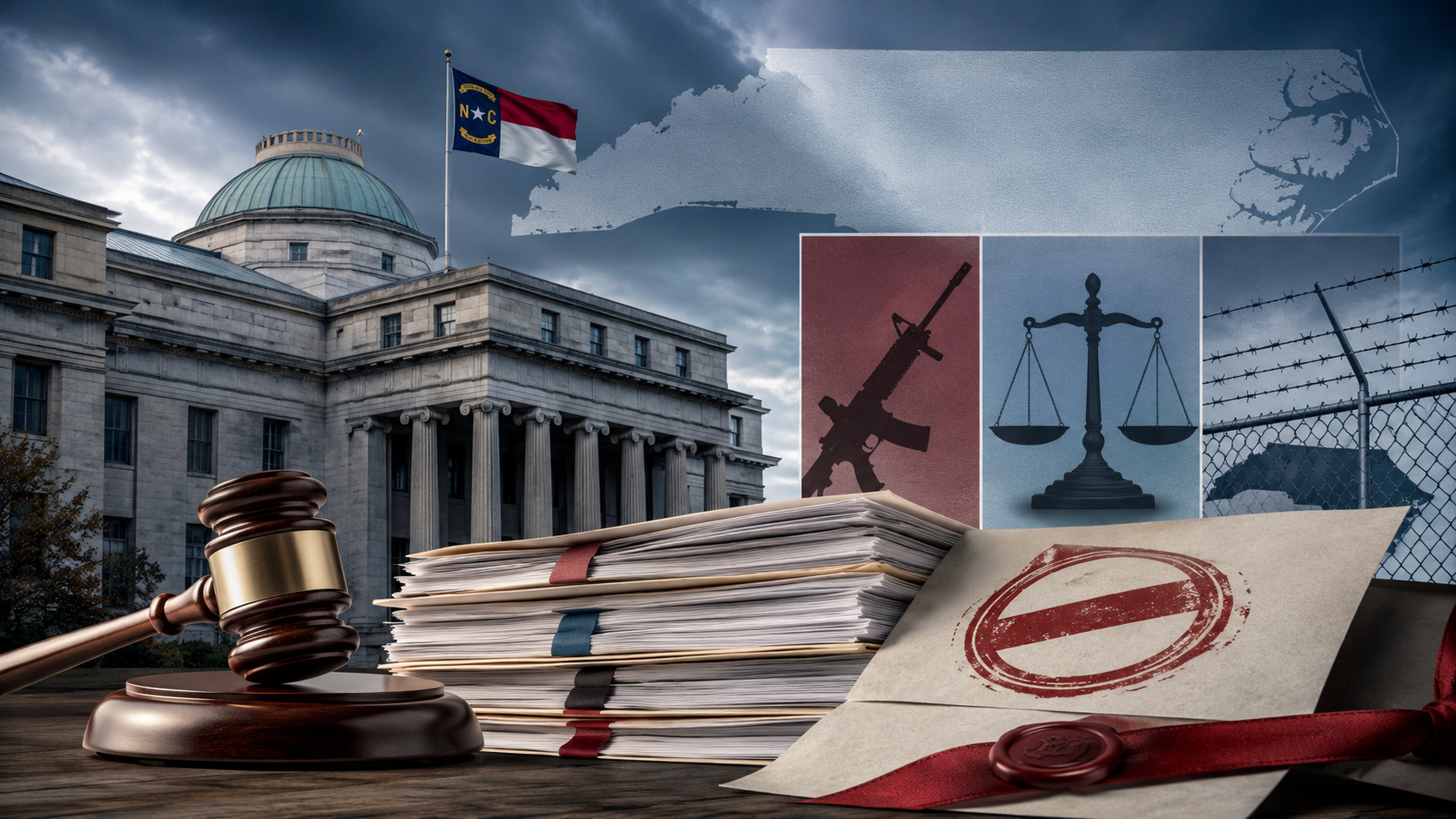
RALEIGH, N.C. — The North Carolina House is scheduled to return Thursday with five vetoed bills on its calendar, keeping alive possible override votes on measures dealing with diversity, equity and inclusion programs, concealed carry and immigration enforcement.
The House calendar for Thursday lists the bills under “unfinished business” and “reconsideration of vetoed bills.” The House is scheduled to convene at 9:30 a.m.
The measures include House Bill 171, titled “Equality in State Agencies/Prohibition on Diversity, Equity, and Inclusion (DEI),” Senate Bill 50, titled “Freedom to Carry NC,” Senate Bill 153, titled “North Carolina Border Protection Act,” Senate Bill 227, titled “Eliminating ‘Diversity, Equity, and Inclusion (DEI)’ in Public Education,” and Senate Bill 558, titled “Eliminating ‘Diversity, Equity, and Inclusion (DEI)’ in Public Higher Education.”
The calendar does not guarantee that votes will be taken Thursday. Legislative leaders can place bills on the calendar without bringing them to a vote, and several vetoed measures have remained in procedural limbo during the session.
Still, the placement of the bills keeps some of the most politically divisive measures of the past year in front of House members.
Gov. Josh Stein vetoed Senate Bill 50 and Senate Bill 153 on June 20, 2025. He vetoed House Bill 171, Senate Bill 227 and Senate Bill 558 on July 3, 2025, according to the House calendar.
Senate Bill 50 would loosen North Carolina’s concealed carry rules by eliminating the requirement that some people obtain a permit before carrying a concealed handgun. The proposal has drawn sharp disagreement between gun-rights supporters, who argue law-abiding residents should not have to seek government permission to carry, and opponents, who say the bill would weaken background check and training requirements.
Senate Bill 153 deals with immigration enforcement and has been described by supporters as a way to require greater cooperation with federal immigration authorities. Opponents have raised concerns about local law enforcement responsibilities, civil rights and the effect on immigrant communities.
The three DEI-related bills target diversity, equity and inclusion programs in state agencies, public schools and public higher education. Supporters of the measures have argued that state government and public education should not promote politically divisive concepts. Critics have said the bills would restrict efforts to address discrimination and could chill speech, training and student-support programs.
A veto override in North Carolina requires support from three-fifths of the members present and voting in each chamber. The margin needed can vary depending on attendance.
The bills are listed on the House calendar as ratified editions, meaning they had passed both chambers before being sent to the governor. If veto overrides succeed in both chambers, the bills would become law without the governor’s signature.
The House calendar also lists no other regular bill business before the vetoed measures, placing them at the top of Thursday’s unfinished business list.
Editor’s note: This article was drafted with the assistance of artificial intelligence and was reviewed and fact-checked by a member of the NC Political News editorial team before publication.