Ideas for helping NC child care industry are solidifying, but a top suggestion faces headwinds
Ideas for helping NC child care industry are solidifying, but a top suggestion faces headwinds
by Lynn Bonner, NC Newsline
August 6, 2025
Halee Hartley is the owner of a preschool with three locations in Boone and has a master’s degree in educational psychology. Kid Cove does not bring in enough money for Harley to pay herself a salary, so she works a second job as a property manager.
Annette Anderson-Samuels dreamed as a child of becoming a teacher but landed in a banking career. She left the bank to start a family child care center in her home in Kings Mountain called Phenomenal Kids Child Care Services. But to support herself, she must work two jobs from her home after the children leave for the day.
“It’s what I have the heart to do,” Anderson-Samuels told a state task force in June. “But I’d like some help from my state.”
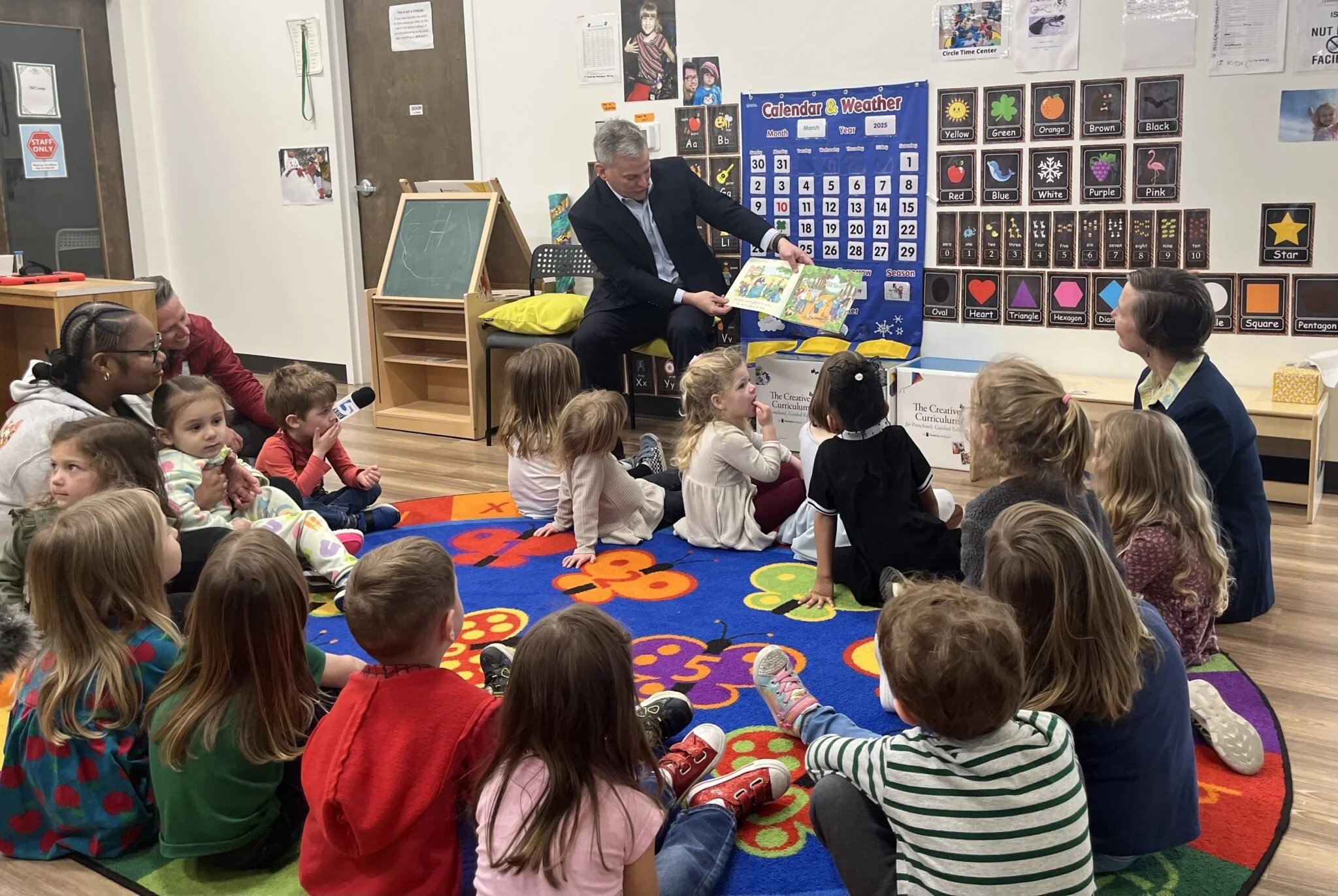
The Child Care Task Force, established by Gov. Josh Stein in March, has been focused on expanding child care options for public sector workers, improving compensation for people who work in the industry, and improving child care finances. Child care affordability and the financial stability of child care businesses are national problems. While child care costs too much for many families to afford without help, child care worker salaries are low, contributing to shortages.
Among the ideas the task force has pursued are increasing minimum subsidy payments to providers, which would help support the industry in rural counties, and establishing a child care endowment fund.
The average annual cost of infant care in North Carolina is $11,720, 57% more per year than in-state tuition for a four-year public college, according to Stein’s executive order.
Task force members include representatives from businesses, UNC and the community college system, child care advocacy organizations, state agencies, a philanthropic organization, and key legislators. Lt. Gov. Rachel Hunt, a Democrat, and Sen. Jim Burgin (R-Harnett) lead the task force. Burgin is chairman of the Senate’s health and human services budget committee. Another key task force member, Sen. Ralph Hise (R-Mitchell), helps direct state spending as one of his chamber’s budget writers.
Many child care business owners struggle to make a profit, yet feel pressure to keep tuition low so families can afford to enroll their children.
The state helps pay for child care for a fraction of the children eligible. Child care subsidies do not pay the full cost. Child care finances are particularly fragile in rural counties, according to a task force interim report published last month. Child care providers in rural counties receive less per child providing the same quality care as providers in urban counties, even though their expenses are about the same.
Raising minimum payments
Task force members made raising minimum subsidy reimbursements their highest priority. Child care reimbursement rates are based on local market rates, which are lower in rural counties.
Under this idea, subsidy rates in counties lower than the minimum would rise to meet the new floor, the report proposes, while providers in counties where rates are already above average wouldn’t lose anything.
NC Child estimated the cost of raising the reimbursement floor at $95 million a year.
Hise, however, warned that increasing the minimum would come at a cost to larger counties. He told other task force members at its June meeting and in a brief interview last week that raising the subsidy floor would mean that counties now above the floor would have to lose subsidized child care slots.
“The amount of money in the pool is the same,” he told the task force. “More money for doing the same thing won’t be prioritized.”
He expanded on that message Monday during a discussion of task force members focused on finances. He told them that paying “more money for the same thing” is less a priority for budget writers than using money for something new.
He did advise them on how to structure their request, suggesting they explain what raising the state floor would mean to the overall effort to stabilize the market.
Subsidy amounts depend on children’s ages, the type of provider, its quality, and its location.
According to the advocacy organization NC Child, a top-tier provider in Gaston County receives $466 less per infant than a provider with the same quality rating in neighboring Mecklenburg County.
Anderson-Samuels, the family home care provider in Kings Mountain, told the task force in June that child care subsidies are lower for her than they are for providers a few miles away in Mecklenburg.
Hartley told the task force that a statewide minimum would help her raise teacher pay, which would aid employee recruitment and retention.
Possibility of a child care endowment fund
Hunt and Burgin are also talking to philanthropies about supporting a child care endowment fund. Establishing such a fund was one of the recommendations in the interim report.
“A child care endowment could help address the current child care crisis in North Carolina by providing an ongoing source of supplemental child care funding for the state and maximizing child care funding through investment from private companies, philanthropy, and communities in partnership with the state,” the report said.
Hunt told the task force in June that someone offered “a significant amount” of money over five years to support an endowment.
“We want to look at solutions outside the box,” Hunt said later in an interview.
“We can’t rely on additional state or federal money,” she said. “There may be cuts especially from the federal government, so we’ve got to think of ways to achieve the solutions we need for our children without just saying we need more state money or federal money.”
The idea of an endowment isn’t a new one. Former Lt. Gov. Dan Forest championed the creation of an education endowment fund to improve teacher pay. It was to be funded by donations, special license plates, and state appropriations. Taxpayers can still make donations through their tax forms. The speciality license plate is no longer available. It’s unclear whether enough people asked for one of the specialty tags in order for it to be produced.
A few other states have established endowments devoted to child care. The interim task force report mentioned child care endowment funds in Nebraska and Connecticut as examples.
Hunt would not divulge who had made the offer to help fund the endowment.
Burgin won’t say who he’d been talking to about endowment funding, but hopes for an announcement this fall.
“Stay tuned,” he said this week.
An industry in decline
While the number of child care centers and family child care homes increased nationally, the number of centers and homes in North Carolina declined from 2023 to 2024, according to the research and advocacy organization Child Care Aware of America.
Both the state House and the state Senate’s proposed budgets include money to increase reimbursement rates to providers of subsidized child care. The House budget has $60 million for subsidy increases, while the Senate budget has $80 million. House and Senate Republicans have not agreed on a compromise budget, so as of now, child care providers have no guarantee that they’ll see more money. The state’s fiscal year began July 1.
Nearly 450,000 children were eligible for subsidized care in 2023-24, according to the state Department of Health and Human Services. About 14.35% of potentially eligible children, or 64,333, received it.
GET THE MORNING HEADLINES.
NC Newsline is part of States Newsroom, a nonprofit news network supported by grants and a coalition of donors as a 501c(3) public charity. NC Newsline maintains editorial independence. Contact Editor for questions: info@ncnewsline.com.
Are you tired of being bombarded by paywalls and pop-up ads when trying to read the news? Do you believe that access to reliable political news should be free and accessible to everyone? Then we urge you to support NC Political News, a weekly electronic political news outlet.
NC Political News is committed to providing high-quality, unbiased political reporting with columnists from all political sides. Unlike other news outlets, NC Political News is free to read and supported by businesses who purchase ad space on our website and in our newsletter, which goes out Monday through Friday at 7:00 am. This means that readers like you can access the news without being asked to pay a cent or dealing with frustrating advertisements.
However, to continue providing this valuable service, NC Political News needs your support. If you believe in the importance of accessible, free news, we urge you to click the image below. Any amount of support is appreciated.
Together, we can keep the news free and help ensure our state stays informed and connected.