John Hood: Budget Deal Sets Up a Busy Week
RALEIGH — By Monday, June 15, the academic year will be over for colleges, universities, and most grade schools. Family trips and summertime sojourns will commence. Tourist venues and recreational attractions will be bustling.
For the North Carolina General Assembly, however, the week of June 15 will be no vacation. If current plans come to fruition, lawmakers will vote that week on a new state budget as well as at least two constitutional amendments to appear on the fall ballot: one capping the growth of property taxes and the other capping the rate of personal income tax at 3.5%.
I suspect both amendments will pass the legislature and gain voter approval. Proponents believe their combined effect will be to constrain the growth of state and local expenditures over time, by depriving big-spenders of the handiest tools at their disposal. The amendments’ most vociferous opponents agree on the effect but think that consequence will harm North Carolina, not help it.
A third group — let’s call them skeptics rather than opponents — note that neither amendment affects sales taxes, excise taxes, and other forms of government revenue. Might future senators, representatives, and county commissioners respond to the new constitutional constraints not with a renewed commitment to fiscal discipline but by expanding the base of the sales tax, hiking its rate, or approving new gambling enterprises?
According to the Tax Foundation, North Carolina derives about 29% of its state and local revenue from personal income taxes, about the same share from sales taxes, 22% from property taxes, 3% from corporate income, and the rest from excises and other levies. Compared to the nation as a whole, we rely more on income and sales tax and less on property tax than the average state.
As I’ve previously explained at (literally) book length, it might make sense for North Carolina to rely more on sales taxes if they were properly structured. Alas, they never will be. A properly structured tax on retail sales wouldn’t distort the economy. It would tax services as well as goods, and in particular the medical, legal, and financial transactions that together comprise most of the service sector. On the other hand, it wouldn’t tax business-to-business transactions, which by definition aren’t retail sales — and the taxation of which creates artificial incentives for vertical and horizontal integration. The income tax base is too broad, yes, creating artificial disincentives against savings and investment. But the sales tax base is too narrow (as is the property tax base).
I understand the skeptics’ argument. But there’s another side to the story. As best I can determine, the presentation of the constitutional amendments made the budget deal between House and Senate possible. That deal is, in turn, both fiscally and politically advisable. It is wise to modify the revenue triggers to ensure lawmakers can sustain their tax-reform momentum while also meeting high-priority needs in public safety, health care, and education. Incumbents are also loath to enter the fall campaign without a new state budget in place.
As lawmakers finalize the details of that budget, I hope they take one more factor into consideration: North Carolina is not adequately prepared for another natural or economic disaster. Could there be another recession, pandemic, or catastrophic hurricane in our future? Of course. It’s only a question of time.
According to the Pew Charitable Trusts, North Carolina has approximately 53 days worth of state spending socked away in our rainy-day fund and unreserved credit balance. That places us below the national average. Tennessee (72 days), Georgia (147 days), and South Carolina (174 days) are much better prepared, as are Pennsylvania (79), Florida (125), Texas (129), and even the likes of California (84) and New York (198).
The General Assembly ought to make a larger rainy-day deposit than required by current statute. The ultimate goal should be to boost savings to at least to the national median of 92 days worth of spending.
Yep, there’s lots to get done by mid-June.
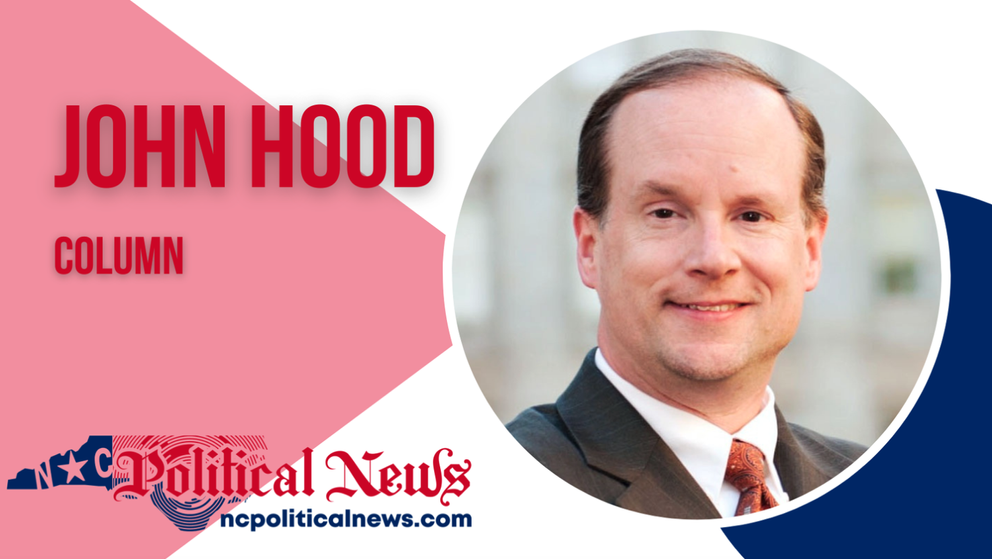
John Hood is a John Locke Foundation board member. His books Mountain Folk, Forest Folk, and Water Folk combine epic fantasy with American history (FolkloreCycle.com).