John Hood: Democrats Will Soon Fall to Third Place
RALEIGH — The likely Democratic nominee for North Carolina’s Senate race next year, former Gov. Roy Cooper, led likely Republican nominee Michael Whatley by six points in the first independent poll commissioned after the two men announced their campaigns last month.
Of course he does. Cooper has been on statewide ballots for decades. Whatley, a first-time candidate who chairs the Republican National Committee, isn’t as well known.
On the other hand, Cooper’s 47% to 41% margin in the latest Emerson College poll isn’t particularly impressive. North Carolina is a closely divided state. Setting aside Josh Stein’s remarkably good fortune last year, most of our statewide races have been and will continue to be decided by small margins.
So, Cooper’s six-point edge in the poll isn’t what caught my eye. It was the partisan breakdown of the Emerson College sample: 36% Republican, 33% unaffiliated, 31% Democrat. If I got in my time machine and went back 30 years to chat with 1995 me, he’d say the sample was badly skewed and suggest I toss it aside. Democrats rank third in party affiliation, behind Republicans and independent? No way, my dark-haired, wrinkle-free doppelganger would insist.
And he’d be dead wrong.
It’s true that, with regard to voter registration, the state’s former majority party hasn’t yet fallen so far. As of last week, 30.6% of North Carolina’s 7.6 million voters were registered as Democrats. Republicans made up 30.4%. Unaffiliated voters already comprise a plurality at 38.4%.
The underlying math has an inexorable logic, however. We don’t have to go back 30 years to see it. Half that time will do it. In 2010, Democrats made up 45% of the electorate. Republicans were 32%, independents 23%. Since then, the independent category has grown by 1.5 million and the GOP by nearly 350,000, while Democratic registrations shrank by more than 450,000.
Sure, it will still take several months for the Ds to slip to third place. But the 2026 election is months away, more than a year away. By then, the streams will have crossed.
Democratic activists are right to feel trepidation about this. But Republican activists ought to restrain their glee. Despite these registration trends, GOP candidates for governor have won precisely one election in the past 30 years. Democrats currently hold half of North Carolina’s 10 statewide executive offices. Within a few years, the Republican majority on the state supreme court could disappear. In federal elections, North Carolina leans red, yes, but not by much. (I prefer a different color coding for the Tar Heel State, a reddish purple known as “flirt.”)
And, to return focus to the Senate race, Cooper starts the 2026 contest with an edge over Whatley even with Democratic registration lower than Republican registration!
That’s because unaffiliated voters aren’t necessarily, or even usually, undecided voters. Many are Democratic or Republican in all but name. In North Carolina, each party starts with a base of support north of 40%. To win, they must maximize turnout and contest the small but decisive share of swing voters truly up for grabs.
The conventional wisdom used to be that Republicans were somewhat more likely to turn out than Democrats, and thus enjoyed a structural advantage in midterm elections, when overall turnout tends to be lower. Now the conventional wisdom is that because the rise of Donald Trump scrambled the party coalitions, with high-propensity suburban voters shifting blue and low-propensity rural voters shifting red, Republicans have lost that structural advantage. Lower overall turnout is good for Democrats, it’s posited.
I never bought the conventional wisdom in the first place, having searched for and failed to find any consistent relationship between midterm turnout and partisan outcomes in past North Carolina elections. So I’m not prepared to accept the new conventional “wisdom,” either, without more evidence.
If public sentiment turns against the party in the White House, as it often does, Roy Cooper might well win. Registration trends are hardly the only ones that matter.
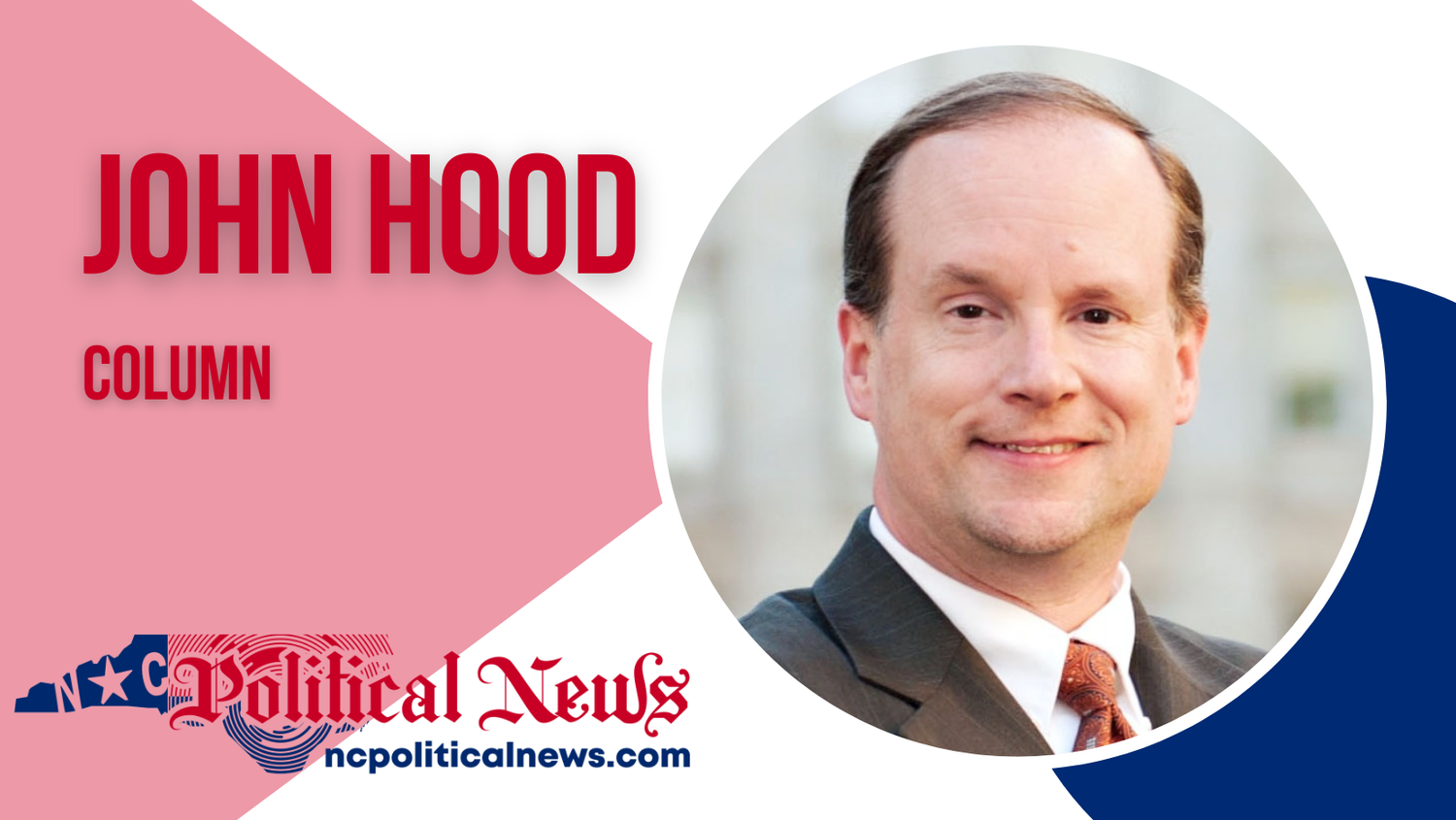
John Hood is a John Locke Foundation board member. His books Mountain Folk, Forest Folk, and Water Folk combine epic fantasy with American history (FolkloreCycle.com).
Are you tired of being bombarded by paywalls and pop-up ads when trying to read the news? Do you believe that access to reliable political news should be free and accessible to everyone? Then we urge you to support NC Political News, a weekly electronic political news outlet.
NC Political News is committed to providing high-quality, unbiased political reporting with columnists from all political sides. Unlike other news outlets, NC Political News is free to read and supported by businesses who purchase ad space on our website and in our newsletter, which goes out Monday through Friday at 7:00 am. This means that readers like you can access the news without being asked to pay a cent or dealing with frustrating advertisements.
However, to continue providing this valuable service, NC Political News needs your support. If you believe in the importance of accessible, free news, we urge you to click the image below. Any amount of support is appreciated.
Together, we can keep the news free and help ensure our state stays informed and connected.