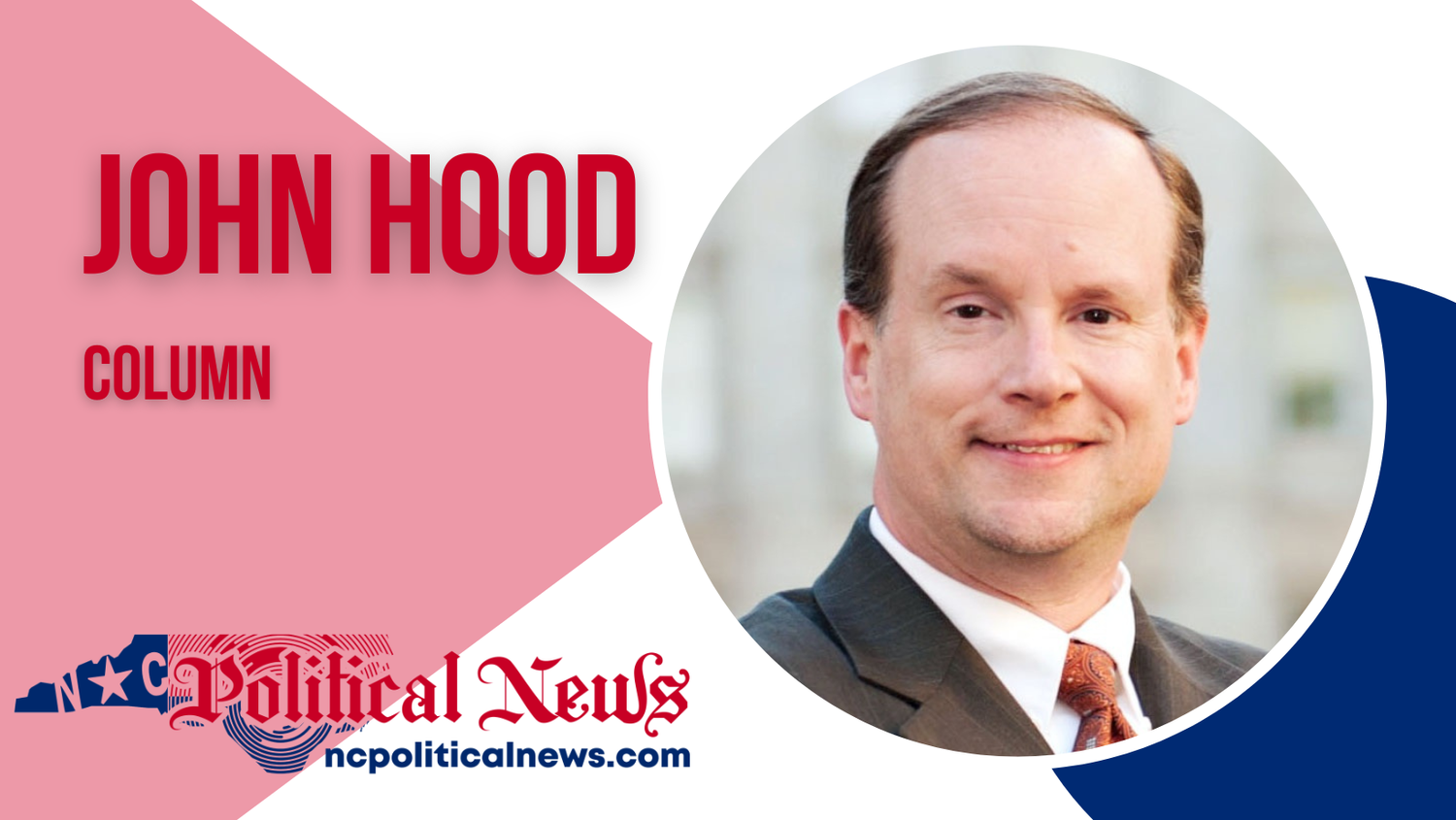
John Hood: Property Tax Merits Reform, Not Repeal
RALEIGH — North Carolina House Speaker Destin Hall (R-Caldwell) had created a 23-member select committee to evaluate potential reforms of the state’s property-tax system. That is a fine idea, a sensible reaction to surging property values and changing fiscal conditions. But members ought not be distracted by out-of-state chatter about repealing the property tax entirely. That is a bad idea, destined to fail.
Annual levies on the value of residential, commercial, and industries property produce 70% of local revenue in North Carolina. The property tax is stable, reliable, and doesn’t distort economic decisions nearly as much as income or sales taxes do.
All taxes are paid using past or present income. And all are, by definition, coercive. They take money away from the people who earned it so that governments can fund public safety, infrastructure, education, and other services for which the collective public benefits can be reasonably expected to exceed the costs.
I’m a fiscal conservative, not an anarchist. I believe government is necessary and provides essential services. I also think government at all levels has a built-in tendency to grow beyond its proper scope, as spending lobbies inside and outside the public sector press for jobs, contracts, and special favors. That’s why I favor both legal and procedural constraints on the size of government, including annual expenditure caps based on inflation and population growth as well as referendum requirements for issuing general-obligation debt. Otherwise, the interests of taxpayers will inevitably yield to the machinations of special interests.
When considering tax alternatives, it’s important not to mix up two different issues: 1) how we should tax and spend, and 2) how much we should tax and spend. Settling one doesn’t necessarily settle the other. At any given level of government spending, there are better and worse ways to raise the revenues necessary to finance it.
For local services in North Carolina, the only practical alternative to the property tax is to raise the sales tax. I might view that tradeoff favorably if North Carolina’s sales tax were broad and efficiently administered. It is neither. Even after the General Assembly expanded it more than a decade ago to encompass entertainment, repairs, and some personal services, we still don’t tax medical bills, financial services, and legal services sold to households. Given the lobbying heft of those industries, I doubt the practicality of any plan to pass a genuine retail-sales tax in North Carolina.
Our property-tax base is too narrow, as well. I don’t think large-scale enterprises benefitting from significant expenditure on public services, such as hospitals and universities, ought to be exempt from the property tax. Again, I’ll remind you that “property” taxes aren’t paid by removing planks or bricks from buildings and chucking them at the tax collector, however tempting that might be. They are really a means of taxing the money of people who own property, lease it (apartment dwellers bear much of the incidence of property tax as monthly rent), and work or consume on it (in the form of lower wages or higher prices, respectively). Especially for place-based services such as fire protection and parks, taxes on real estate apportion the costs in a rational manner.
“The property tax won’t win any popularity contests with homeowners,” wrote Jared Walczak, vice president of state projects at the Tax Foundation, “but it still has an important role to play in public finance. Policymakers can and should address taxpayers’ legitimate grievances about out-of-control property tax bills, but they should do so without upending a system of taxation that is more efficient, fair, and pro-growth, and better suited to municipal finance, than any of the alternatives.”
By all means, let’s make sure North Carolinians can challenge unjust valuations and cash-poor homeowners aren’t dispossessed. Levy limits and circuit breakers make sense. More generally, the General Assembly should continue tax reforms that reduce special carve-outs and broaden tax bases in order to lower tax rates. But replacing property taxes isn’t a realistic option.
John Hood is a John Locke Foundation board member. His books Mountain Folk, Forest Folk, and Water Folk combine epic fantasy with American history (FolkloreCycle.com).
Are you tired of being bombarded by paywalls and pop-up ads when trying to read the news? Do you believe that access to reliable political news should be free and accessible to everyone? Then we urge you to support NC Political News, a weekly electronic political news outlet.
NC Political News is committed to providing high-quality, unbiased political reporting with columnists from all political sides. Unlike other news outlets, NC Political News is free to read and supported by businesses who purchase ad space on our website and in our newsletter, which goes out Monday through Friday at 7:00 am. This means that readers like you can access the news without being asked to pay a cent or dealing with frustrating advertisements.
However, to continue providing this valuable service, NC Political News needs your support. If you believe in the importance of accessible, free news, we urge you to click the image below. Any amount of support is appreciated.
Together, we can keep the news free and help ensure our state stays informed and connected.