John Hood: Social Disconnection Is Everyone’s Problem
RALEIGH — I have a large and loving family, many cherished friends and colleagues, daily opportunities for meaningful work and enjoyable play, and countless other blessings. Still, on occasion, I feel lonely and disconnected.
That doesn’t make me ungrateful or neurotic. It makes me human.
When journalists, social scientists, and policymakers speak of a “crisis” of loneliness, they don’t typically mean to suggest that most of us live disconnected lives. While a majority of survey respondents say they feel isolated, left out, or lacking in companionship at least some of the time, more than three-quarters of Americans say they are, on the whole, satisfied with how their personal lives are going.
North Carolina exhibits a similar pattern. Most residents of the Tar Heel State say they are satisfied with their jobs, local communities, and private lives. Still, sizable minorities express persistently darker feelings. A recent High Point University survey found that more than a quarter of North Carolinians said they had “very often” felt “stressed, anxious or down in the past month,” while a 10% described their current mental and emotional health as “poor.” Nearly a fifth of high-schoolers say they’ve seriously considered suicide.
I offer this level-setting not to dismiss concerns about chronic loneliness but to define it properly. Indeed, if social disconnection were a near-universal problem, we might well despair of ever making headway against it.
That would be a mistake. Chronic loneliness afflicts a small but growing minority of our fellow citizens. Its broader consequences — social, economic, even fiscal — merit our attention and action.
High levels of social disconnection are consistently linked to such conditions as economic immobility, joblessness, illiteracy, addiction, and debilitating medical conditions. The causal arrows likely point in both directions. That is to say, while poverty, poor health, and inadequate education can exacerbate feelings of loneliness and disconnection, an absence of meaningful professional and personal relationships — a lack of social capital, to use the now-standard term — is itself a risk factor for other adverse outcomes.
“As America strives to prepare the next generation for a rapidly changing economy,” wrote Bruno Manno, a former assistant secretary of education, in National Affairs, “we must recognize that social capital is as critical as academic capital. Knowledge and networks together form the dual pillars of opportunity.”
Public policy certainly has a role to play here. In his essay, Manno urged school systems to expand career and technical education, apprenticeships, and other avenues for building social capital among students and young adults. Also popular among policymakers at the moment are constraints on smart-phone usage at school and social-media usage by minors at any time. And the North Carolina Senate should take up and approve House Bill 578, the Jason Flatt Act. Named after a young Tennessean who took his own life, the legislation would provide training in suicide prevention to teachers and other school personnel. The House passed the bill unanimously last year.
I do not, however, view social disconnection as primarily a policy question. Not only is it far from clear whether dramatically higher spending on social services would significantly reduce loneliness, but I would also submit that government programs have in the past served at least in part to supplant other social institutions — nuclear and extended families, religious congregations, community groups, and other civic associations — that have traditionally provided structure, meaning, and belonging to our lives.
Here’s the good news: we need not ask, cajole, or pressure our public officials to act on our behalf. Each of us has agency. We can make social connection a priority, a practice, a habit. We can volunteer to tutor students, mentor young employees, and serve seniors. We can join, rejoin, or devote ourselves more intensely to faith-based institutions. Have a talent or passion for sports, gardening, art, music, books, cooking, or gaming? Join a club, or form one. Have neighbors you’ve never met? Go knock on their doors.
Let’s all be social-capital investors. The need is great, the potential payoffs huge.
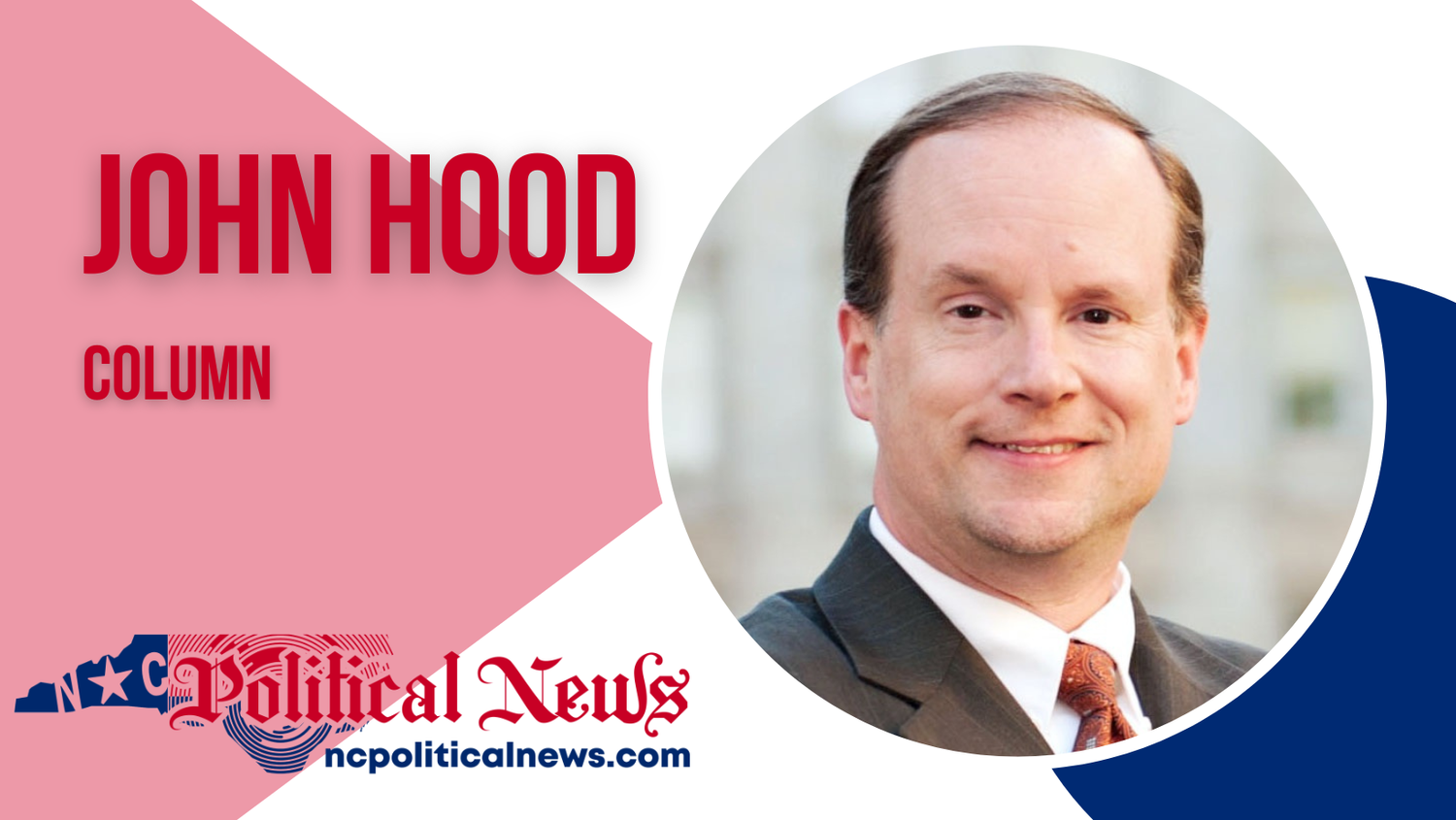
John Hood is a John Locke Foundation board member. His books Mountain Folk, Forest Folk, and Water Folk combine epic fantasy with American history (FolkloreCycle.com).
Are you tired of being bombarded by paywalls and pop-up ads when trying to read the news? Do you believe that access to reliable political news should be free and accessible to everyone? Then we urge you to support NC Political News, a weekly electronic political news outlet.
NC Political News is committed to providing high-quality, unbiased political reporting with columnists from all political sides. Unlike other news outlets, NC Political News is free to read and supported by businesses who purchase ad space on our website and in our newsletter, which goes out Monday through Friday at 7:00 am. This means that readers like you can access the news without being asked to pay a cent or dealing with frustrating advertisements.
However, to continue providing this valuable service, NC Political News needs your support. If you believe in the importance of accessible, free news, we urge you to click the image below. Any amount of support is appreciated.
Together, we can keep the news free and help ensure our state stays informed and connected.