One Month After Brutal Charlotte Light Rail Murder, NC Senate Passes 'Iryna's Law'
The NCGA is moving forward with cracking down on weak-on-crime policies, strengthening our approach to violent crimes
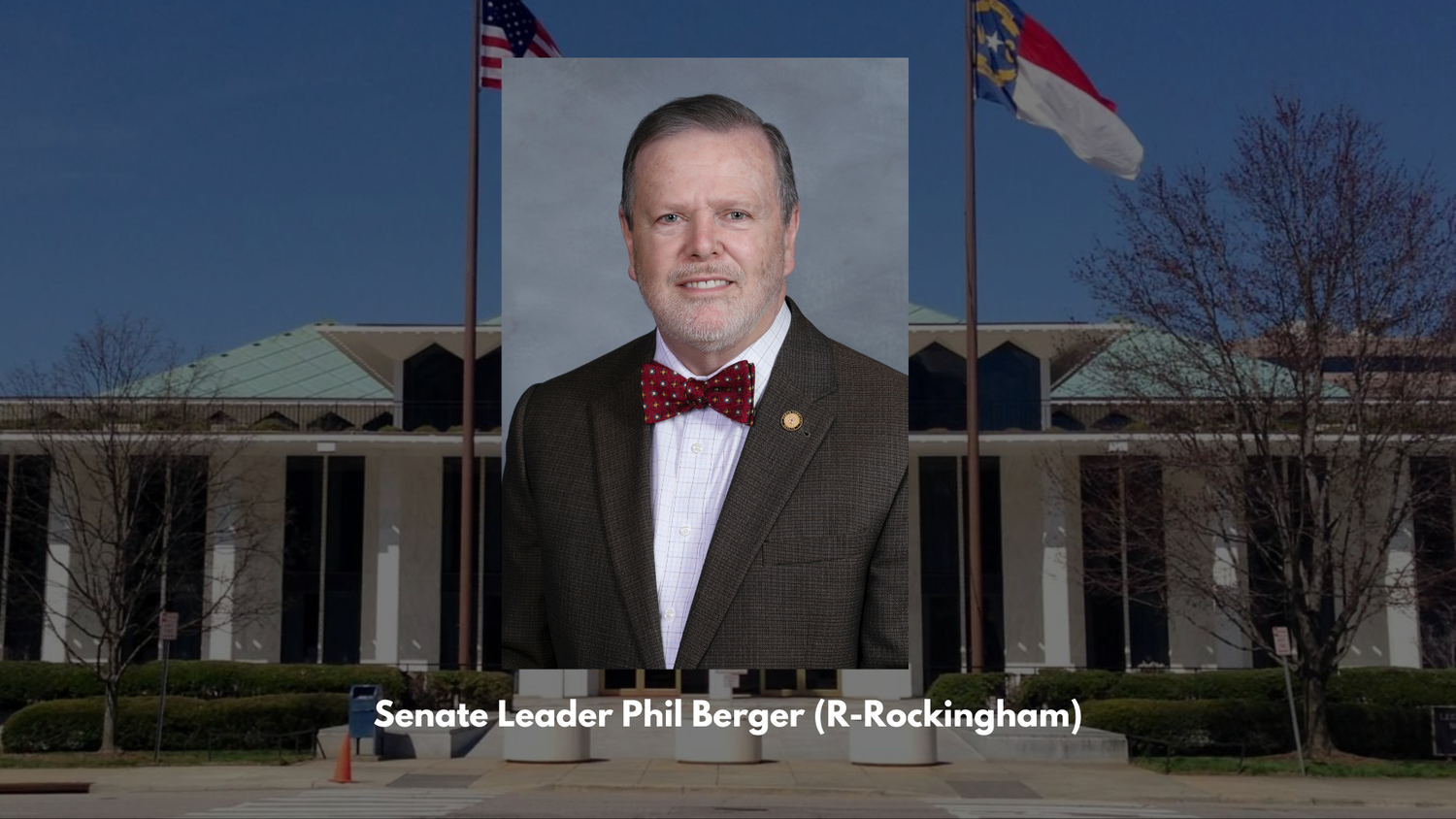
Raleigh, N.C. – Today, the N.C. Senate passed House Bill 307, "Iryna's Law," which includes numerous criminal justice reforms that tackle the weak crime policies that played a role in the murder of Iryna Zarutska on Aug. 22, 2025.
Senate Judiciary Committee Chairmen Danny Britt (R-Robeson), Warren Daniel (R-Burke), and Buck Newton (R-Wilson) said, "After the senseless murder of Iryna Zarutska, we knew we had to act. This is why we created Iryna's Law. We will not rest until the days of woke, lazy crime policies dictated by officials who coddle criminals are behind us.”
House Bill 307, "Iryna's Law," eliminates cashless bail and removes some of the magistrate or judge's discretion, ensuring that it will be more difficult for violent and repeat offenders to get out of jail in the future.
The bill creates a new category of "violent offenses" for which the judge or magistrate must impose certain conditions for pretrial release, including GPS monitoring.
For first-time violent offenders, the only options are secured bond or house arrest with electronic monitoring. For second or subsequent offenses, the only option for release is secured bond and house arrest with electronic monitoring. As for repeat offenders, this bill requires judicial officials to impose a secured bond or house arrest with electronic monitoring on any defendant who has been convicted of three or more offenses in the last 10 years, regardless of whether those offenses are considered violent.
The bill also addresses the mental health crisis currently affecting our criminal justice system by creating a new protocol under which judicial officials will be required to order mental health evaluations.
If a defendant is charged with a violent offense and has been involuntarily committed in the last three years, or if a defendant is charged with any offense and the judicial official has cause to believe the defendant is a danger to himself or others, the judicial official must order that the defendant be evaluated for involuntary commitment. If, after the evaluation, the examiner determines the defendant needs to be committed, they must initiate commitment proceedings.
This bill also makes several changes to remove judicially imposed roadblocks that have prevented the death penalty from being carried out in North Carolina for nearly two decades.
Instead of letting death penalty appeals sit indefinitely, they must now be heard within two years of filing, and continuances will not be granted unless the judge finds extenuating circumstances. Any appeal or motion that was filed more than 24 months ago must be scheduled for hearing by December 2026, and the hearing must occur on or before December 2027.
Any hearings related to a death penalty case would be required to be held in the county where the offender was convicted.
The bill would also add committing a capital felony while the victim was using public transportation as an aggravating factor for seeking the death penalty. This ensures that prosecutors can pursue, and the courts can impose, the death penalty without question for similar crimes like the one that took Iryna's life.
Additionally, the bill would:
Clarify that a judicial official must review and consider the defendant’s criminal history before setting conditions of pretrial release.
Require a judicial official to make written findings of fact explaining the reason why the official determined the conditions of release in each case.
Specify that a judge or magistrate's failure to make these required findings is grounds for removal.
Allow the Chief Justice of the Supreme Court or the Chief District Court Judge to initiate suspension proceedings for magistrates.
Require the Collaboratory to study the intersection of mental health and the justice system in North Carolina for both adults and juveniles, as well as the availability of house arrest as a condition of pretrial release, and alternative methods of execution aside from those already authorized in North Carolina.
Are you tired of being bombarded by paywalls and pop-up ads when trying to read the news? Do you believe that access to reliable political news should be free and accessible to everyone? Then we urge you to support NC Political News, a weekly electronic political news outlet.
NC Political News is committed to providing high-quality, unbiased political reporting with columnists from all political sides. Unlike other news outlets, NC Political News is free to read and supported by businesses who purchase ad space on our website and in our newsletter, which goes out Monday through Friday at 7:00 am. This means that readers like you can access the news without being asked to pay a cent or dealing with frustrating advertisements.
However, to continue providing this valuable service, NC Political News needs your support. If you believe in the importance of accessible, free news, we urge you to click the image below. Any amount of support is appreciated.
Together, we can keep the news free and help ensure our state stays informed and connected.