Second federal judge blocks mail-ballot rules as North Carolina voting proceeds
North Carolina has already begun distributing absentee ballots for the Nov. 3 election while courts consider whether the Postal Service can impose new requirements.
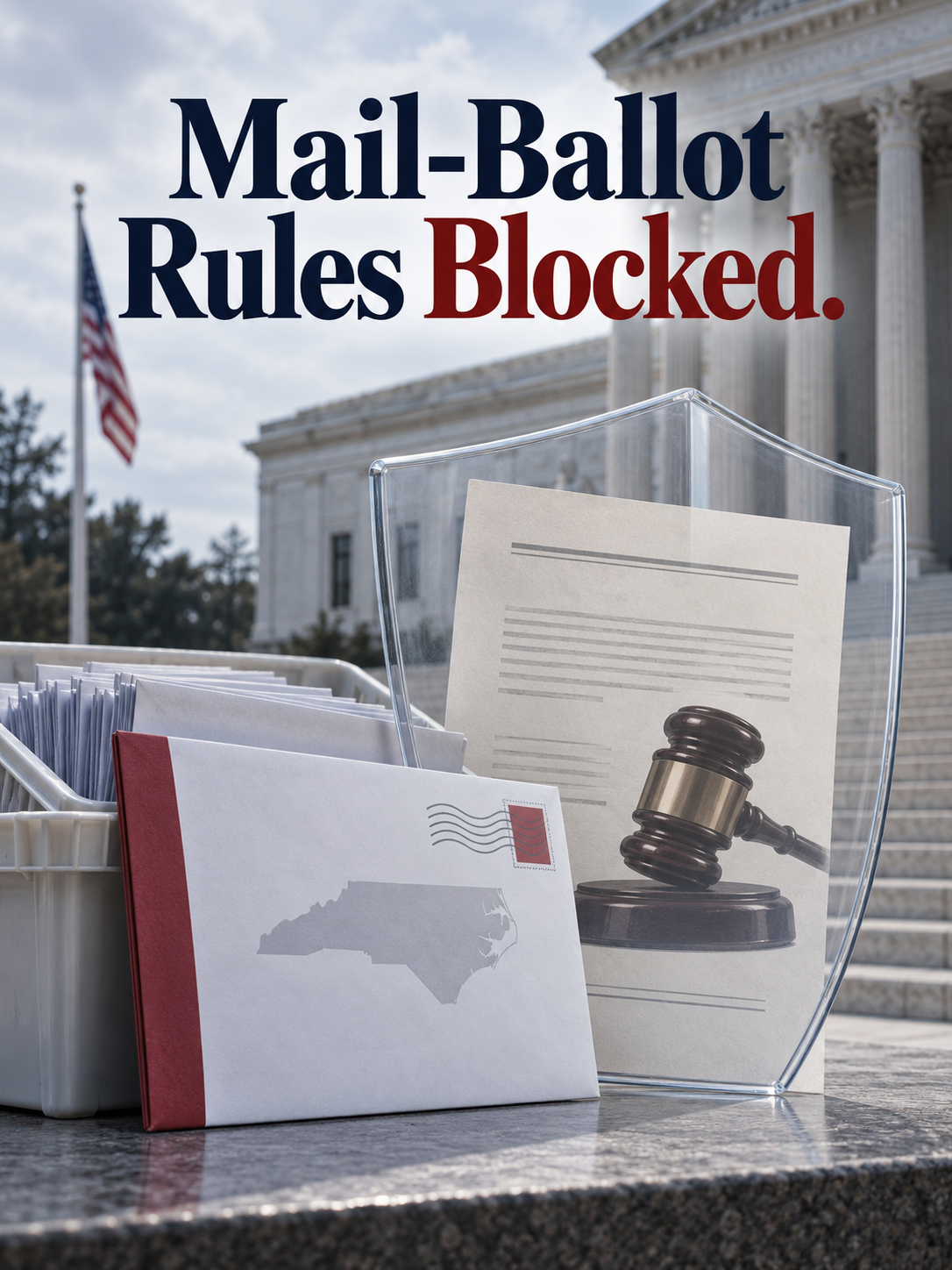
A second federal judge has blocked the U.S. Postal Service from enforcing new mail-ballot requirements before the November midterm election, providing additional protection for absentee voting that is already underway in North Carolina.
U.S. District Judge Carl J. Nichols issued a preliminary injunction Sunday in litigation brought by Democratic Party organizations and civil-rights groups. Nichols concluded that the challengers had demonstrated an increased risk that otherwise valid absentee or mail-in ballots would not be counted if the requirements took effect.
The ruling creates a separate legal barrier to the Postal Service rule while the U.S. Supreme Court considers litigation arising from an earlier injunction issued by U.S. District Judge Indira Talwani in Massachusetts.
The Postal Service requirements stem from an executive order issued by President Donald Trump. The resulting rule would require state and local election officials to obtain Postal Service approval for ballot-envelope designs and upload information identifying absentee voters through a federal portal.
Election officials have argued that the requirements cannot be implemented safely this close to the election.
The timing is particularly important in North Carolina. County boards of elections began sending absentee-by-mail ballots Sept. 4, making North Carolina one of the first states to begin voting in the 2026 general election.
The state’s in-person early-voting period begins Oct. 15 and continues through Oct. 31. Election Day is Nov. 3.
The latest injunction does not resolve the underlying lawsuits. Instead, it prevents enforcement while the litigation proceeds.
Nichols, who was appointed by Trump, initially declined to block the executive order in May because the Postal Service had not issued its final rule and the challenge was considered premature. The administration subsequently issued the rule Aug. 21, allowing opponents to renew their request.
The Supreme Court’s eventual decision could determine whether the requirements can take effect before ballots are cast and counted nationwide. Unless a higher court intervenes, the two preliminary injunctions prevent enforcement during the 2026 election.
Editor’s note:
This article was drafted with the assistance of artificial intelligence and was reviewed and fact-checked by a member of the NC Political News editorial team before publication.