Senate committees take up broad North Carolina election-law package
RALEIGH — A broad election-law bill affecting ballot counting, provisional voting, voter registration and campaign-finance procedures is scheduled for consideration by two North Carolina Senate committees Tuesday.
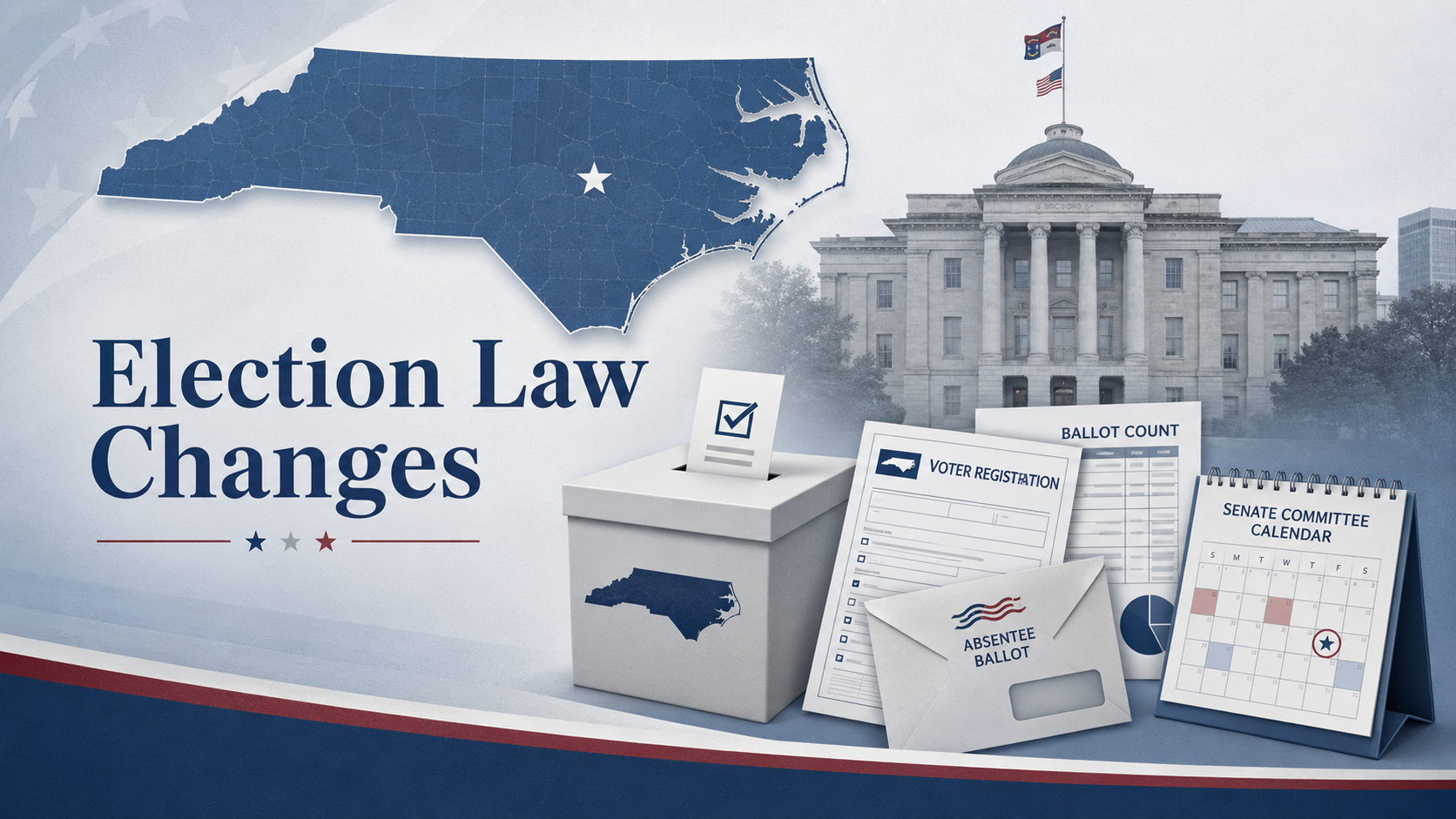
House Bill 958, titled “Election Law Changes,” is listed for the Senate Elections Committee at 11 a.m. and the Senate Rules and Operations Committee at 2 p.m.
The latest House-approved version contains numerous changes to state election procedures. Among them, the bill would permit county election boards to begin counting certain ballots between 9 a.m. and 5 p.m. on Election Day under a resolution adopted at least two weeks before the election. Results could not be disclosed before polls close.
The bill would move several post-election deadlines from the third business day after an election to the fifth business day. Those deadlines include opportunities to correct incomplete voter-registration information, provide identification for some provisional ballots and cure certain deficiencies involving absentee-ballot documentation.
It would also require public access to ballot counting while prohibiting observers from interfering with or participating in the count.
Under the proposal, county boards could take preparatory steps involving provisional ballots before Election Day, provided those preparations did not reveal election results.
The legislation contains additional provisions addressing campaign finance, election-board administration, voter records, state employees, audits and other election-related procedures.
The House passed the bill’s second reading 66-47 on June 30 and then approved it on third reading. The Senate received the measure July 1. On July 27, it was withdrawn from the Senate Rules Committee and referred to the Elections Committee, with a sequential referral back to Rules if approved.
Committee consideration does not mean the bill has passed the Senate. Any Senate amendments could require additional House action before the measure could be presented to the governor.
Editor’s note: This article was drafted with the assistance of artificial intelligence and was reviewed and fact-checked by a member of the NC Political News editorial team before publication.