Senate committees take up virtual currency kiosk consumer protection bill
RALEIGH — A bill creating statewide rules for virtual currency kiosks is scheduled for Senate committee consideration Tuesday, June 30.
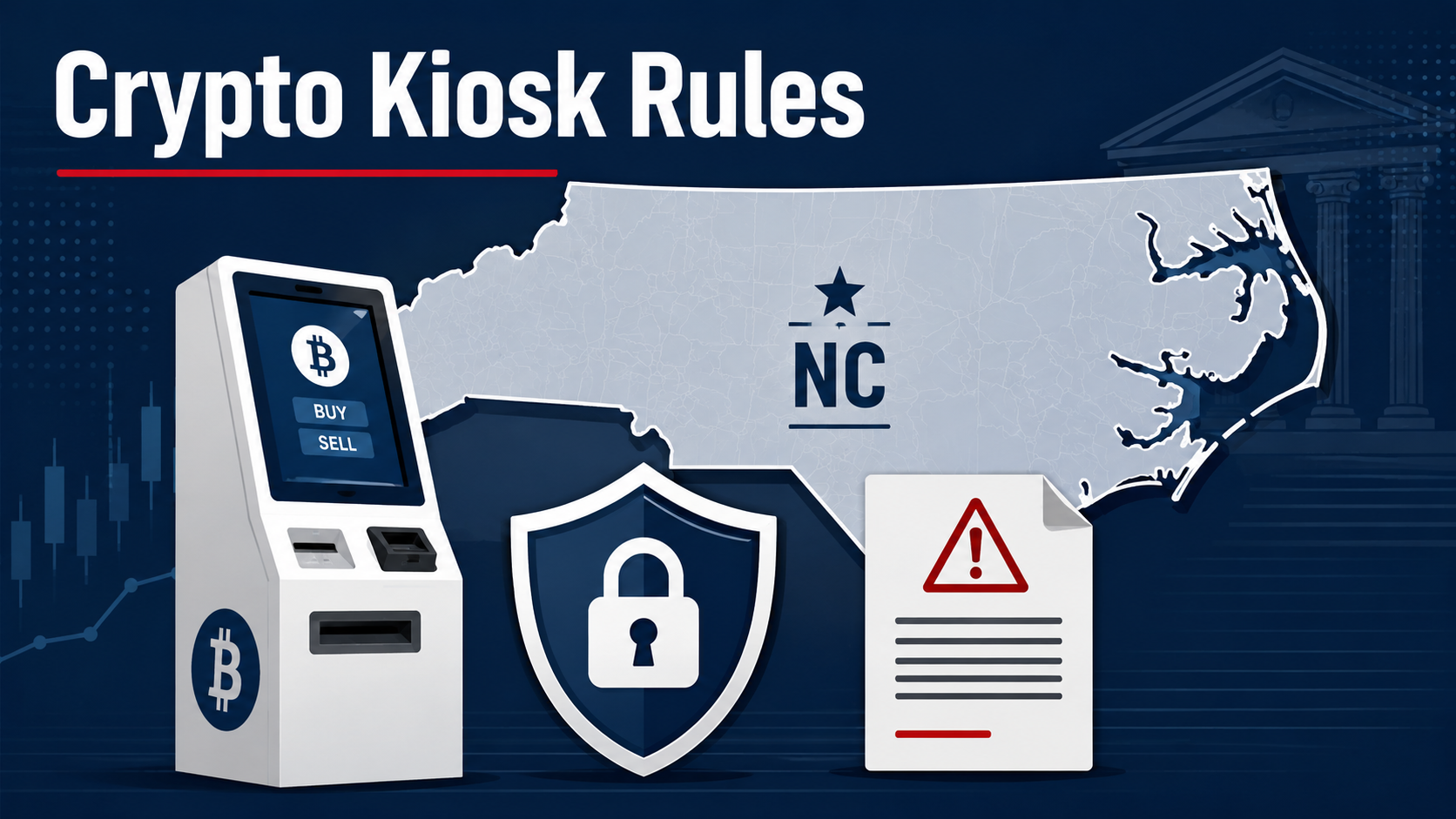
House Bill 920, titled the “Virtual Currency Kiosk Consumer Protection Act,” appears on the Senate Finance Committee agenda and the Senate Rules and Operations agenda for June 30, according to the North Carolina General Assembly legislative calendar. The bill would create a new article in Chapter 53 of the General Statutes regulating virtual currency kiosk operators in North Carolina.
The bill defines a virtual currency kiosk as an automated machine that enables the transfer of fiat currency to a public key recorded on a blockchain. It also defines virtual currency kiosk operators and places oversight authority with the North Carolina Commissioner of Banks.
The proposed law would require kiosk operators to make several disclosures before transactions, including material risks associated with virtual currency. The bill text states that customers must be told virtual currency is not legal tender, is not backed by government and may not be protected by federal deposit or securities insurance programs. It also notes that virtual currency transactions may be irreversible.
The bill includes an interactive fraud-screen requirement. Before completing a transaction, kiosks would have to display warnings about common scams, including someone pretending to be a bank, software provider, romantic interest, police officer, government agency, utility, investment adviser or legal official. If a customer says the fraud warning applies, the transaction would be stopped and the customer’s account, wallet address, phone number or other unique identifier would be disabled for at least 24 hours.
The bill would also ban QR code or scan-based login methods, require physical written receipts unless a customer requests an electronic receipt, require blockchain analytics software, require live customer service when kiosks are available for public use, and require anti-fraud and compliance policies.
House Bill 920 would impose daily transaction limits of $2,000 for new virtual currency customers and $5,000 for existing customers. It also includes refund provisions for certain fraudulent transactions reported to the Commissioner within 30 days and caps aggregate fees and charges, including spread, at 14% of the dollar equivalent of the transaction.
Editor’s note: This article was drafted with the assistance of artificial intelligence and was reviewed and fact-checked by a member of the NC Political News editorial team before publication.