
Stein points to overdose death decline while pushing opioid treatment, fentanyl enforcement funding
RALEIGH, N.C. — Gov. Josh Stein is pointing to a reported decline in overdose deaths in North Carolina while calling for additional state funding for opioid treatment and fentanyl enforcement.
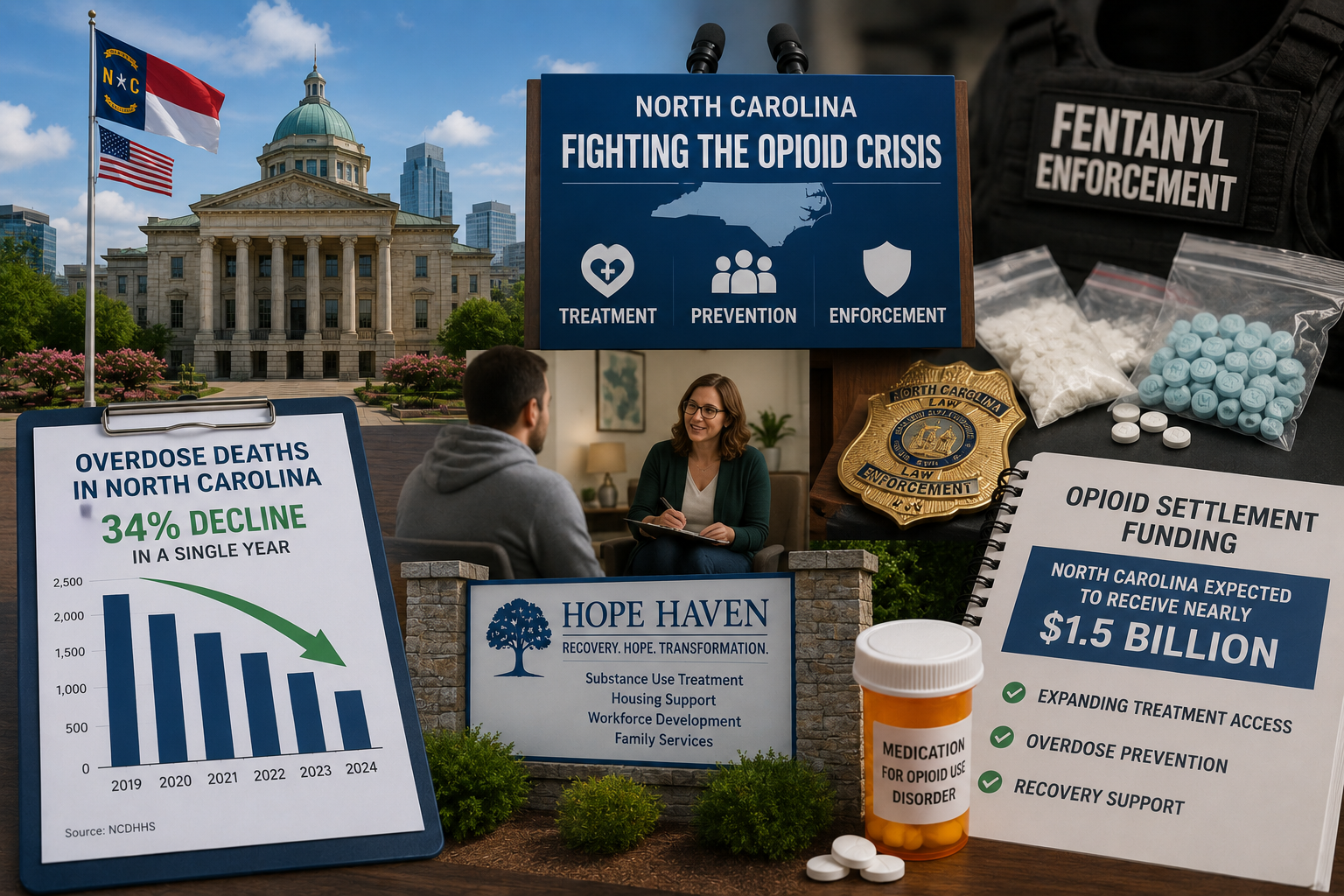
Stein visited Hope Haven, a substance abuse rehabilitation center in Charlotte, on Monday to highlight the use of opioid settlement funds in recovery and overdose prevention work, according to the governor’s office.
“Every life we lose to an overdose is one life too many,” Stein said in a statement. “We’ve made progress working in a bipartisan way to treat addiction here in North Carolina, and I thank organizations like Hope Haven that are doing that work.”
Stein also said the state needs to focus on the supply of illegal drugs, including fentanyl.
“My budget would support state and local law enforcement and create a Fentanyl Control Unit that would further crack down on drug traffickers so fewer families would suffer these tragic losses,” Stein said.
The governor’s office said Hope Haven provides residential and community-based services for people and families affected by substance use disorder, homelessness and economic instability. The organization’s services include counseling, workforce development, parenting education, housing support and long-term recovery services.
Anthony T. Jones, president and CEO of Hope Haven, said opioid settlement funding is helping expand recovery work in Mecklenburg County.
“Hope Haven is using opioid settlement funds to build a stronger recovery system in Mecklenburg County — expanding services, saving lives, and ensuring people have real pathways to long-term recovery,” Jones said.
The governor’s office said North Carolina saw a 34% decline in overdose deaths in a single year, the first decline since 2019. The release cited NCDHHS for the figure.
Stein’s office said his recommended budget for fiscal year 2026-27 would expand medication treatment for opioid use disorder in correctional institutions and create a Fentanyl Control Unit. The budget also proposes stabilizing VIPER network funding for first responder communications, creating a real-time threat alerting platform and providing raises for state law enforcement officers.
The opioid settlement money referenced by the governor stems from national litigation against opioid manufacturers, distributors and pharmacies. The governor’s office said North Carolina is expected to receive nearly $1.5 billion from those settlements.
The proposals still depend on the state budget process. The General Assembly writes the state budget, and lawmakers may accept, reject or alter the governor’s recommendations.
Editor’s note: This article was drafted with the assistance of artificial intelligence and was reviewed and fact-checked by a member of the NC Political News editorial team before publication.