Stein signs public safety, housing and state workforce bills
The four new laws address gang activity, involuntary commitment, parking requirements, stormwater incentives and state government employment.
RALEIGH — Gov. Josh Stein signed four bills into law Monday, approving measures that affect criminal gang laws, the state’s involuntary commitment system, housing development rules and state government employment policy.
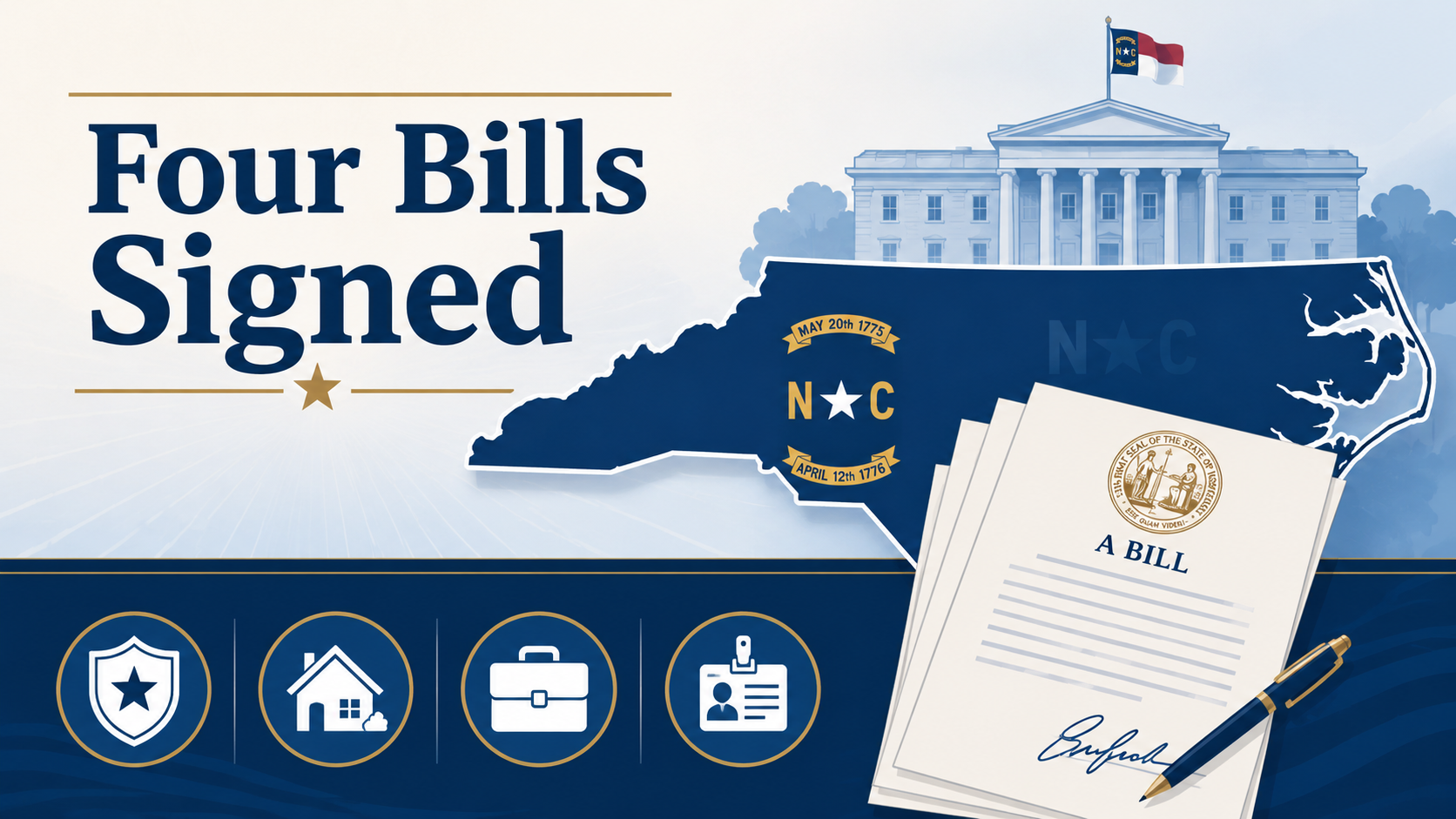
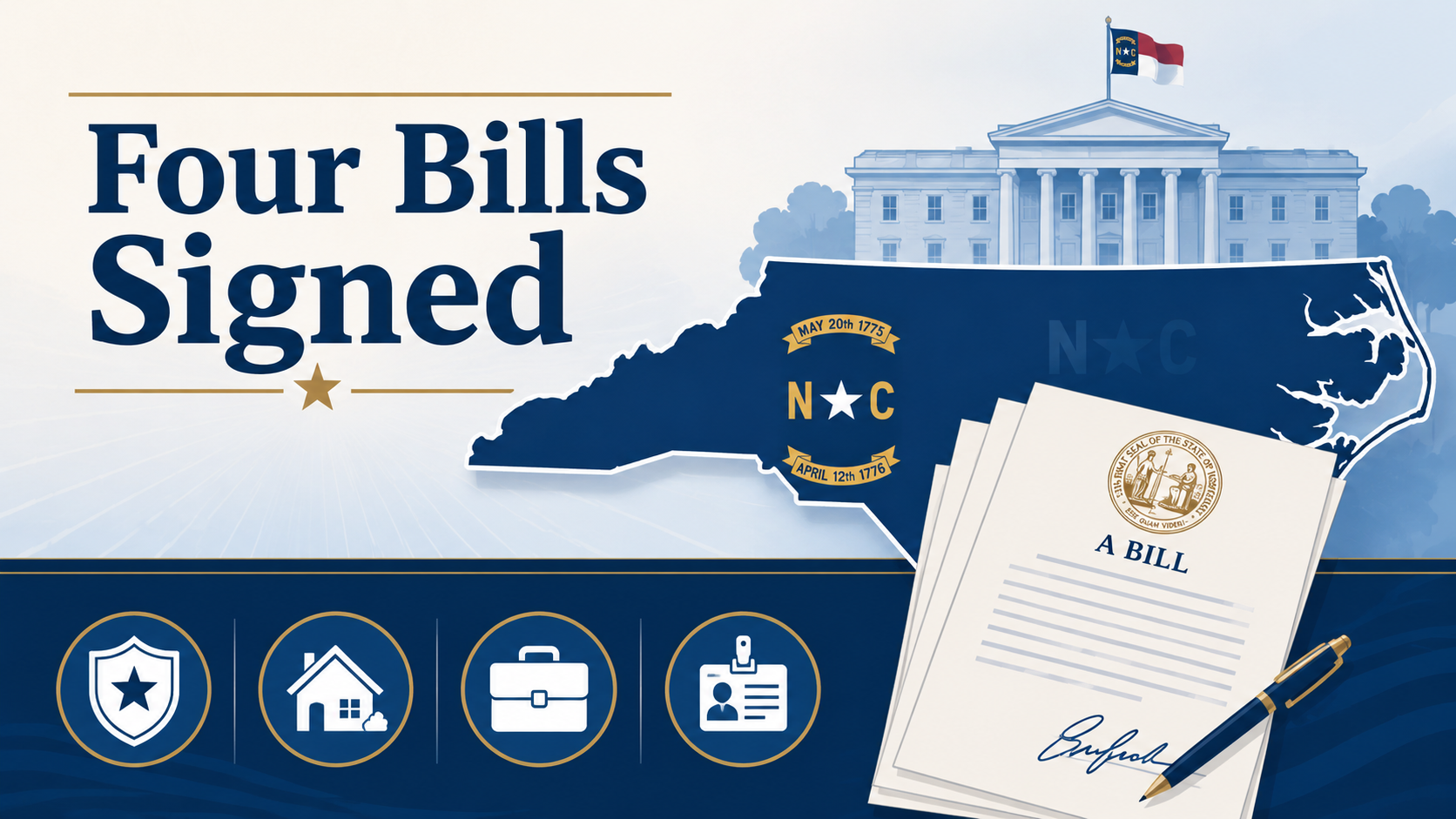
The bills signed were House Bill 1173, “Jaleeyah’s Law”; House Bill 1104, “Improve IVC Process and Enhance Public Safety”; House Bill 162, “Parking Lot Reform/Stormwater Control”; and Senate Bill 1041, the “Public Workforce Modernization Act.” The Governor’s Office announced the bill actions July 6.
House Bill 1173, titled “Jaleeyah’s Law,” deals with crimes, criminal procedure, gangs, organized crime, sentencing, weapons, courts and district attorneys, according to the General Assembly bill page. The bill passed the Senate 44-5 on June 30 and had previously passed the House 111-2 on second reading. It was ratified July 2 and presented to the governor July 6.
Stein said he signed the bill in memory of Jaleeyah Tune and said the state must address the root causes of gang violence while cracking down on gang activity to protect residents.
House Bill 1104 changes parts of the state’s involuntary commitment and public safety process. The bill page lists affected areas including courts, DHHS, hospitals, law enforcement, mental health, sheriffs, social services, telemedicine and studies. It passed a House concurrence vote 105-10 on July 1, was ratified July 2 and was presented to the governor July 6.
Stein said the bill strengthens outpatient commitment, connects defendants to treatment so they may stand trial and requires additional studies on telehealth, mobile crisis units, examiner training and data sharing. He also said the recently passed budget does not provide enough funding to support the bill’s goals.
House Bill 162, “Parking Lot Reform/Stormwater Control,” affects local government, planning and zoning, construction, utilities, water and sewer systems, property and parking, according to the bill page. The House concurred in the Senate committee substitute 111-2 on June 30. The bill was ratified July 1 and presented to the governor July 2.
Stein said the measure eliminates mandatory minimum parking spaces based on occupancy in most counties and allows local governments to offer voluntary stormwater control incentives.
Senate Bill 1041, the “Public Workforce Modernization Act,” is a broad state personnel bill. The General Assembly bill page lists it as a public bill containing appropriations and local appropriations. It affects numerous areas of state law, including state personnel, education, community colleges, universities, public health, retirement, transportation, ethics, state agencies and information technology. The Senate concurred in House amendments 47-0 on July 1, and the bill was ratified July 2 and presented to the governor July 6.
Stein said the workforce bill modernizes state human resources, makes it easier to apply for state jobs, creates work-based learning opportunities, helps spouses of service members find jobs in state government and expands paid parental leave for state employees to 12 weeks.
Editor’s note: This article was drafted with the assistance of artificial intelligence and was reviewed and fact-checked by a member of the NC Political News editorial team before publication.