Education workers will leap to the head of the line for COVID-19 vaccines on Feb. 24. More than a million seniors are still waiting for their first dose.

All in Health
Education workers will leap to the head of the line for COVID-19 vaccines on Feb. 24. More than a million seniors are still waiting for their first dose.
Today Governor Roy Cooper and North Carolina Department of Health and Human Services Secretary Mandy K. Cohen, M.D. outlined a timeline for Group 3 frontline workers becoming eligible to receive the Covid-19 vaccine, beginning with anyone working in child care or in PreK – 12 schools on February 24.
North Carolinians have protected themselves and their loved ones from the flu along with COVID-19 by taking preventative measures such as wearing a mask, staying 6 feet apart from people who do not live with them, and frequently washing their hands or using hand sanitizer.
After a slow start, North Carolina is ramping up its COVID-19 vaccinations. Some 9.2% of residents got the first shot of COVID-19 vaccines by Monday, Feb. 8, when 970,162 people had received a first dose, according to the N.C. Department of Health and Human Services. Two days earlier, an average 8.6% of COVID-19 tests came back positive.
The North Carolina Department of Health and Human Services released new tools to help North Carolinians get their COVID-19 vaccine questions answered and to find vaccine locations in the state.
The North Carolina Department of Health and Human Services will kick off a new live stream talk series to address and provide updates on the state’s COVID-19 vaccination plan on Feb. 2 at 5:30 p.m.
On January 27, North Carolina reported administering 99% of its first doses of COVID-19 vaccine, and as of this morning the Centers for Disease Control and Prevention ranks the state as 6th in the nation for total doses administered, 12th for first doses administered per 100,000 people, and 17th for total doses administered per 100,000 people.
On January 27th,, dedicated health care advocates from across North Carolina announced they have joined forces to create North Carolina for Better Medicaid (NCBM), a coalition of Medicaid and Medicaid Managed Care champions.
University of North Carolina System President Peter Hans will overhaul the standards for creating new degree programs. Campuses will now weigh the public interest when adding the programs — and decide whether the degrees help students find work and repay their debt.
The North Carolina Department of Health and Human Services has expanded its vaccine data dashboard to provide information about vaccine doses promised to and received by the state. Users also will be able to see the percent of doses received that have been administered. Today’s dashboard shows 95% of all first doses have been reported as being administered and 812,586 total doses have been administered.
RALEIGH — The North Carolina Department of Health and Human Services is reporting the first identification in a North Carolina resident of the COVID-19 variant called B.1.1.7, which was first detected in the United Kingdom in December. The B.1.1.7 variant was identified in a sample from an adult in Mecklenburg County processed by Mako Medical Laboratories. To protect the privacy of the individual, no further information will be released.
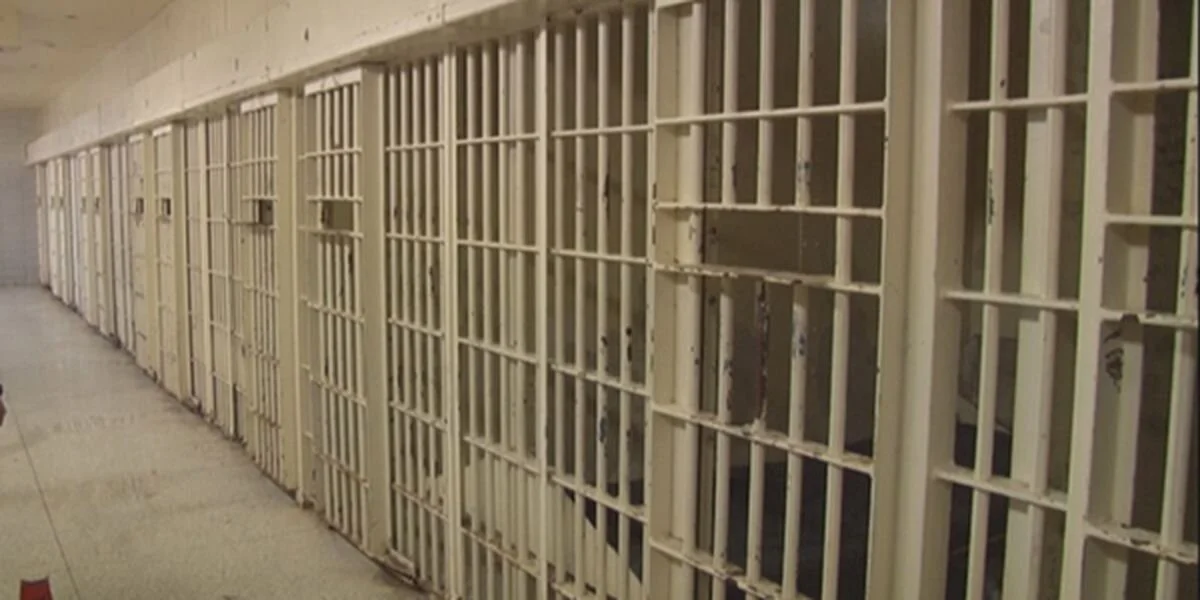
Around 1,000 of the 1,300 vaccines allocated for the prison system this week have arrived, and the rest of the week’s allocation is expected to arrive and be distributed within days. This week’s allocation is the Moderna vaccine.
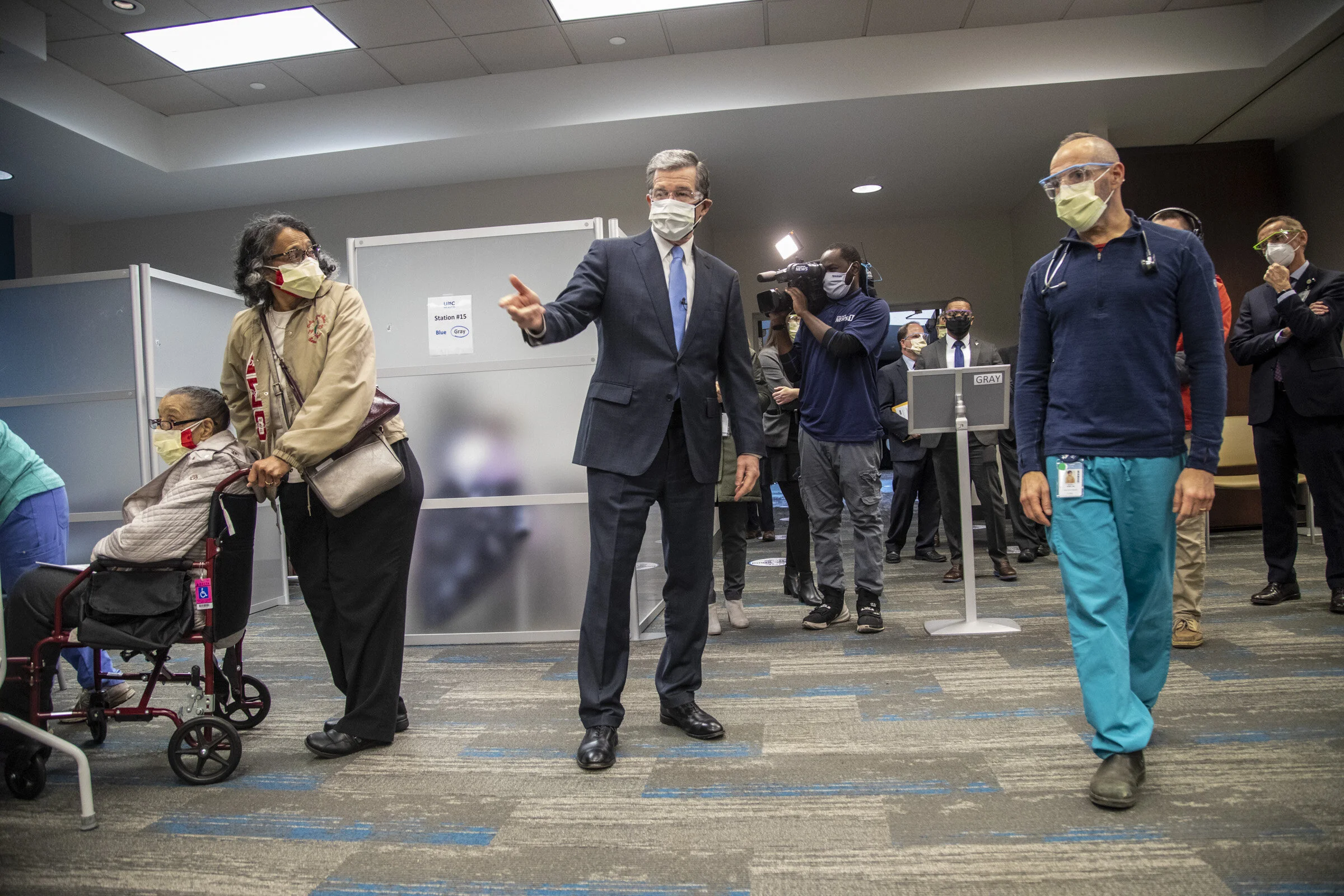
Governor Roy Cooper and North Carolina Department of Health and Human Services (NCDHHS) Secretary Dr. Mandy Cohen visited a large-scale vaccine site at UNC-Chapel Hill’s Friday Conference Center to witness health care workers and North Carolinians over age 65 receive the COVID-19 vaccine.
The North Carolina Department of Health and Human Services announced today that vaccine providers that are ready to expand may vaccinate all health care workers and anyone 65 years and older.
The North Carolina Department of Health and Human Services is partnering with health systems, local health departments and community health centers across the state to host large community vaccine events for people currently eligible to be vaccinated. More than 45,000 vaccines are expected to be given through these events.
Transmission of the COVID-19 virus has been “extremely limited” in public schools that have reopened in North Carolina, a team of researchers from Duke University and UNC-Chapel Hill have found.
On Jan. 1, 2021, North Carolina reported its highest one-day number of COVID-19 cases with 9,527 new cases reported, exceeding the state’s previous highest day set on Dec. 18, 2020 by more than 1,000. Cases remained high today, Jan. 2, with 9,356 new cases reported.
The North Carolina Department of Health and Human Services announced it had updated its vaccination plan to align with new federal recommendations issued last week. The changes simplify the vaccine process and continue the state’s commitment to first protect health care workers caring for patients with COVID-19, people who are at the highest risk of being hospitalized or dying, and those at high risk of exposure to COVID-19.
The North Carolina Department of Health and Human Services recently received approval to use federal matching funds to expand services for the evidence-based early childhood program, Reach Out and Read. Research shows that children who Reach Out and Read have improved literacy and language comprehension, and clinics have improved patient-clinician relationships and well-child visit attendance. This partnership with Reach Out and Read is one of the first in the country among Medicaid programs.
Lawmakers are fighting to help small businesses afford health insurance, but they’re running out of time. As the pandemic and the shutdowns wreck the economy, thousands of North Carolinians continue to lose their insurance. North Carolina has nearly 1.2 million uninsured residents.