The North Carolina Department of Health and Human Services will host a live fireside chat and tele-town hall on Jan. 20 from 6 to 7 p.m. to discuss COVID-19 vaccines, boosters, testing and more.

All in Health
The North Carolina Department of Health and Human Services will host a live fireside chat and tele-town hall on Jan. 20 from 6 to 7 p.m. to discuss COVID-19 vaccines, boosters, testing and more.
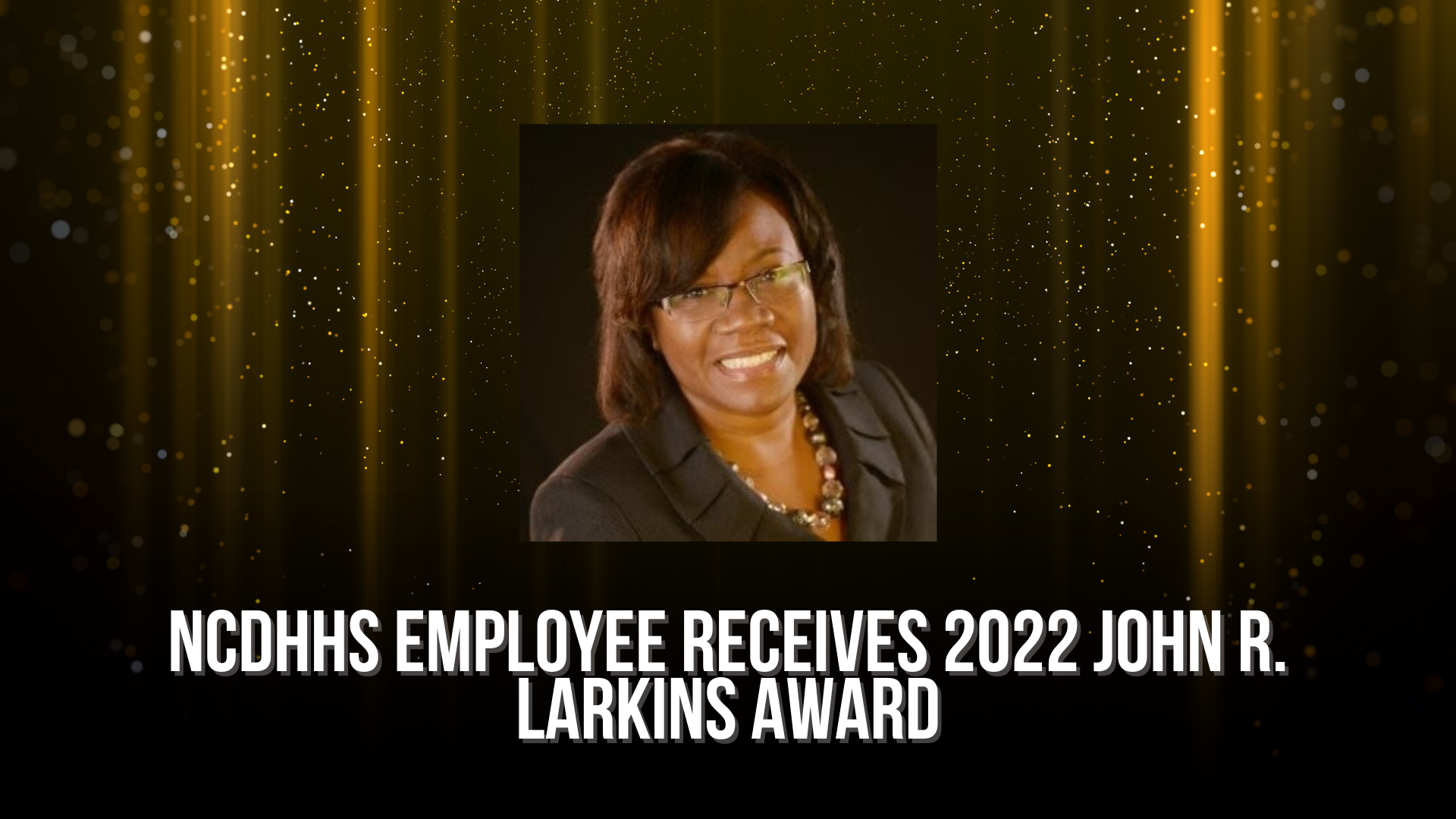
Debra Farrington, chief of staff for NC Medicaid, was honored today as the recipient of the 2022 John R. Larkins Award.
In the face of nationwide competition for testing supplies and shortages of testing staff, the North Carolina Department of Health and Human Services is pulling all available levers to support existing testing sites, to open more sites across the state and to increase access to at-home collection kits.
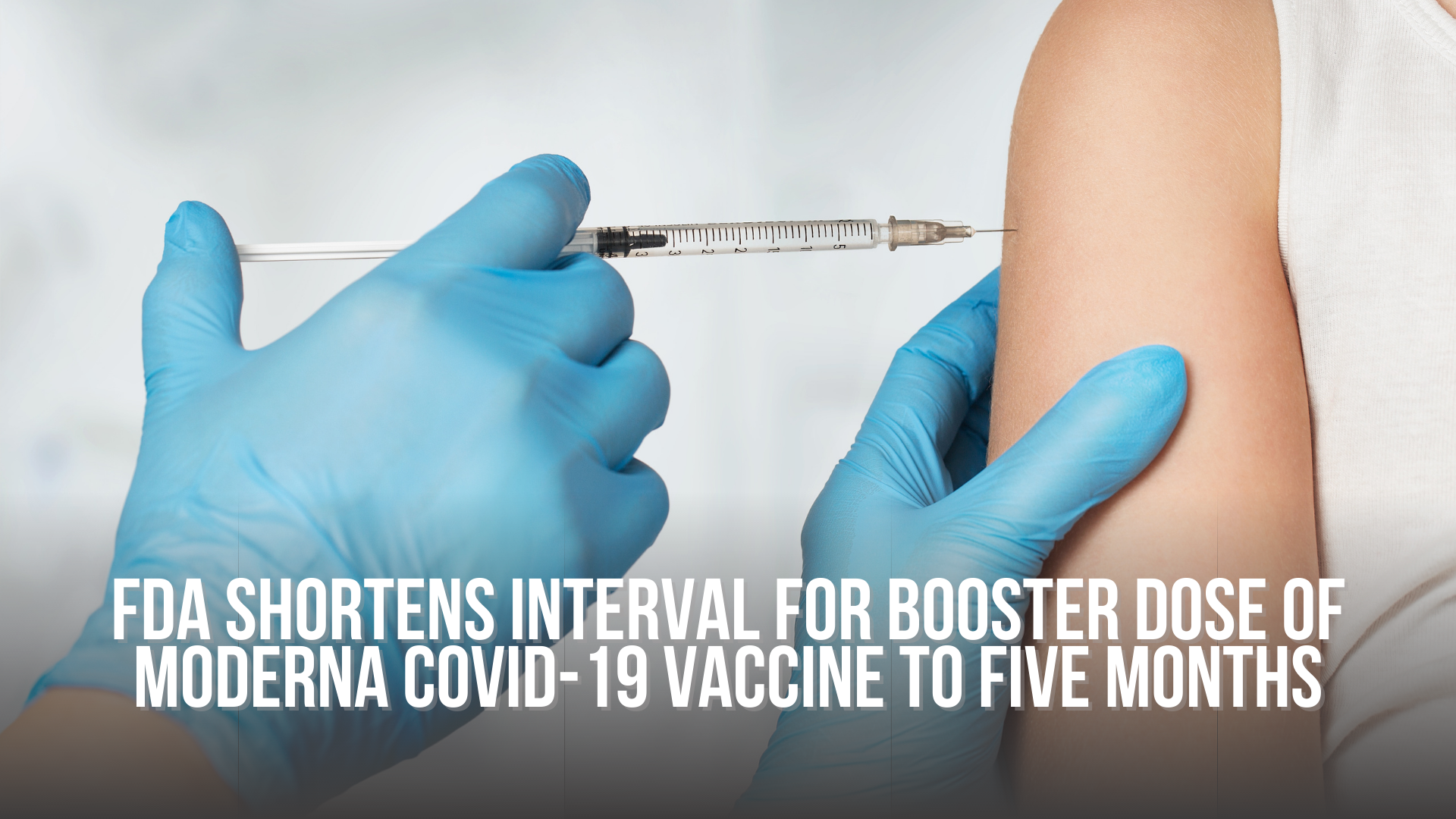
The FDA now authorizes and the Centers for Disease Control and Prevention recommends individuals who received the Moderna COVID-19 vaccine get a booster dose after five months. This announcement from federal agencies comes just three days after the announcement of a shortened wait time for a booster from six months to five months for individuals who received the Pfizer vaccine.
With COVID-19 cases reaching pandemic highs, the North Carolina Department of Health and Human Services urges K-12 schools to promote vaccination and boosters for students and staff and require students and staff wear masks indoors to keep students in the classroom and limit the risk of COVID-19 transmission.
The U.S. Food and Drug Administration amended the emergency use authorization (EUA) for the Moderna COVID-19 Vaccine to shorten the time between the completion of a primary series of the vaccine and a booster dose to at least five months for individuals 18 years of age and older.
Supreme Court of North Carolina Chief Justice Paul Newby has proclaimed January 2022 as Human Trafficking Awareness Month in the Judicial Branch by way of a judicial order.
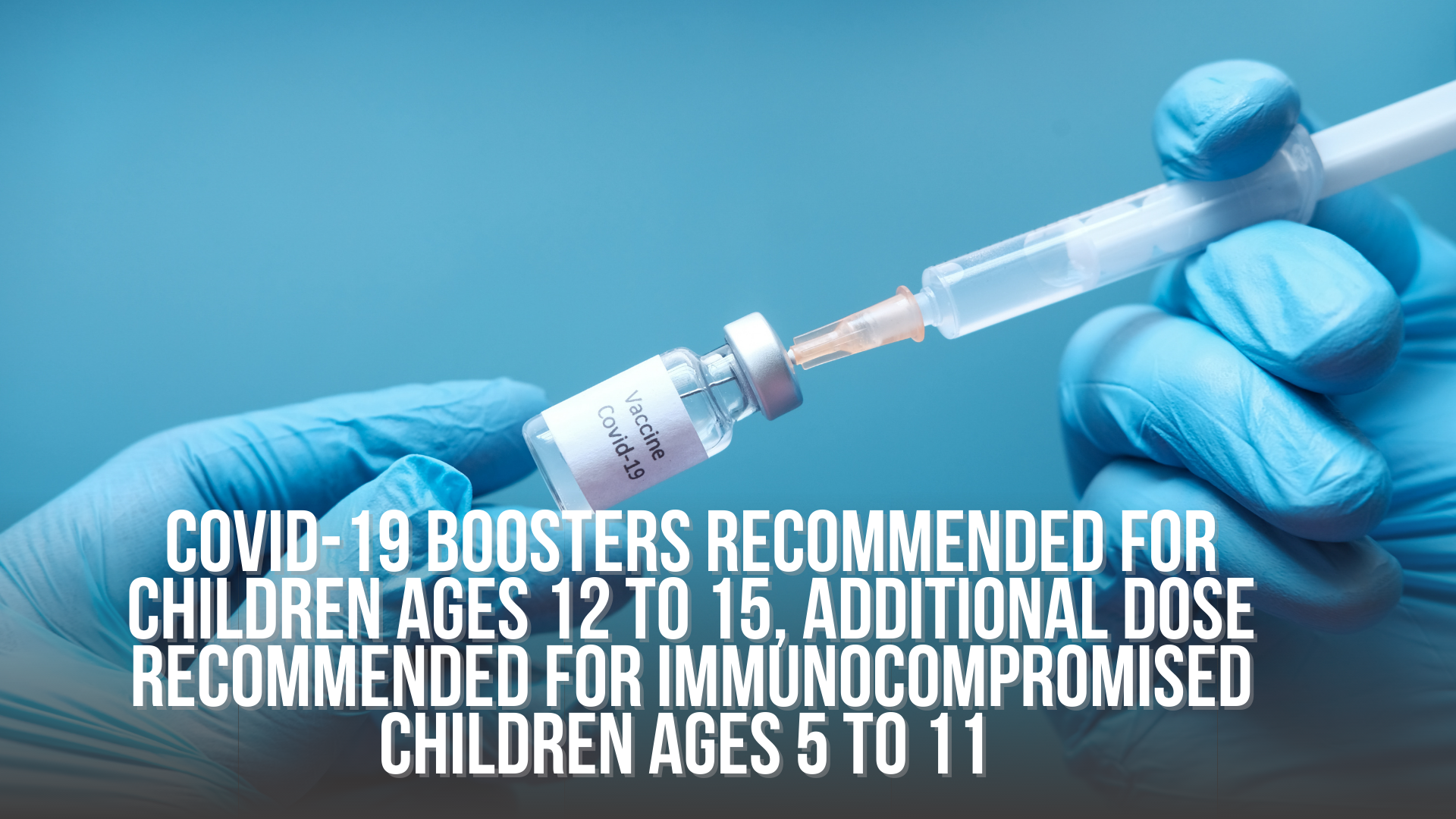
The Centers for Disease Control and Prevention yesterday announced it recommends the Pfizer COVID-19 booster for children ages 12 to 15 to further protect them from COVID-19. The CDC also recommends a third dose of Pfizer for children ages 5 to 11 who have compromised immune systems.
Gov. Roy Cooper on Tuesday, Jan. 4, said health experts, doctors, and scientists are learning more about COVID-19, and state officials and politicians are using that knowledge to keep schools open and to avoid more onerous shutdowns and suppressions.
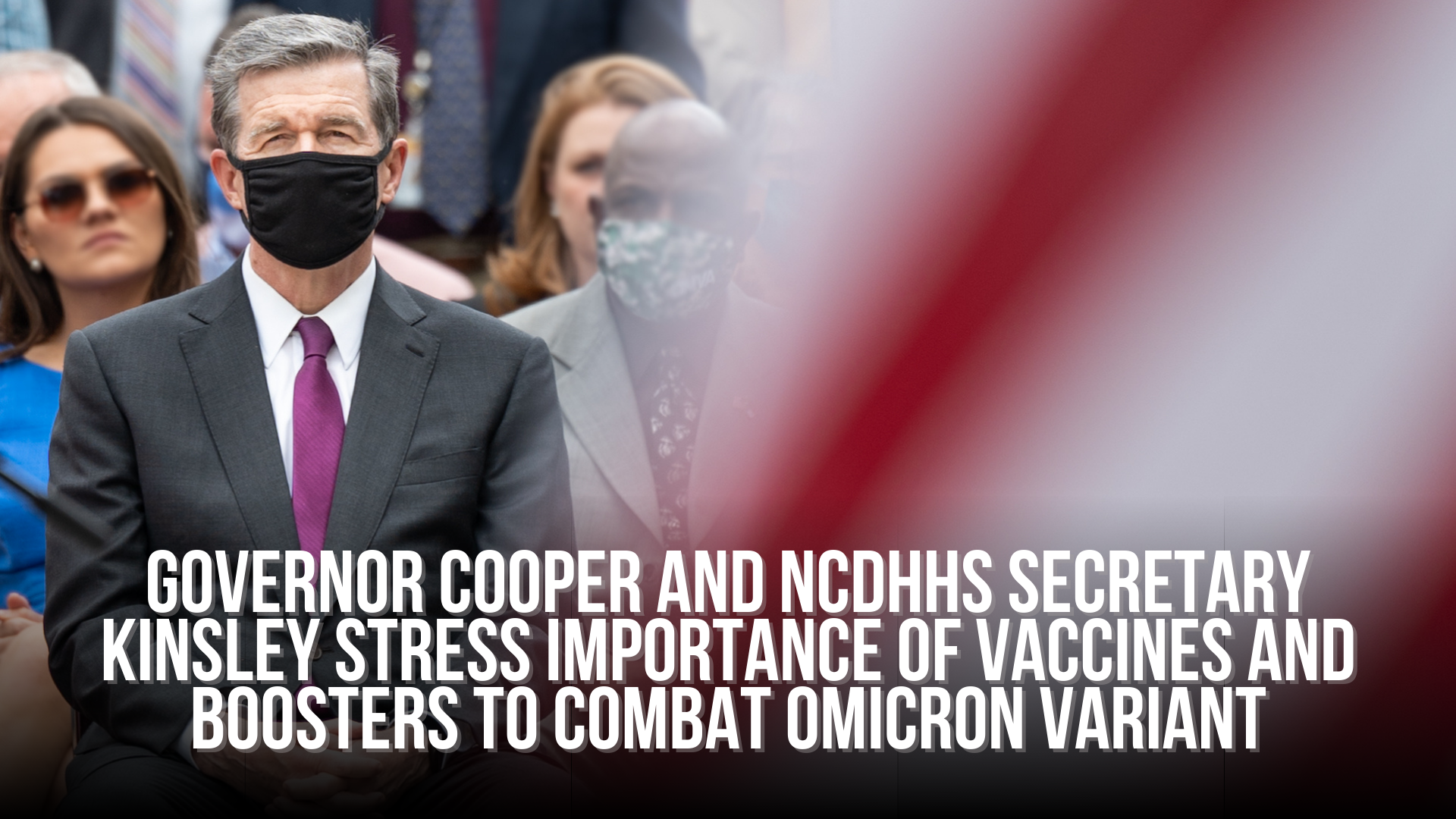
With cases of COVID-19 reaching record highs and hospitalizations increasing, Governor Roy Cooper and North Carolina Department of Health and Human Services Secretary Kody H. Kinsley called on all North Carolinians to get vaccinated and get a booster as soon as they are eligible to protect themselves from severe illness from the highly contagious Omicron variant of COVID-19.
With hospitalizations due to COVID-19 rising, getting a booster of the COVID-19 vaccine remains the most important thing North Carolinians can do to keep themselves and their loved ones out of the hospital, officials with the North Carolina Department of Health and Human Services today announced.
The U.S. Food and Drug Administration issued an emergency use authorization (EUA) for Pfizer’s Paxlovid (nirmatrelvir tablets and ritonavir tablets, co-packaged for oral use) for the treatment of mild-to-moderate coronavirus disease (COVID-19) in adults and pediatric patients (12 years of age and older weighing at least 40 kilograms or about 88 pounds) with positive results of direct SARS-CoV-2 testing, and who are at high risk for progression to severe COVID-19, including hospitalization or death
A state senator is drawing attention to the new N.C. state budget's measures to fight human trafficking.
Health experts are warning that the highly contagious COVID-19 variant, Omicron, is expected to cause the greatest surge in COVID-19 infections to date in the coming months. The CDC and NCDHHS urge people to get vaccinated with an mRNA vaccine (Pfizer or Moderna) as soon as possible and to get a booster as soon as they are eligible to help prevent serious illness, hospitalization and death.
Governor Roy Cooper and North Carolina Department of Health and Human Services Secretary Mandy K. Cohen, M.D. provided an update on the state’s COVID-19 key metrics and trends.
Programs that provide overdose prevention and syringe access are serving more people and potentially saving more lives, according to the 2020-2021 North Carolina Safer Syringe Initiative Annual Report released by the North Carolina Department of Health and Human Services.
In order to better reach those with substance use disorders, the North Carolina Department of Health and Human Services is awarding $4.4 million in funding for 15 mobile units to provide screening, assessment, treatment, primary care and recovery support services.
Governor Roy Cooper and North Carolina Department of Health and Human Services Secretary Mandy K. Cohen, M.D. provided an update on the state’s COVID-19 key metrics and trends.
Rep. Greg Murphy, M.D. (NC-03) led a letter with members of the House GOP Doctors Caucus pressuring the Biden Administration to address the surge in fentanyl drug overdose deaths as a result of the crisis at the Southern Border.
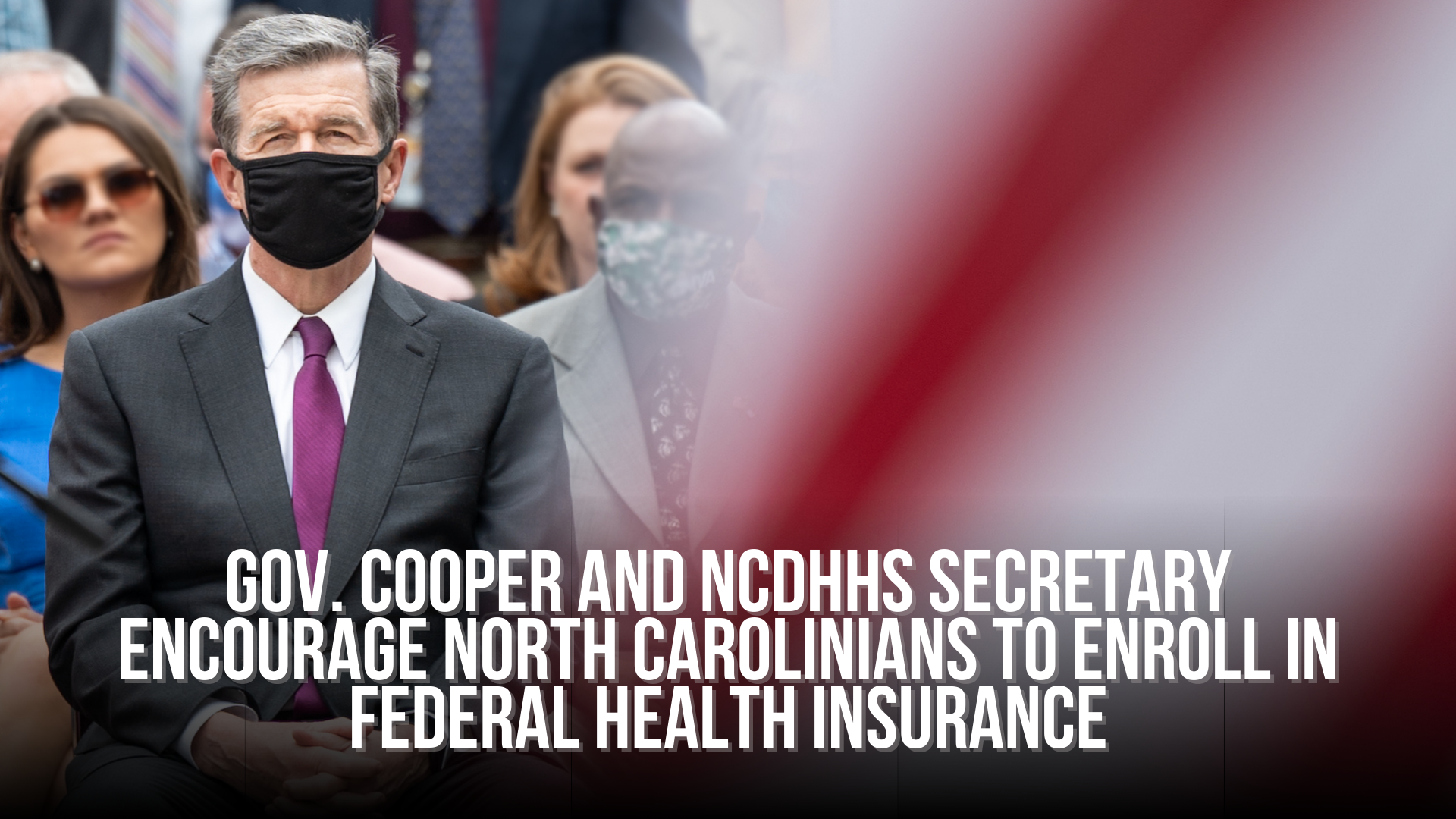
Governor Roy Cooper and North Carolina Department of Health and Human Services Secretary Mandy K. Cohen, M.D., today highlighted changes in federal law that make obtaining insurance through the federal Health Insurance Marketplace more affordable and available to more than 100,000 additional people in the state.