With nearly $22 billion of clean energy investments unveiled across North Carolina, 2024 marks a significant milestone in the state’s energy leadership.
All in Opinion
With nearly $22 billion of clean energy investments unveiled across North Carolina, 2024 marks a significant milestone in the state’s energy leadership.
I was disappointed to see both candidates in the recent presidential debate fail to discuss what was among the most important questions: how they would handle the mounting national debt.
As a business owner, I know a thing or two about competition. Achieving success requires a sense of mission, wisdom, effective management, and – most importantly – dedicated employees.
Inflation has left many North Carolinian families to make difficult short-term spending decisions, but what about long-term financial planning, like retirement?
RALEIGH — As we once again celebrate our country’s birthday, might I suggest we spare a moment to consider our state’s role in the dramatic story of American independence?
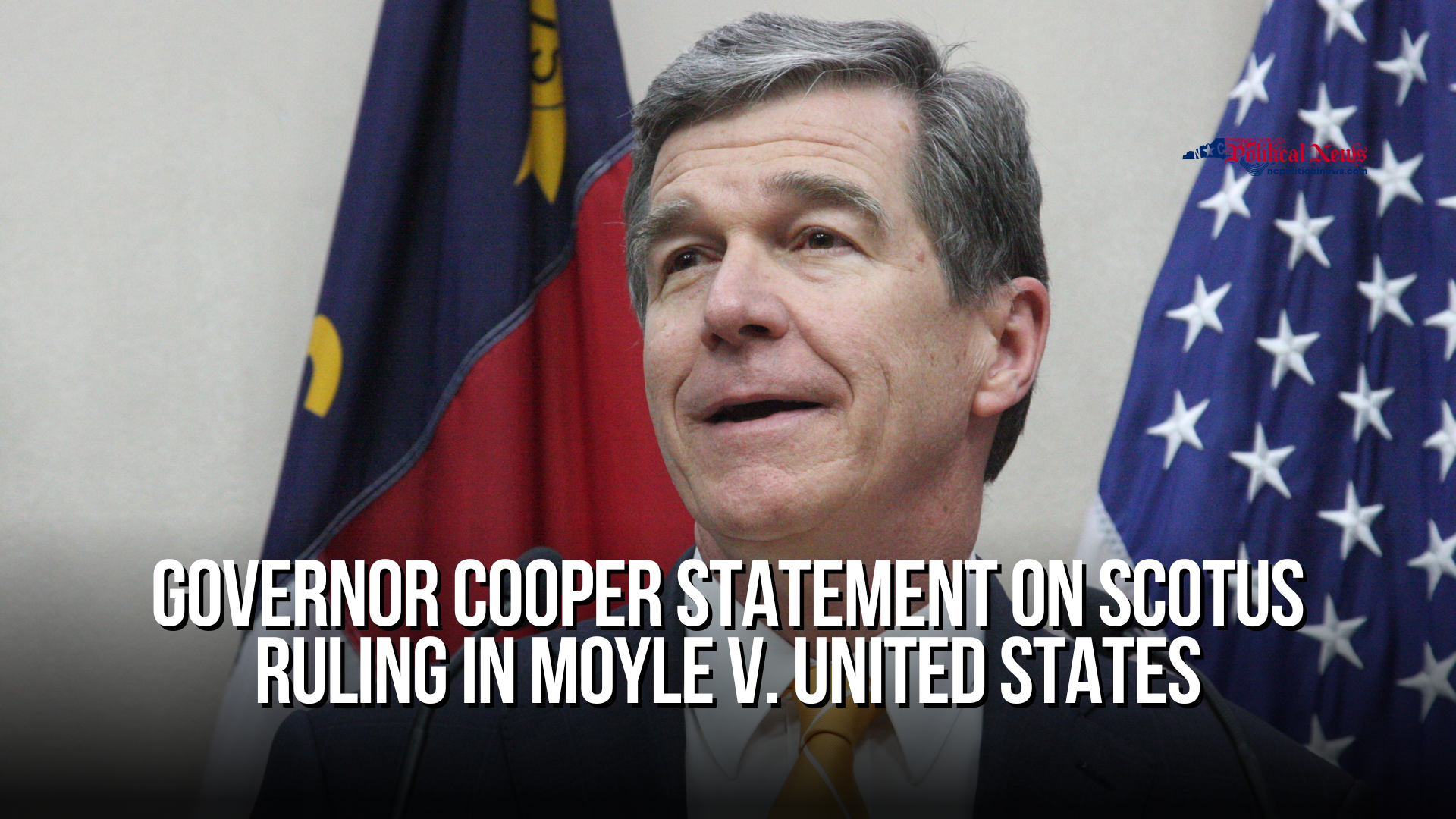
Governor Roy Cooper issued the following statement on the Supreme Court’s decision in Moyle v. United States:
RALEIGH — North Carolina’s private sector lost an eye-popping 414,000 jobs in the most-recent quarter tracked by the U.S. Bureau of Labor Statistics. Are we on the brink of economic cataclysm? Should you buy gold and head for the hills?
What does it mean to be free? Many seemingly intractable disputes about specific issues — ranging from welfare spending and school choice to abortion and alcohol policy — originate from the fact that people don’t answer this question in the same way. It’s hard to have a useful political conversation without a common political language.
RALEIGH — A little over a year ago, I penned a column using polling data to explore why North Carolinians appeared to favor Republicans over Democrats in generic-ballot tests.
“No, it isn’t just because of unfair redistricting,” I wrote. “Nor is it a lack of resources. North Carolina Democrats have raised and spent lots of money on races they still ended up losing. What I mean is that, on many of the public’s top concerns, Democrats lack credibility with the swing voters they need to prevail.”
I acknowledge that one politician’s “wasteful spending” may be another politician’s “strategic investment.” Still, I suspect state Sen. Phil Berger got it right when he blamed the slow start of this year’s budget negotiations on lawmakers’ lack of focus on truly state responsibilities.
Decisions about education are some of the most important decisions families – and therefore state leaders – make. Just as parents consider the many school choices available in North Carolina, lawmakers are making choices about where to put our taxpayer dollars to yield the best outcomes for our children.
Mark Maye and I made an excellent team back in the day. That “day,” I should add, was actually a few weeks in 1977. I was eleven. Mark was a bit older. He and I played together on a basketball team in Charlotte. We won every game. To be more precise, we dominated every game. There’s a reason my dresser subsequently featured a shiny basketball trophy.
RALEIGH — Donald Trump will likely win North Carolina’s 16 electoral votes this year. Our state is a political battleground, no question about it, but in presidential races the Democratic Party always runs a bit uphill here.
State and local governments annually collect tens of billions of dollars in taxes from North Carolinians. The total bill comes to an average of $5,300 per person per year.
North Carolina’s traditional public schools are represented by 115 county and city school districts. For almost 100 years since the Great Depression and the Machinery Acts of 1931 and 1933, the State of North Carolina has provided the preponderance of financial support for most of the public school employees in these school districts.
While some economic metrics continue to offer good news to North Carolinians, others point in a different direction. U.S. agricultural exports, for example, fell by $17 billion last year and appear to be on track for another decline of about $8 billion or so this year.
On May 23 the University of North Carolina System Board of Trustees voted to repeal its Diversity & Inclusion Policy in favor of “institutional neutrality.” This new policy, which was introduced in April, will remove funding for DEI offices and eliminate various diversity-related positions across the 17 UNC System schools. Chancellors will be required to report cuts to existing jobs and DEI spending by September 1.