State and local governments annually collect tens of billions of dollars in taxes from North Carolinians. The total bill comes to an average of $5,300 per person per year.
State and local governments annually collect tens of billions of dollars in taxes from North Carolinians. The total bill comes to an average of $5,300 per person per year.
A new statewide poll found overwhelming voter support across all political lines for greater energy competition, a regional free market for energy, and more renewable energy, including offshore wind.
North Carolina’s traditional public schools are represented by 115 county and city school districts. For almost 100 years since the Great Depression and the Machinery Acts of 1931 and 1933, the State of North Carolina has provided the preponderance of financial support for most of the public school employees in these school districts.
Unemployment rates (not seasonally adjusted) decreased in all 100 of North Carolina’s counties in April 2024.
On Wednesday and Thursday, Governor Cooper met with 14 companies in Switzerland as part of an economic development trip, including Syngenta, ABB and Novartis. He also met with the Director of the State Secretariat for Economic Affairs Secretary Helene Budliger Artieda.
The Republican-controlled Environmental Management Commission is stalling efforts to regulate PFAS in North Carolina while members of the Commission own stock in companies that lobbied against PFAS regulation. The Commission is responsible for adopting rules for the “protection, preservation, and enhancement of the water and air resources of the State.”
While some economic metrics continue to offer good news to North Carolinians, others point in a different direction. U.S. agricultural exports, for example, fell by $17 billion last year and appear to be on track for another decline of about $8 billion or so this year.
Senate Transportation Committee Chairs Sens. Michael Lazzara (R-Onslow), Tom McInnis (R-Moore), and Vickie Sawyer (R-Iredell) released the following joint statement on Gov. Roy Cooper’s veto of House Bill 198, “DOT Legislative Changes.-AB”:
Governor Roy Cooper vetoed the following bill: House Bill 198: DOT Legislative Changes.-AB, AN ACT TO MAKE CHANGES TO TRANSPORTATION LAWS, AS RECOMMENDED BY THE DEPARTMENT OF TRANSPORTATION.
On May 23 the University of North Carolina System Board of Trustees voted to repeal its Diversity & Inclusion Policy in favor of “institutional neutrality.” This new policy, which was introduced in April, will remove funding for DEI offices and eliminate various diversity-related positions across the 17 UNC System schools. Chancellors will be required to report cuts to existing jobs and DEI spending by September 1.
North Carolina House Leadership filed House Bill 1074, to ensure citizens-only voting in North Carolina.
RALEIGH: Governor Cooper and a delegation of state officials will travel to Europe on an economic development trip from May 24-31. The Governor and state officials will meet with companies and government officials in France, Germany and Switzerland and will focus on investment opportunities and job creation in North Carolina.
North Carolina is a diverse state and that diversity is our strength. It is troubling to see the continued politicization of important state institutions, particularly higher education.
Billy Graham was known the world over—not bad for a Southern Baptist preacher from North Carolina. Many of us feel some connection with the famed evangelist either directly or indirectly.
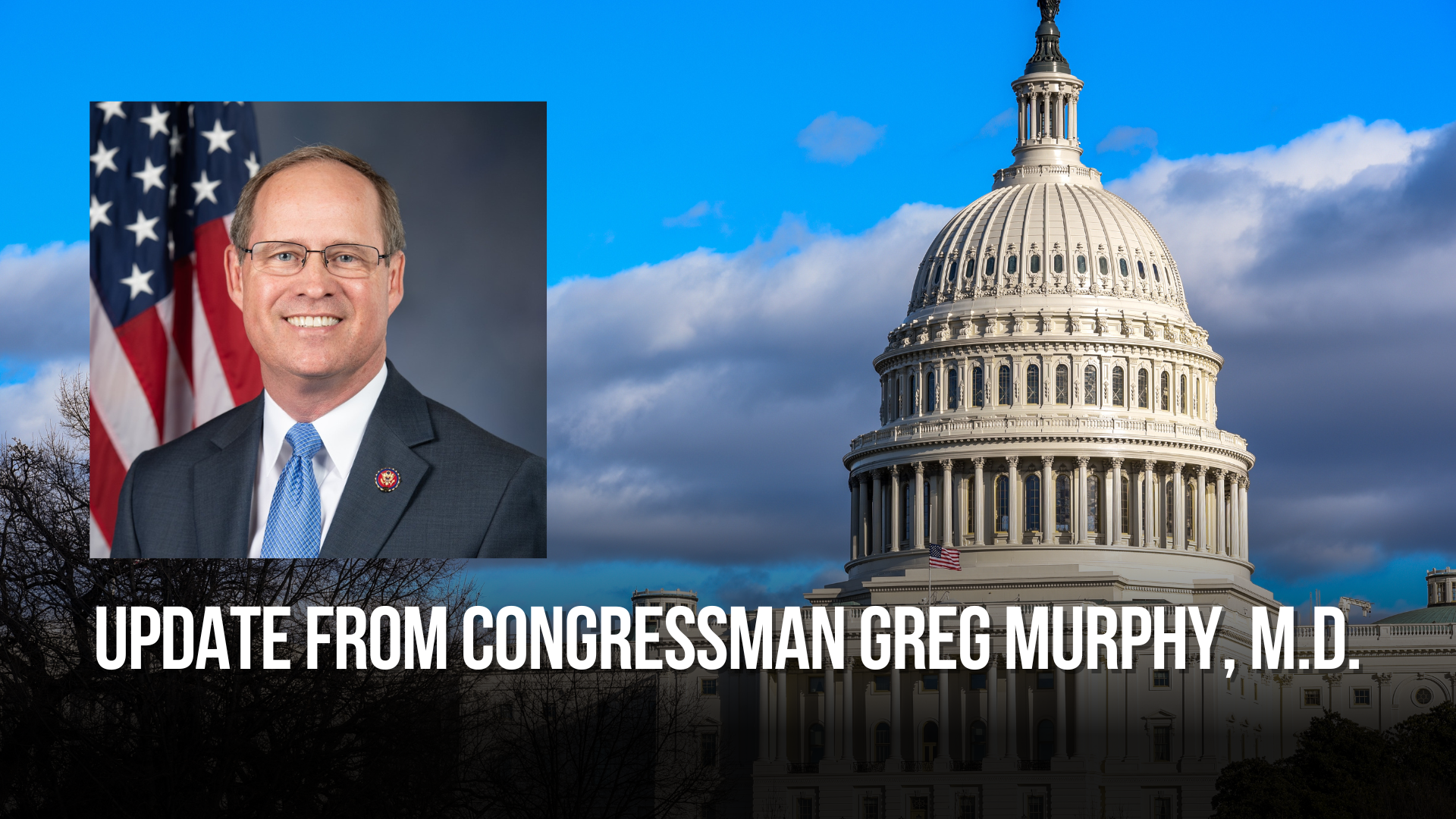
Washington, D.C. — Congressman Greg Murphy, M.D. issued the following statement: "As a physician I have, for the last 30 years, taken care of thousands and thousands of patients. It is now my turn to be one.”
In 1993 Robeson County residents had a median income of approximately $21,000. Respectively, in 2022, residents of Robeson County, NC had a median income of approximately $35,000. This is the county I grew up in and this county remains one one of North Carolina's poorest counties.
The state’s seasonally adjusted April 2024 unemployment rate was 3.5 percent, unchanged from March’s revised rate. The national rate increased 0.1 of a percentage point to 3.9 percent.
As inflation squeezes our wallets, concerns over the cost of healthcare loom large for North Carolina families. A recent survey showed that 54% of state residents worry about affording medications, with nearly a third resorting to skipping doses or refusing to fill prescriptions to save money.
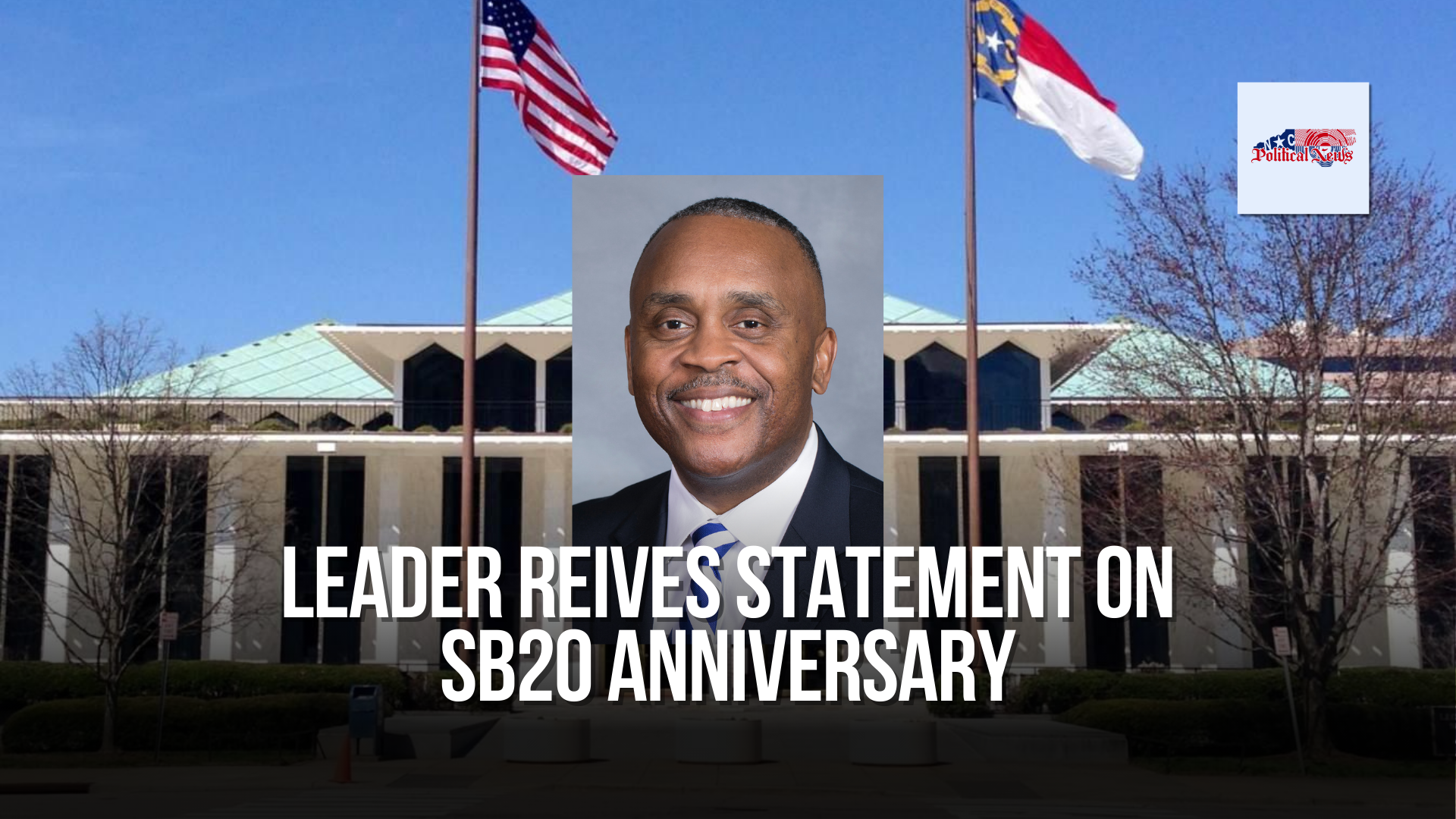
“Today marks one year in North Carolina since Republican leaders stripped women of their fundamental right to bodily autonomy. SB20 was the first step toward a full abortion ban, and North Carolinians should have no doubt about it," House Democratic Leader Robert Reives said.