A state commission created to modernize North Carolina’s election data systems is now laying out what a replacement for the state’s aging campaign finance reporting process should look like, an early step in what could become a broader transparency and compliance overhaul.
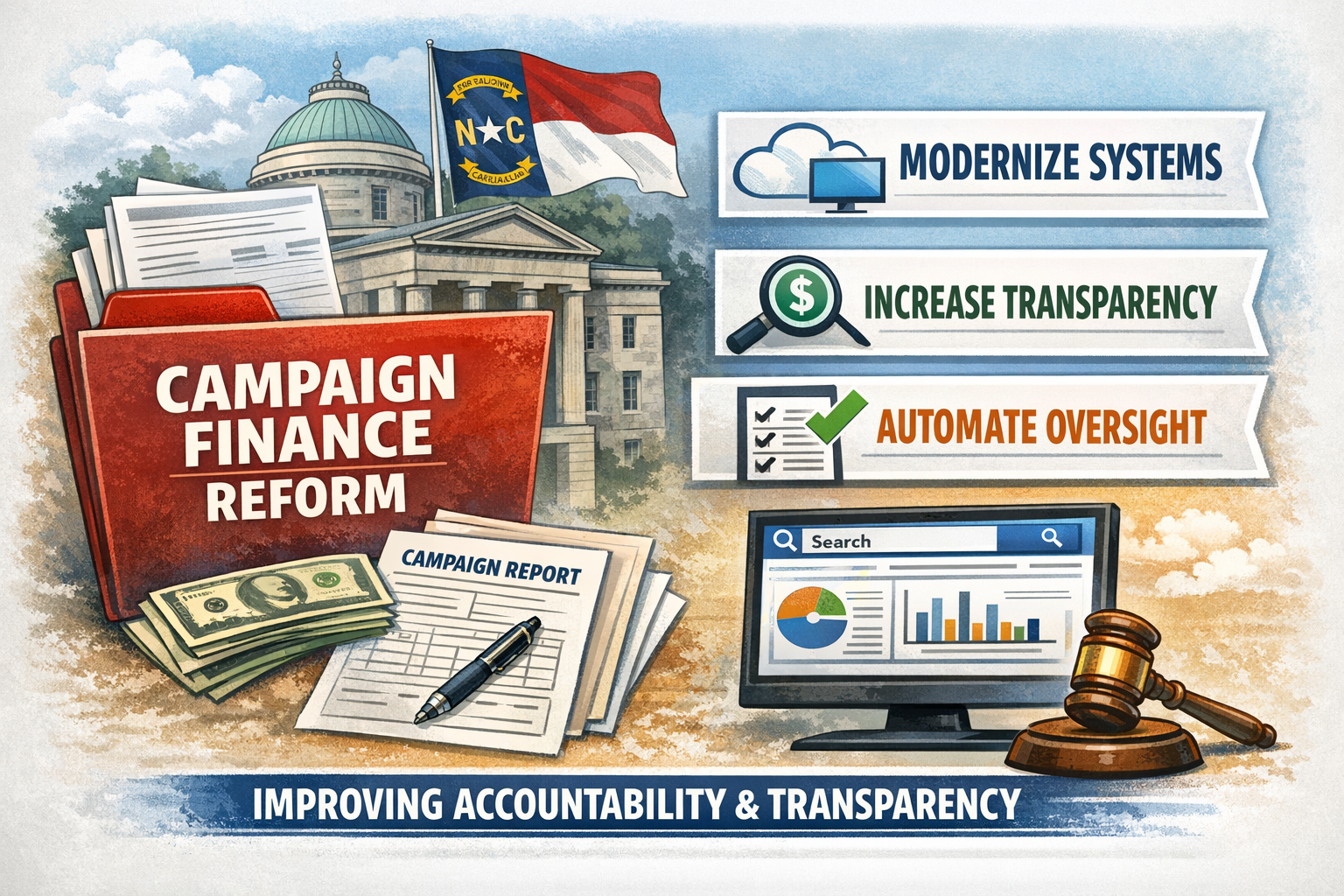
The Office of the State Auditor said the Modernization of Election Data Systems, or MEDS, Commission heard a new set of 10 guiding principles at its March 18 meeting. Those principles call for a cloud-based system, guided step-by-step filing, electronic signatures, stronger public search tools, automated compliance checks, easier corrections, and faster public access to campaign finance data.
That may sound technical, but the policy stakes are straightforward. North Carolina’s campaign finance reporting system affects how candidates and committees file disclosures, how quickly the public can review political spending, and how easily watchdogs and election officials can spot missing information or questionable reporting. A system that is easier to use could reduce filing errors, while a system that is easier to search could make outside spending and donor activity more visible to the public.
The auditor’s office described the effort as a bipartisan one. The subcommittee that presented the new framework was co-chaired by Brooks Fuller of Common Cause North Carolina and Andy Jackson of the John Locke Foundation, an unusual pairing that suggests there is at least some cross-ideological agreement that the current system is outdated. Fuller said the goal is to replace a nearly 35-year-old paper-dependent campaign finance system with one that is secure, cloud-based, and easier to use. Jackson said one objective is to reduce mistakes by guiding treasurers through the filing process and confirming when reports have been received and accepted.
The commission’s principles also emphasize public-facing access. Among the recommendations are a searchable dashboard, improved analytics tools, and an automated communications channel between filers and election administrators that would also preserve records for public-records compliance. Those features matter because campaign finance law is only as transparent as the system the public uses to examine it.
For now, the proposal remains a framework, not a final policy change. The commission is still in the planning stage, and the release does not establish a launch date, funding plan, or legislative vehicle for replacing the current system. But the move is significant because it begins to define what modernization would actually require rather than simply acknowledging that the current system is old.
The political question now is whether this effort becomes a real reform push or stalls as another study panel. If lawmakers, election officials, and outside groups keep backing the same core principles, North Carolina could be headed toward a more accessible and more transparent campaign finance system. If not, the state may remain stuck with a reporting structure that nearly everyone involved appears to agree has fallen behind the times.
Editor’s note: This article was drafted with the assistance of artificial intelligence and was reviewed and fact-checked by a member of the NC Political News editorial team before publication.