
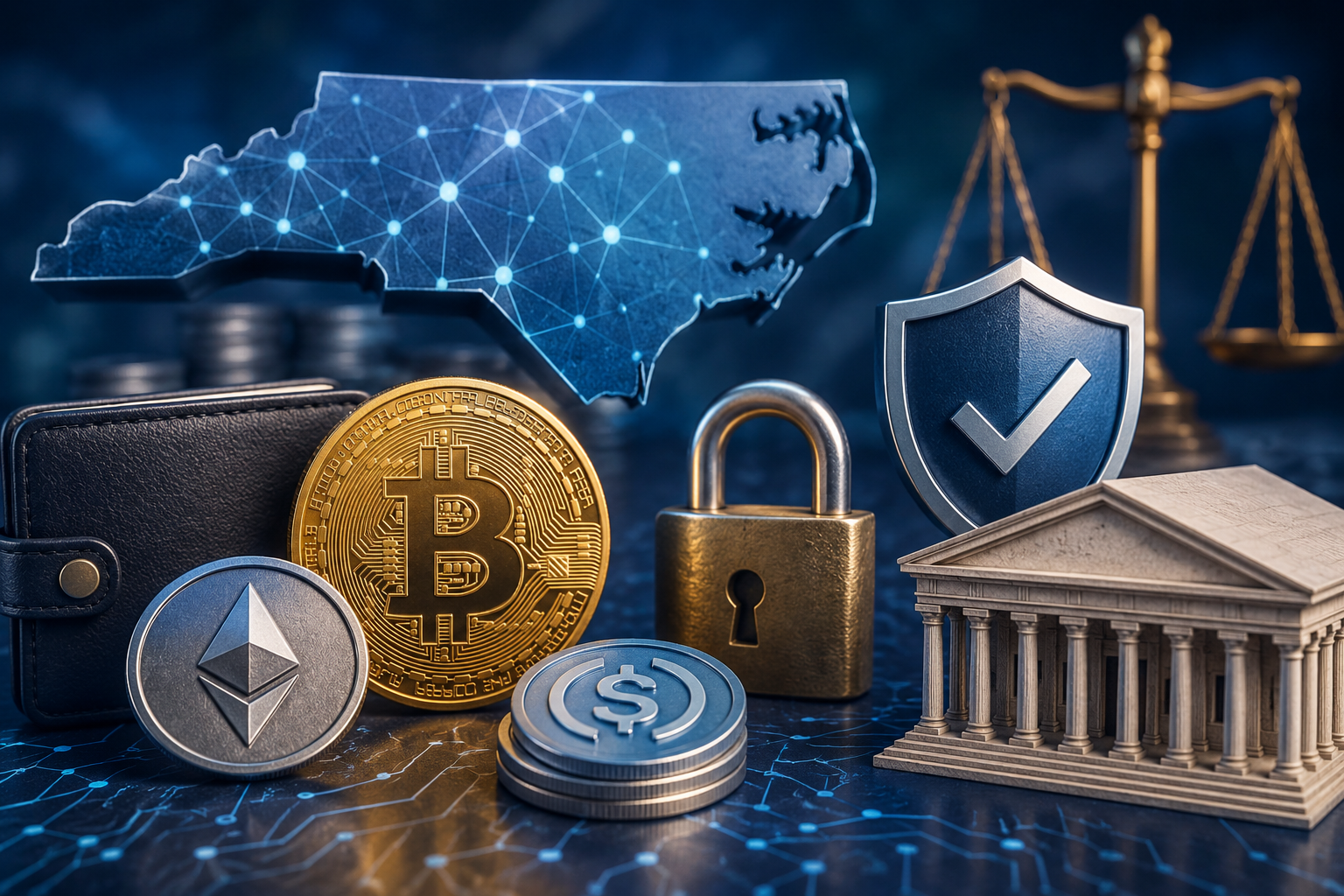
Digital asset and stablecoin bill heads to House committee
RALEIGH — A North Carolina House committee is scheduled Tuesday to consider a bill that would create a state regulatory framework for digital asset services and stablecoin issuers, including rules for custody, reserves, licensing, audits and enforcement.
House Bill 1029, titled the “NC Digital Asset and Stablecoin Act,” is on the House Commerce and Economic Development Committee agenda for 10 a.m. Tuesday, May 12, in Room 643 of the Legislative Office Building. The committee agenda says a proposed committee substitute will be considered.
The bill was filed April 21 and referred April 22 to the House Commerce and Economic Development Committee. If approved there, it would go next to House Finance and then to the House Rules, Calendar, and Operations Committee.
The primary sponsors are Republican Reps. Allen Chesser of Nash County, David Willis of Union County, Stephen Ross of Alamance County and Mike Schietzelt of Wake County. Additional sponsors listed on the bill page include Reps. Ben Biggs, Carla Cunningham Branson, George Cleveland Cairns, Jimmy Dixon, Brian Echevarria, Neal Jackson Pike, Reece Pyrtle, Keith Kidwell Shepard and Harry Warren.
The bill says it was recommended by the House Select Committee on Blockchain and Digital Assets. No public sponsor quote was included in the official bill materials reviewed Monday.
The proposal would add a new “Digital Asset Financial Act” to state banking law. It defines a digital asset as a natively electronic asset that gives economic, proprietary or access rights and is recorded or stored on a blockchain, cryptographically secured distributed ledger or similar technology. The bill states that a digital asset is personal property.
Under the bill, state-chartered banks and state-organized credit unions could offer digital asset custody services, staking services and digital asset transaction services, but they would have to notify their regulating authority before beginning custody services. For state-chartered banks, that authority would be the North Carolina commissioner of banks. For state-organized credit unions, it would be the administrator of credit unions.
Financial institutions would have to notify regulators in writing at least 60 days before starting digital asset custody services. Institutions offering custody services in a fiduciary capacity would need approval from the regulating authority and would have to show they have the expertise, policies and procedures to safely conduct those services.
The bill also would require customer agreements and disclosures. Those disclosures would have to tell customers that digital assets are not insured by the Federal Deposit Insurance Corp., the National Credit Union Administration or any other federal or state deposit or share insurance program.
The reserve requirement is one of the central consumer-protection provisions. According to the Legislative Reporting Service summary, a financial institution providing custody services would have to maintain control over a quantity of each type of digital asset that equals or exceeds the amount owed to customers or required to be held on their behalf. The bill also requires independent annual audits.
The measure would regulate staking, a process in which digital assets are committed to a blockchain network to help validate transactions or secure the network. The bill would require written disclosures on staking program terms, including risks, lockup periods, customer rights, fees and opt-out terms. It would also prohibit a financial institution from using a customer’s staked assets for purposes other than facilitating staking on the relevant blockchain or distributed ledger.
The bill would authorize digital asset transaction services, but would require disclosures on execution price, spreads, fees, commissions and expected transaction timelines. It would also require financial institutions to comply with state and federal laws, including anti-money laundering and cybersecurity requirements.
The bill’s second major section would create a “NC Stablecoin Act.” It would prohibit a person from issuing, circulating, offering or redeeming a payment stablecoin in North Carolina unless the person is a permitted stablecoin issuer. A person with no more than $10 billion in outstanding payment stablecoins would generally need a license from the commissioner of banks unless otherwise authorized.
Stablecoins are digital assets typically designed to maintain a stable value, often by being redeemable for a fixed monetary amount. Under the bill summary, a payment stablecoin would be one designed or marketed for payment or settlement, whose issuer undertakes to redeem or repurchase it for a fixed amount of monetary value, and that is not legal tender, a deposit or a federally registered security.
The commissioner of banks would have a major oversight role. The bill summary says the commissioner would handle stablecoin issuer licensing, while the State Banking Commission and Credit Union Commission would be allowed to adopt rules to implement, clarify and enforce the digital asset provisions.
The proposal also would bring digital assets into North Carolina’s unclaimed property law. Digital asset accounts would be presumed abandoned after five years under certain conditions, and holders would have to report and deliver abandoned digital assets to the state treasurer or maintain them until transfer is possible.
For consumers, the legislation could determine how digital assets are held, disclosed, audited and protected when handled by state-regulated financial institutions. For banks, credit unions and financial technology companies, it could create a clearer path to offering crypto-related services in North Carolina, but with regulatory notice, reserve, cybersecurity and audit requirements.
The pending committee substitute is the key piece to watch. The committee agenda indicates a PCS will be considered, but the official NCGA bill page reviewed Monday still lists the bill’s current action as referral to Commerce, Finance and Rules, and the publicly available first edition remains the detailed text available through the bill page.
The committee could approve the bill, amend it, hold it for further discussion or take no action. If it advances, lawmakers in Finance would likely review the measure’s tax, regulatory or fiscal implications before the bill could reach the House floor.
Editor’s note: This article was drafted with the assistance of artificial intelligence and was reviewed and fact-checked by a member of the NC Political News editorial team before publication.