House panel to consider property tax cap amendment
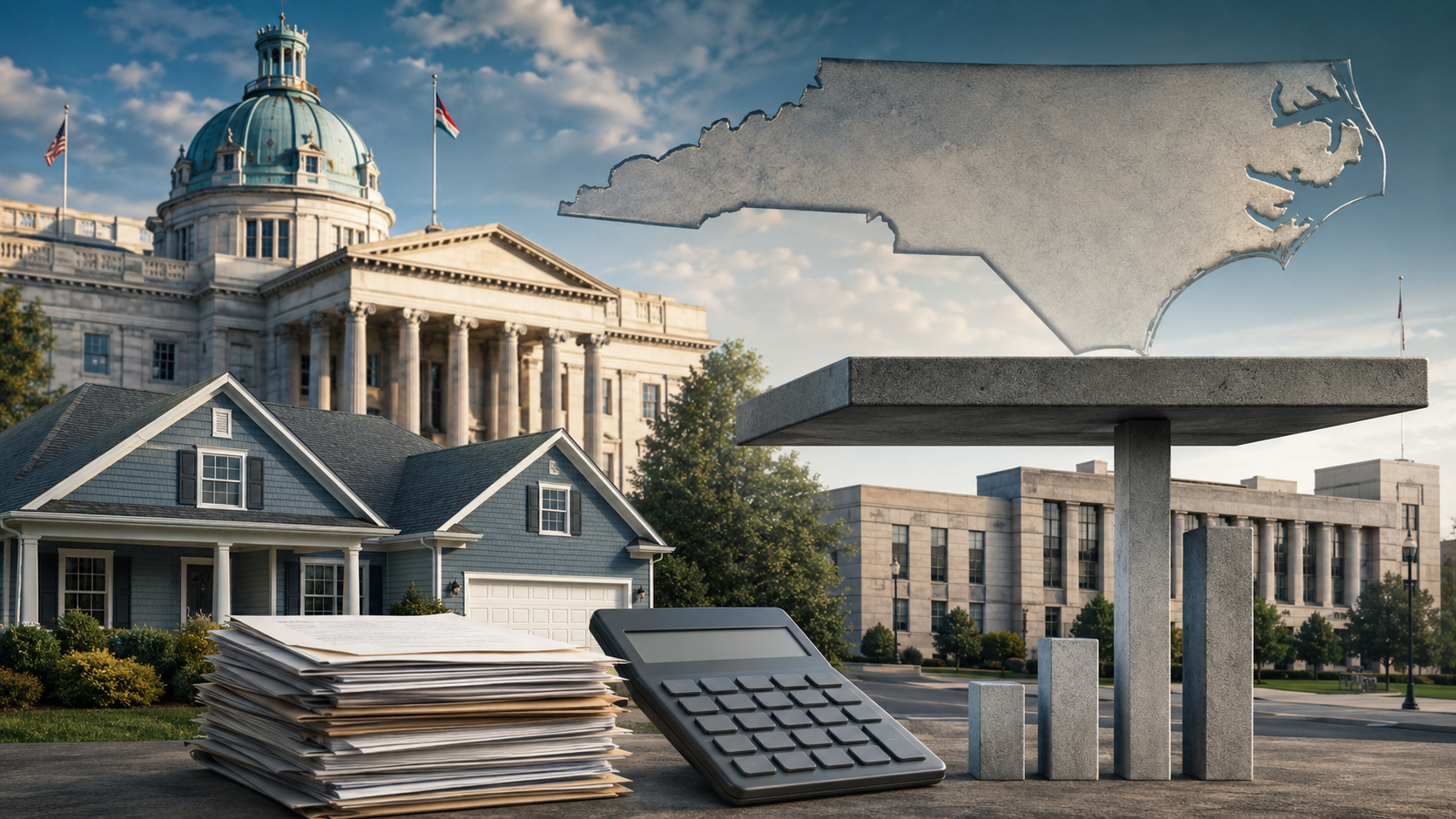
RALEIGH — A North Carolina House committee is scheduled Tuesday to consider a proposed constitutional amendment that would require state lawmakers to limit increases in local property tax levies.
House Bill 1089, titled “Const. Amend. Property Tax Levy Limit,” is on the House Finance Committee agenda for 9 a.m. Tuesday, May 12, in Room 643 of the Legislative Office Building. The bill was filed April 28 and passed first reading April 30, when it was referred to House Finance and, if favorable, to the House Rules, Calendar, and Operations Committee.
The measure is sponsored by Republican Reps. Brian Echevarria of Cabarrus County, Julia Howard of Davie County, Mitchell Setzer of Catawba County and Erin Paré of Wake County, with more than 30 additional sponsors listed on the bill page. The bill is marked by the General Assembly as a public bill affecting the North Carolina Constitution.
If approved by the General Assembly, the proposed amendment would appear on the Nov. 3, 2026, general election ballot. The ballot question would ask voters to vote for or against a “Constitutional amendment requiring limits on property tax increases by local governments.”
The bill would amend Article V, Section 2 of the North Carolina Constitution to say, “The General Assembly shall enact general laws limiting the amount by which the levy of taxes on property may increase, which may include exceptions.” The proposal does not set a specific cap in the constitution. Instead, it would require lawmakers to later enact general laws establishing the limits and any exceptions.
Under North Carolina’s constitution, amendments proposed by legislative action must be approved by three-fifths of each chamber and then submitted to voters. If a majority of voters approve the amendment, it becomes effective on the date provided in the act. In this bill, the amendment would take effect upon certification of the referendum results.
A nonpartisan legislative staff analysis of an earlier bill draft said the proposal would submit to voters whether to require the General Assembly to enact legislation limiting property tax levy increases by counties and cities. The same analysis noted that North Carolina law generally limits property taxes to a maximum rate of $1.50 per $100 of value.
The bill comes after months of legislative scrutiny of local property taxes. House Republicans have argued that rising property values and local spending have increased pressure on homeowners. House Speaker Destin Hall, R-Caldwell, previously told Axios that limiting annual tax bill increases would force local governments to curb spending, while Rep. Brian Echevarria, R-Cabarrus, accused some local governments of allowing spending to grow beyond what population growth and inflation justify.
Opponents and local government advocates have raised concerns that statewide tax limits could make it harder for counties and municipalities to fund schools, roads, public safety and other services. Rep. Maria Cervania, D-Wake, told Axios that lawmakers should first try to find solutions before placing a constitutional limit on the General Assembly’s flexibility.
The practical effects of the proposal would depend heavily on the follow-up legislation. The bill does not spell out whether the cap would be based on inflation, population growth, assessed value, total levy growth, tax bills for individual properties or some other formula. It also does not define what exceptions lawmakers could allow.
That leaves major questions for fast-growing counties, rural counties with limited tax bases, school districts seeking construction money, and cities and towns facing higher infrastructure and public safety costs.
The Finance Committee could approve the bill, amend it, hold it for further discussion or take no action. If it advances, the proposal would still need approval from the full House and Senate before reaching voters. Because constitutional amendments do not require the governor’s signature, the central political test is whether the proposal can secure the required three-fifths vote in both chambers and then win majority support from voters statewide.
Editor’s note: This article was drafted with the assistance of artificial intelligence and was reviewed and fact-checked by a member of the NC Political News editorial team before publication.