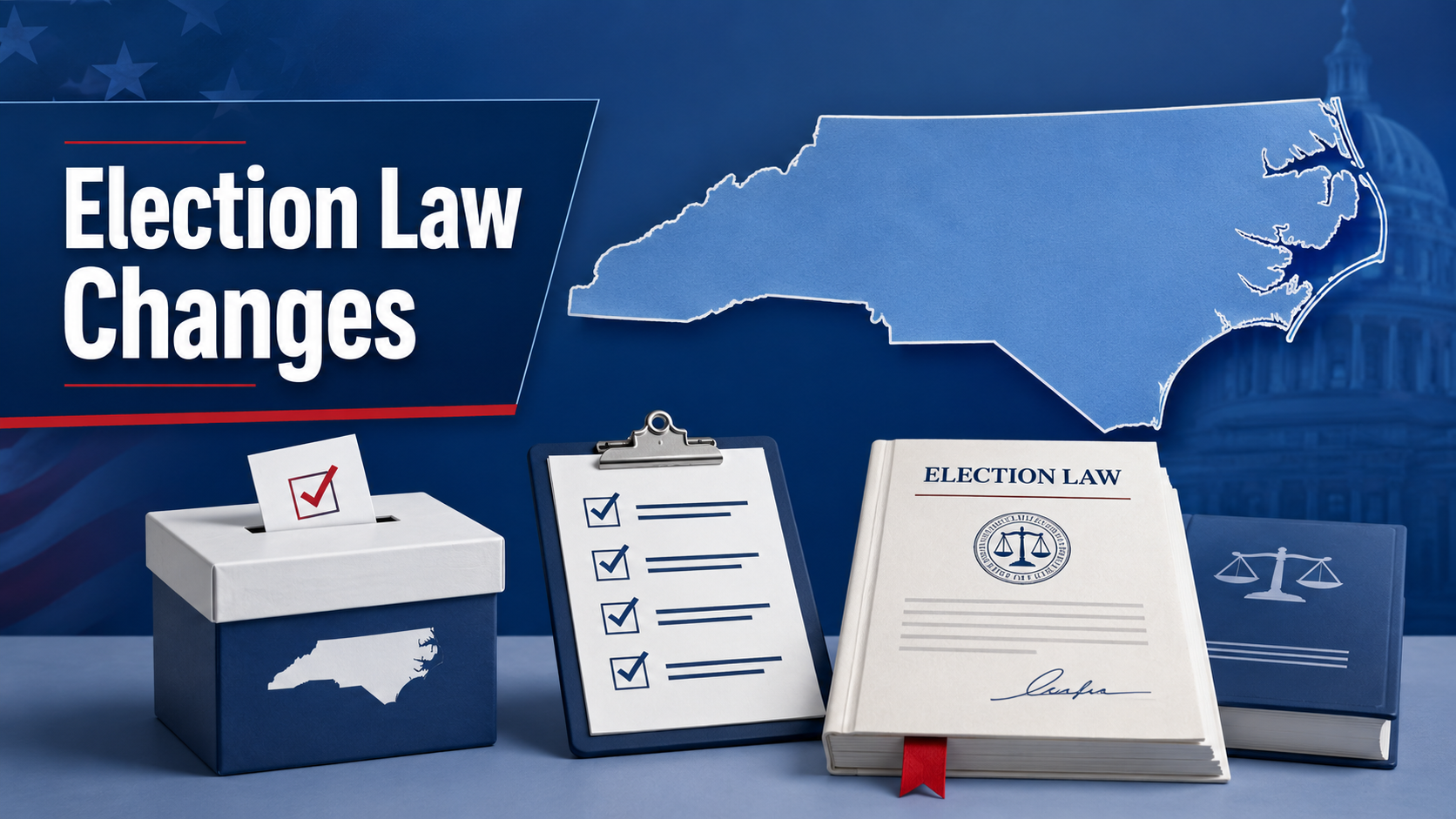
Election law bill remains active after latest House committee substitute
House Bill 958 would make broad changes to ballot counting, provisional ballot deadlines, absentee ballot procedures, party labels and other election administration rules.
RALEIGH — A wide-ranging North Carolina election law bill remains active in the House after lawmakers posted a proposed committee substitute for House Bill 958, titled “Election Law Changes.”
The bill has statewide impact because it would amend multiple sections of Chapter 163, North Carolina’s elections law, and would affect election administration by the State Board of Elections and county boards of elections across the state.
According to the General Assembly bill page, House Bill 958’s latest listed action was “Cal Pursuant Rule 36(b)” on June 24. The bill page lists the measure as public, notes that the text has changed and identifies affected areas including elections, campaign finance, voter registration, state and county elections boards, ballots, reporting, records, state employees, auditing and artificial intelligence.
The proposed committee substitute states that the bill would “make various changes regarding election laws.” One section would revise initial ballot-counting procedures, including rules for counting official ballots and public observation of the count. The proposal says vote counting at the precinct must be conducted with the participation of precinct officials of all political parties then present, and vote counting at the county board level must be conducted in the presence or under supervision of board members of all political parties then present.
The proposal also addresses provisional ballots and voter registration corrections. Under the language in the proposed substitute, certain provisional ballot and registration-related deadlines would be tied to noon on the fifth business day after the election, replacing references to the third business day in several sections.
The bill would also affect absentee ballot procedures. The proposed substitute includes language on curing certain absentee ballot deficiencies, notifying voters of curable deficiencies and setting deadlines for cure documentation. It also includes language barring announcement of ballot-count results before the close of polls on election day.
The measure has not become law. Because the bill is still moving through the legislative process, its provisions could change before any final vote.
Editor’s note: This article was drafted with the assistance of artificial intelligence and was reviewed and fact-checked by a member of the NC Political News editorial team before publication.