
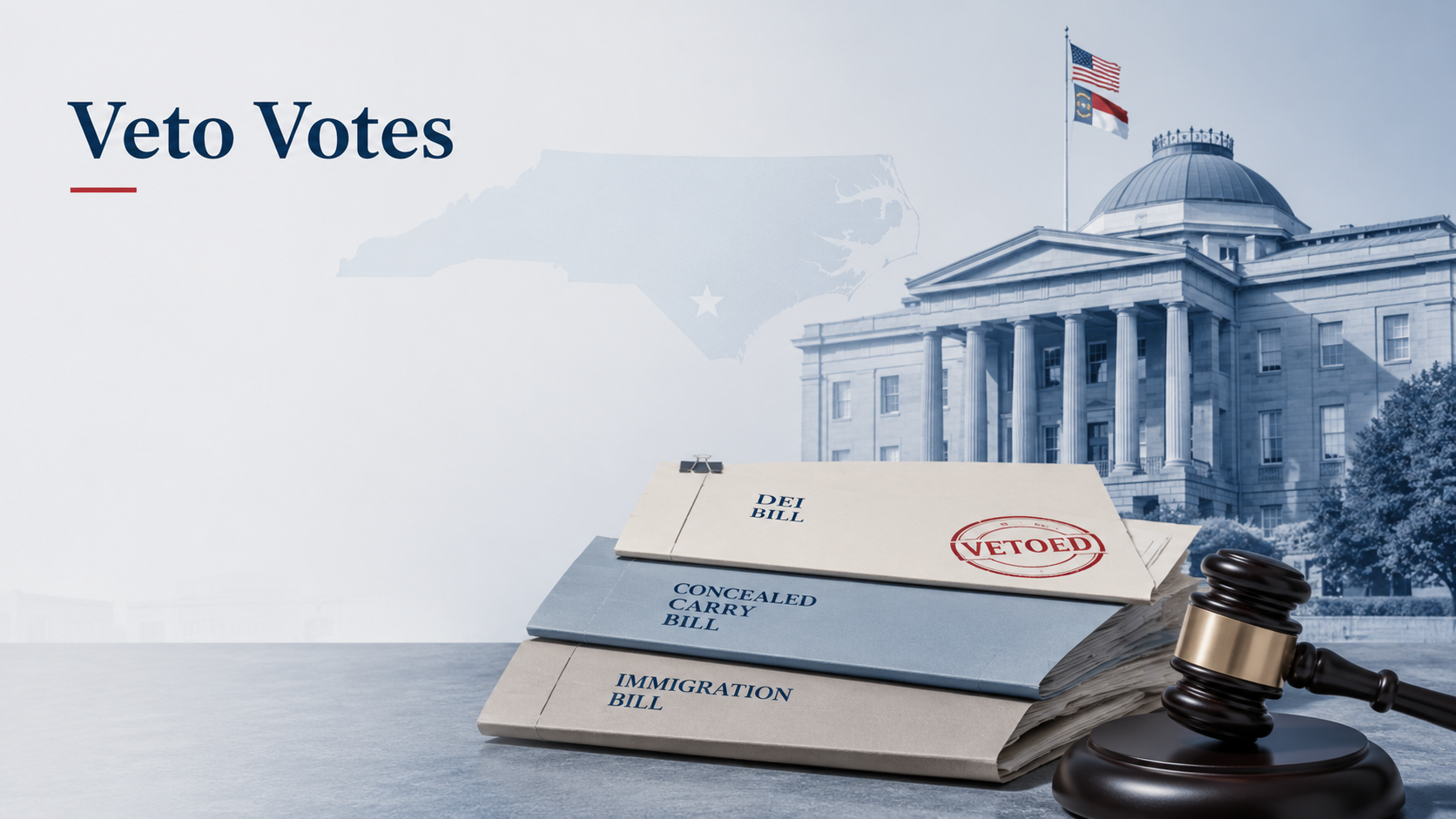
House calendar keeps vetoed DEI, guns and immigration bills in play
RALEIGH, N.C. — The North Carolina House kept several vetoed bills on its calendar Thursday, setting up the possibility of override votes on measures dealing with diversity, equity and inclusion programs, concealed carry and immigration enforcement.
The House calendar for Thursday, May 21, listed five vetoed bills under unfinished business for reconsideration: House Bill 171, Senate Bill 50, Senate Bill 153, Senate Bill 227 and Senate Bill 558. The listing does not mean votes occurred, but it signals that the bills remain eligible for House action.
House Bill 171, titled “Equality in State Agencies/Prohibition on Diversity, Equity, and Inclusion,” was vetoed by Gov. Josh Stein on July 3, 2025. Senate Bill 227, which addresses DEI in public education, and Senate Bill 558, which addresses DEI in public higher education, were also vetoed July 3, 2025.
Senate Bill 50, titled “Freedom to Carry NC,” was vetoed June 20, 2025. The bill would make changes to concealed carry laws in North Carolina. The Senate voted 30-19 on July 29, 2025, to override the governor’s veto, sending the veto override to the House.
Senate Bill 153, titled the “North Carolina Border Protection Act,” was also vetoed June 20, 2025 and listed on the House calendar for possible reconsideration.
The package of bills represents some of the sharpest policy disputes between Stein and Republican legislative leaders. The DEI measures would affect state agencies, public schools and public higher education. The firearms bill would affect concealed carry rules, while the immigration enforcement bill would affect state and local law enforcement policy.
The calendar placement comes during the General Assembly’s short session, when lawmakers are also considering budget adjustments, election law measures, appointments and other bills eligible for consideration. The House calendar notes that veto overrides remain eligible for consideration during the short session.
The bills have already cleared both chambers once and were returned after Stein’s vetoes. For any vetoed bill to become law over the governor’s objection, both the House and Senate must approve an override by the required three-fifths vote of members present and voting.
The House did not have to take all of the listed bills up Thursday. Legislative calendars can change, and items may be carried over, withdrawn or acted on at a later session.
Still, the placement gives lawmakers the option to move quickly on some of the state’s most politically charged bills, including measures that would affect public education, higher education, state agency operations, gun laws and immigration enforcement.
Editor’s note: This article was drafted with the assistance of artificial intelligence and was reviewed and fact-checked by a member of the NC Political News editorial team before publication.