House panel weighs healing arts licensing bill
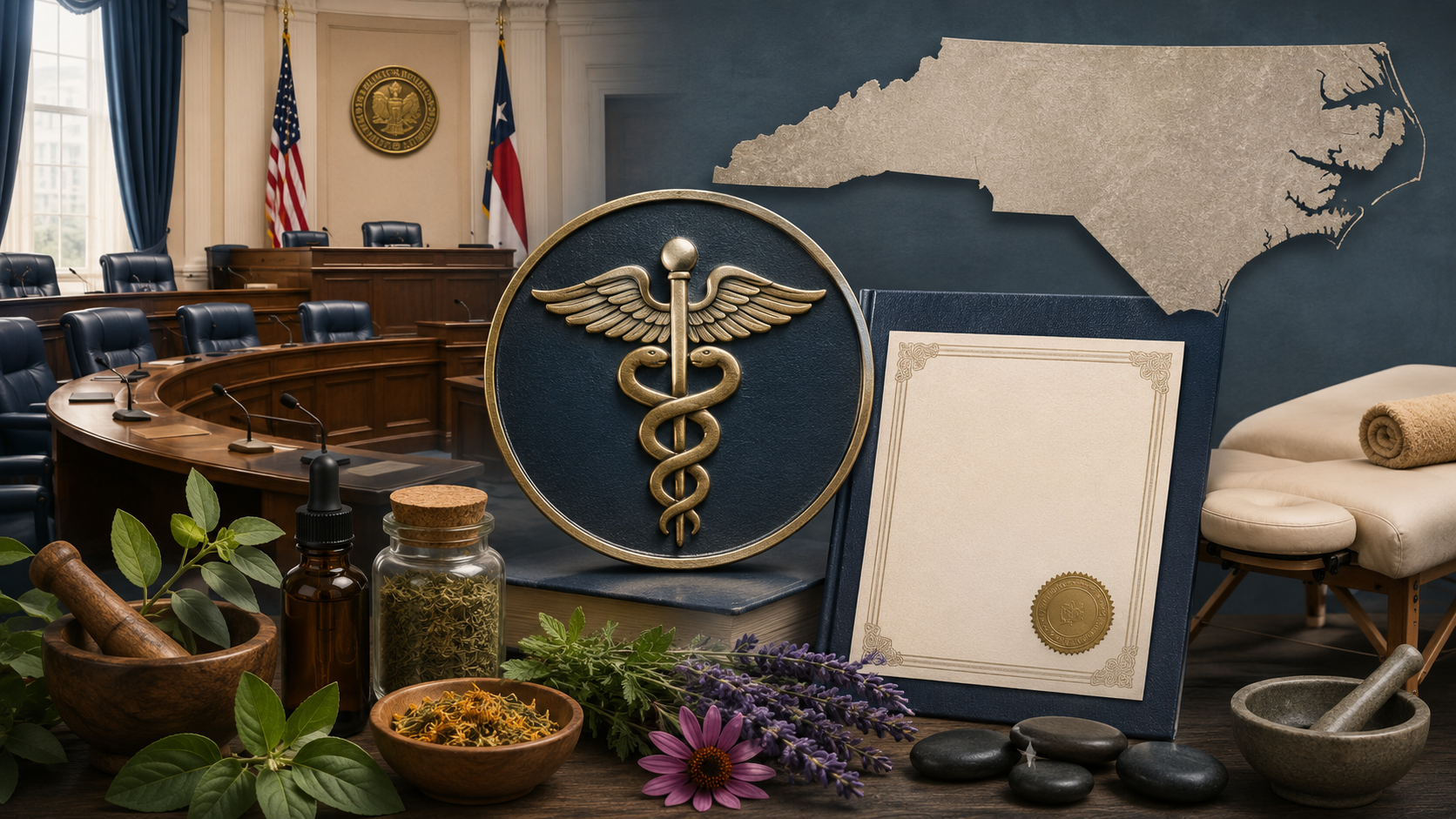
RALEIGH — A North Carolina House committee is considering a bill that would create a new state licensing framework for reflexologists and music therapists, placing both professions under a proposed North Carolina Healing Arts Commission.
The House Regulatory Reform Committee was scheduled to meet at 10 a.m. Wednesday, May 13, in Rooms 1228 and 1327 of the Legislative Building. The committee calendar listed House Bill 122, the North Carolina Healing Arts Act, with a proposed committee substitute to be considered.
The bill, sponsored by Reps. Harry Warren and Dennis Riddell, was re-referred April 30 to the House Regulatory Reform Committee, then to Finance, then Rules, Calendar, and Operations of the House if it receives favorable reports.
As filed, House Bill 122 would establish the North Carolina Healing Arts Commission and create licensure processes for reflexologists and music therapists. The legislation would add a new Article 44 to Chapter 90 of the North Carolina General Statutes, which governs several health-related professional licensing laws.
The bill says the proposed Healing Arts Act is intended to “safeguard the public health, safety, and welfare,” protect the public from unqualified practitioners, establish licensure requirements and ensure the availability of high-quality healing arts services. It defines “healing arts” broadly to include allopathic, complementary or alternative approaches to the prevention, identification and treatment of human physical or mental conditions, diseases, ailments, pain, defects or injuries, as well as the promotion and restoration of health and wellness.
The measure would not place all alternative medicine practices under the commission at once. The bill specifies that the healing arts professions covered by the proposed article would be reflexology and music therapy. A Legislative Reporting Service summary says the bill also clarifies that nothing in the article should be interpreted to require direct third-party reimbursement to people licensed under it.
Under the filed version, the commission would be made up of members appointed to three-year terms, including reflexology and music therapy representatives and public members. The bill says most commission members, except for a public member appointed by the governor, would be required to hold a North Carolina Healing Arts License in their respective profession and remain in good standing during their terms.
The legislation also would create separate advisory committees for reflexology and music therapy. Those committees would screen license applicants, conduct investigations and make recommendations to the commission on issuing, renewing, denying, suspending or revoking licenses.
For reflexology, the bill defines the practice as a protocol of manual techniques applied mainly to specific reflex areas of the feet and hands. The Legislative Reporting Service summary notes that the bill specifies reflexology is not massage and bodywork therapy.
The bill would allow compensation for reflexology services only when those services are performed by an individual holding a North Carolina Healing Arts License in reflexology, unless an exception applies. Nonlicensed individuals who provide reflexology services or engage in the practice would be subject to penalties or potential injunctions under the bill.
For music therapy, the bill would establish a North Carolina Music Therapy Advisory Committee and licensing process. The filed version says compensation for music therapy services could be received only when the services are performed by an individual holding a North Carolina Healing Arts License in music therapy. It also would bar a person from using the title “North Carolina Licensed Music Therapist” without a valid license.
The proposal also lays out a fee structure. According to the Legislative Reporting Service, the commission would establish fees of up to $300 for issuing a license, $200 for a license application and exam, $350 for annual license renewal and $200 for late renewal.
Violations would escalate. The Legislative Reporting Service summary says a first violation would be punishable by a written warning, a second violation by a civil penalty of no more than $200, and third or subsequent violations by a civil penalty of no more than $200 per violation and a Class 1 misdemeanor. The commission also could seek a superior court order to enjoin and restrain violations.
Licensing bills often draw debate because they can create new consumer protections while also adding regulatory barriers, fees and state oversight for practitioners. For supporters, the bill may be framed as a way to set professional standards and give consumers clearer information about who is qualified. For critics, the key questions may be whether the licensing system is necessary, whether the proposed fees are appropriate, and whether the state should create a new commission for these professions.
The committee’s consideration of a proposed committee substitute means the bill could change before advancing. As of the committee calendar, House Bill 122 had not passed either chamber and would still need approval from the House, Senate and governor before becoming law.
Editor’s note: This article was drafted with the assistance of artificial intelligence and was reviewed and fact-checked by a member of the NC Political News editorial team before publication.