Stein signs bill shifting federal funds for broadband, water projects
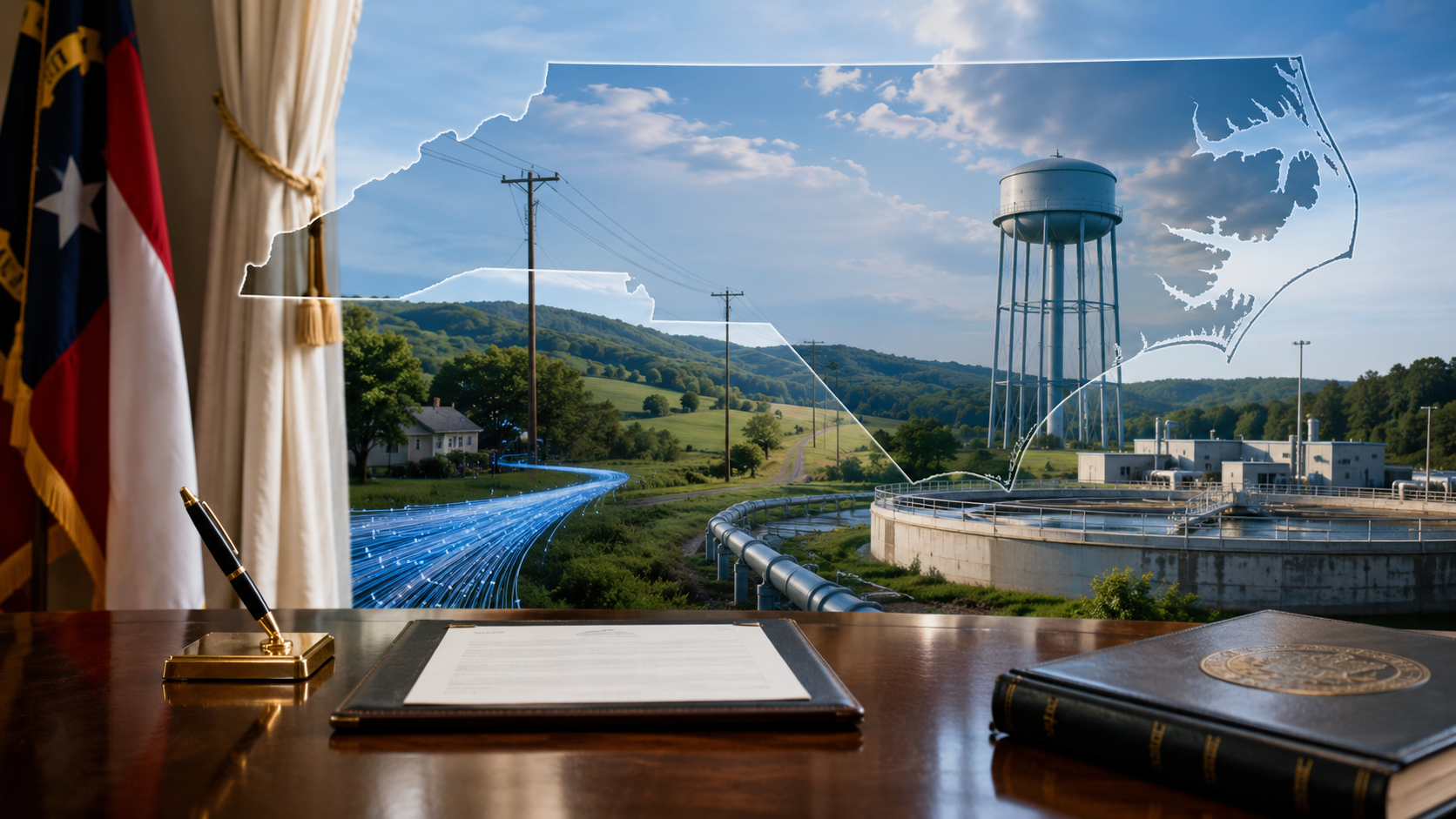
RALEIGH — Gov. Josh Stein has signed a bill giving state budget officials more flexibility to manage federal recovery money tied to broadband, water and sewer infrastructure projects before a federal spending deadline.
Stein signed House Bill 433, now Session Law 2026-3, on Tuesday, May 12. The bill, titled “SFRF/NCPRO Revisions,” deals with State Fiscal Recovery Funds provided to North Carolina through the American Rescue Plan Act and administered through state budget and pandemic recovery offices. The North Carolina General Assembly bill page lists the legislation as signed by the governor and chaptered as Session Law 2026-3 on May 12.
“North Carolina is home to the second-largest rural population in the country,” Stein said in a statement. “This bill strengthens rural North Carolina by enabling the Department of Information Technology to continue building critical rural broadband capacity and supporting the Department of Environmental Quality’s work to build more resilient water infrastructure. I am grateful to the General Assembly for sending it to me.”
The law does not appear to create a new broadband or water program. Instead, it authorizes state officials to reclassify or reallocate certain unspent federal recovery funds so long as the money remains within eligible uses and complies with federal law and guidance. A legislative summary says the bill authorizes the North Carolina Pandemic Recovery Office, in consultation with the state budget director, to reallocate State Fiscal Recovery Funds when there is a reasonable expectation that the money will not be spent before the applicable federal deadline.
The measure is tied to the pending December 2026 deadline for spending State Fiscal Recovery Funds. A nonpartisan legislative staff analysis said the state received $5.4 billion in State Fiscal Recovery Funds under the American Rescue Plan Act, with funds required to be obligated by December 2024 and spent by December 2026. The analysis said Fiscal Research Division staff had concerns that a “sizable portion” of broadband funding could revert to the U.S. Treasury without legislative action.
Under the bill, reallocated funds must support activities that previously received State Fiscal Recovery Fund appropriations and must follow federal guidance for water, sewer or broadband infrastructure. The legislative summary says the bill prohibits using reallocated funds for any new purpose.
A legislative staff analysis said the practical effect would allow a swap between State Fiscal Recovery Funds appropriated to the Department of Information Technology for broadband programs and General Fund appropriations to the Department of Environmental Quality for water and sewer projects. Fiscal Research Division staff estimated that between $200 million and $300 million could be swapped under applicable federal law and guidance.
The legislation also extends the authority of the North Carolina Pandemic Recovery Office through May 1, 2027, as the state completes the federal closeout process for recovery funds. The bill requires a final report to the Fiscal Research Division and the Joint Legislative Commission on Governmental Operations regarding pandemic recovery activities and use of funds.
House Bill 433 received broad bipartisan support before reaching the governor’s desk. The House concurred in the Senate committee substitute by a 104-0 vote on May 7, and the Senate passed the measure 44-0 on May 5, according to the General Assembly’s voting records.
The bill moved through the legislature after changing substantially from its original 2025 version, which dealt with registered nurses in schools. Legislative Reporting Service summaries note that the bill’s title and contents were changed through committee substitutes and a Senate amendment before final passage.
For rural communities, the stakes are practical. Broadband access affects education, telehealth, business development and public services, while water and sewer infrastructure can determine whether communities can support growth, housing and industrial development. The new law gives state officials more room to keep already-authorized federal recovery dollars from going unused, but it also means the state’s next steps will depend on how budget officials execute the fund swaps and what projects remain eligible under federal rules.
Editor’s note: This article was drafted with the assistance of artificial intelligence and was reviewed and fact-checked by a member of the NC Political News editorial team before publication.