
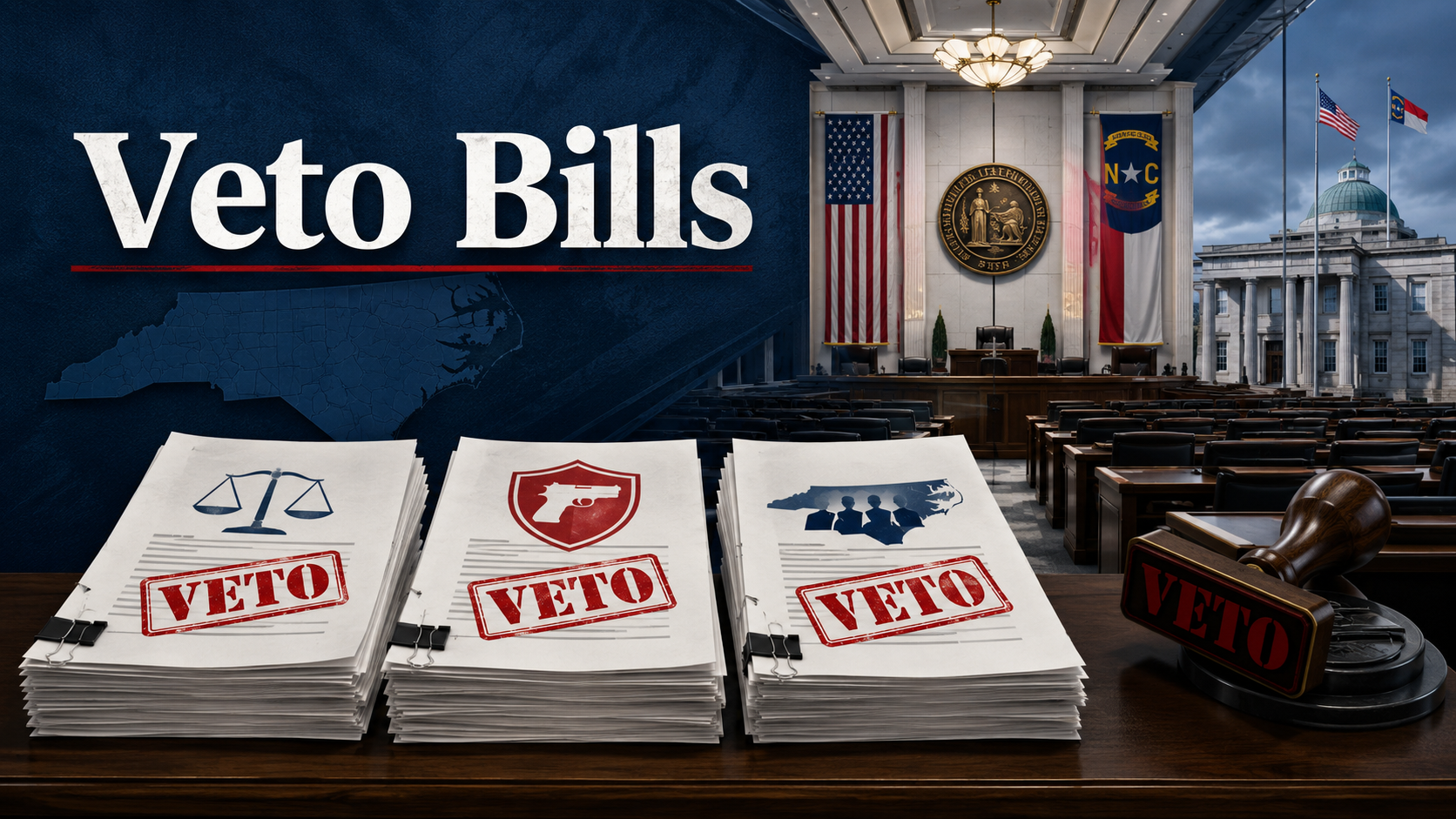
House returns with vetoed DEI, gun and immigration bills still unresolved
RALEIGH, N.C. — Several vetoed bills dealing with diversity programs, gun laws and immigration enforcement remained unresolved as the North Carolina House returned to session Tuesday.
The House calendar listed vetoed measures under unfinished business, keeping alive the possibility that Republican lawmakers could attempt override votes on legislation previously rejected by Gov. Josh Stein. The bills include measures involving diversity, equity and inclusion programs in state agencies and public education, permitless concealed carry and immigration enforcement.
The calendar placement does not guarantee a vote. The House can leave vetoed bills on the calendar for multiple sessions without taking action.
Still, the unresolved vetoes remain politically significant because they involve some of the sharpest policy divisions between Stein and Republican legislative leaders. If the House takes up any of the vetoes, Republicans would need enough votes to meet the three-fifths threshold required to override a governor’s veto.
Senate Bill 50, titled “Freedom to Carry NC,” would make changes to North Carolina’s concealed carry laws. The bill was vetoed by Stein, and the Senate later voted 30-19 to override the veto, sending the matter to the House.
Other vetoed measures include immigration enforcement bills and legislation restricting DEI policies. Supporters of the bills have framed them as public safety, government neutrality and education accountability measures. Opponents have raised concerns about constitutional issues, discrimination, local law enforcement burdens and public safety risks.
The House calendar also keeps the issue politically active during a legislative period already shaped by budget negotiations, agency oversight, education policy and other veto fights.
The key question is not only whether House leaders bring the measures forward, but whether they have the votes. Republicans hold majorities in both chambers, but veto overrides depend on attendance and party unity, particularly in the House.
For now, the bills remain available for action but not resolved. A vote, delay or decision to remove them from active consideration would determine whether Tuesday’s calendar becomes a procedural placeholder or a major policy fight.
Editor’s note: This article was drafted with the assistance of artificial intelligence and was reviewed and fact-checked by a member of the NC Political News editorial team before publication.