North Carolina sues VinFast to acquire Chatham County manufacturing site
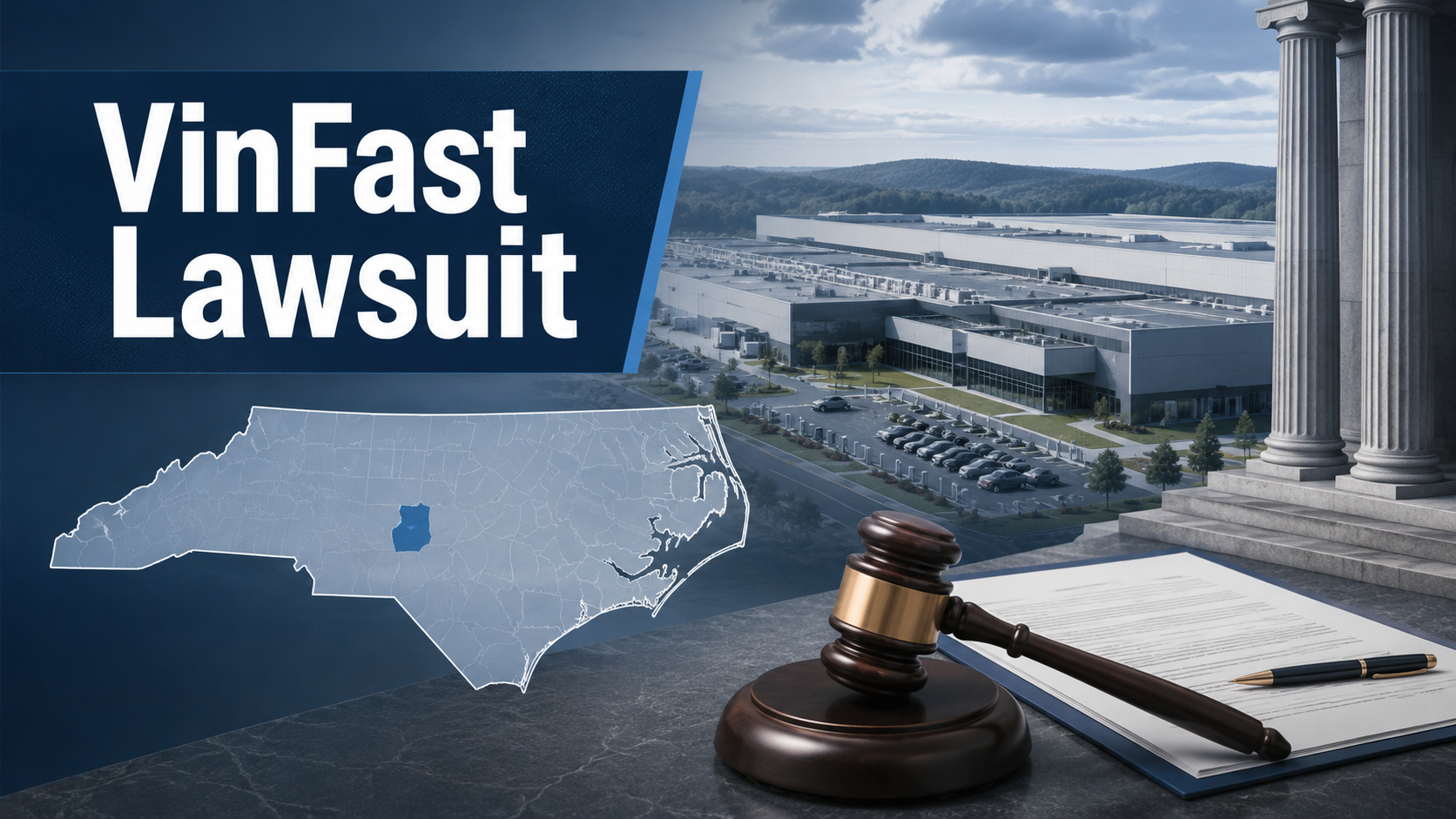
RALEIGH, N.C. — North Carolina is suing VinFast in an effort to acquire the company’s Chatham County electric vehicle manufacturing site after state officials said the company failed to meet key obligations tied to one of the largest economic development projects announced in state history.
Attorney General Jeff Jackson filed the lawsuit on behalf of the North Carolina Department of Commerce, alleging that VinFast breached agreements connected to its planned electric vehicle and battery manufacturing facility. Through the lawsuit, the state is seeking to exercise what officials described as a contractual right to acquire the property.
The project was announced in 2022 with a goal of creating 7,500 jobs and investing more than $3 billion in Chatham County. The North Carolina General Assembly also appropriated $450 million for site preparation, transportation improvements and water and sewer infrastructure tied to the project, according to the Department of Justice.
“VinFast agreed to build a factory and create jobs for North Carolinians. It didn’t do either,” Jackson said in the announcement. “When North Carolina makes a deal, we build in protection for taxpayers. VinFast broke the deal, so we’re using that protection to find a project for this site that will create jobs.”
Gov. Josh Stein said the state’s action is intended to protect taxpayers and return the site to the market for future manufacturing development.
“North Carolina will always compete aggressively for jobs and investment, but we also protect taxpayers by requiring the company to hold up its end of the deal,” Stein said. “VinFast has not fulfilled its commitments. Today’s action is about protecting taxpayers and getting the Chatham County mega-site back on the market to support future good-paying manufacturing jobs.”
According to the Department of Justice, Commerce’s agreements with VinFast included provisions requiring repayment of certain site preparation funds if benchmarks were not met. The agreements also gave the state the right to acquire the project site if the company failed to satisfy key performance requirements.
State officials said VinFast was required to meet construction benchmarks, have the facility operational by July 2026 and create 1,750 jobs by the end of 2026.
VinFast cleared and graded the site in 2023, and those costs were reimbursed by the state so the site would be ready for construction. But DOJ said the company has failed to meet key obligations since then.
The department also said VinFast has publicly indicated that it does not expect the facility to be operational until at least 2028, two years beyond the contractual timeline cited by the state.
Commerce Secretary Lee Lilley said the case reflects the state’s responsibility to enforce performance-based agreements tied to taxpayer support.
“North Carolina’s economic development strategy is built on strong partnerships and performance-based agreements that are designed to protect the public interest,” Lilley said. “While we remain committed to supporting projects and long-term growth, we also have a responsibility to ensure that contractual obligations tied to taxpayer-supported incentives are fulfilled.”
The Department of Justice said it notified VinFast in January that the company had defaulted on its agreement and that the state intended to protect its investment by exercising its right to acquire the site. According to DOJ, VinFast disputed the state’s position and argued that it had met its construction deadlines and would open the facility on a delayed 2028 timeline.
The lawsuit now places one of the state’s highest-profile economic development projects into a legal fight over performance requirements, taxpayer protections and the future of a major manufacturing site in Chatham County. The state’s position is that acquiring the property would preserve the site for another economic development project.
Editor’s note: This article was drafted with the assistance of artificial intelligence and was reviewed and fact-checked by a member of the NC Political News editorial team before publication.