John Hood: Bookstore Rebirth Teaches a Crucial Lesson
RALEIGH — One benefit of getting married on New Year’s Eve is that our anniversary is unlikely to slip my mind. If you doubt my capacity to forget so important a date, just ask my wife.
Another benefit, it turns out, is that Traci and I get to enjoy short holiday trips to commemorate our nuptials. Over the years, we’ve celebrated in locales across the Carolinas and beyond. We stay in charming hotels or B&Bs. We attend shows or concerts. And invariably, between scheduled events and our traditional late-night viewing of SyFy’s Twilight Zone marathon on New Year’s Eve, we pop into a bookstore.
This year, we made a delightful visit to Papercut Books in Wilmington. Past discoveries include such gems as Firelight Book & Candle in Blowing Rock, Scuppernong Books in Greensboro, and Too Many Books in Roanoke.
Even if the printed word isn’t your cup of tea — which reminds me, many purveyors of new and used books now serve delicious snacks and drinks — you should care about bookstores. They ought not exist. Longstanding institutions should have gone out of business years ago. New stores should never have survived for more than a few weeks.
That was the “expert” take on bookselling about 15 years ago. One national chain, Borders, went out of business. Its largest competitor, Barnes & Noble, was closing locations and pivoting to online sales and its e-book reader Nook. Independents were teetering on the precipice, too. In 1995, the American Booksellers Association had about 5,500 members with 7,000 separate locations across the country. By 2009, ABA membership was down to 1,400 members with 1,600 locations.
By the early 2010s, the future of physical bookstores — and even physical books as a medium — appeared bleak. Then came some surprising developments.
After rising for years, for example, e-books as a share of total book purchases began to level off. Many readers still prefer holding bound volumes in their hands and displaying them on shelves. (What’s really taken off in recent years, among young and not-so-young consumers, is the audiobook format.)
While reading for pleasure remains a less popular pastime today than in past eras, quite a few people rediscovered their love of books during the pandemic and have continued to buy and read new works as well as the classics.
And while Amazon still accounts for a gigantic share of book sales, both chains and independents have been adding locations. The Chicago Tribune recently reported that Barnes & Noble opened 70 new stores in 2025 and anticipates 60 more this year. According to the latest ABA annual report, there were 1,635 member companies in 2020 with 2,209 store locations. In 2025, there were 2,863 members and 3,281 locations!
The broader story here is that customer preferences and industry trends are very difficult to predict with accuracy. Even successful investors make many bad bets. Markets are an ongoing discovery process in which producers and consumers use often-blurry price signals to make inherently imperfect decisions.
If lawmakers in Washington, Raleigh, and North Carolina’s hundreds of counties and municipalities want to make wise decisions with our dollars and liberties, they’ll keep these inescapable realities in mind. They won’t assume they, or the special interests lobbying them for funds or favors, can accurately foresee the economic future.
Not so many years ago, public and private institutions bet heavily on electric vehicles. Perhaps their EV bets will pay off in the long run, but so far the vast majority of consumers prefer the reliability and affordability of gas-fueled vehicles or the flexibility of hybrid ones. Rather than attempting to compel a politically favorable outcome, policymakers should focus on the provision of true public goods such as courts, public safety, and education and eschew the use of subsidies, tariffs, and regulations to engineer the “right” result.
Don’t take my word for any of this. Just go to your favorite bookseller and buy economic books by North Carolina native Thomas Sowell. And, incidentally, Happy New Year!
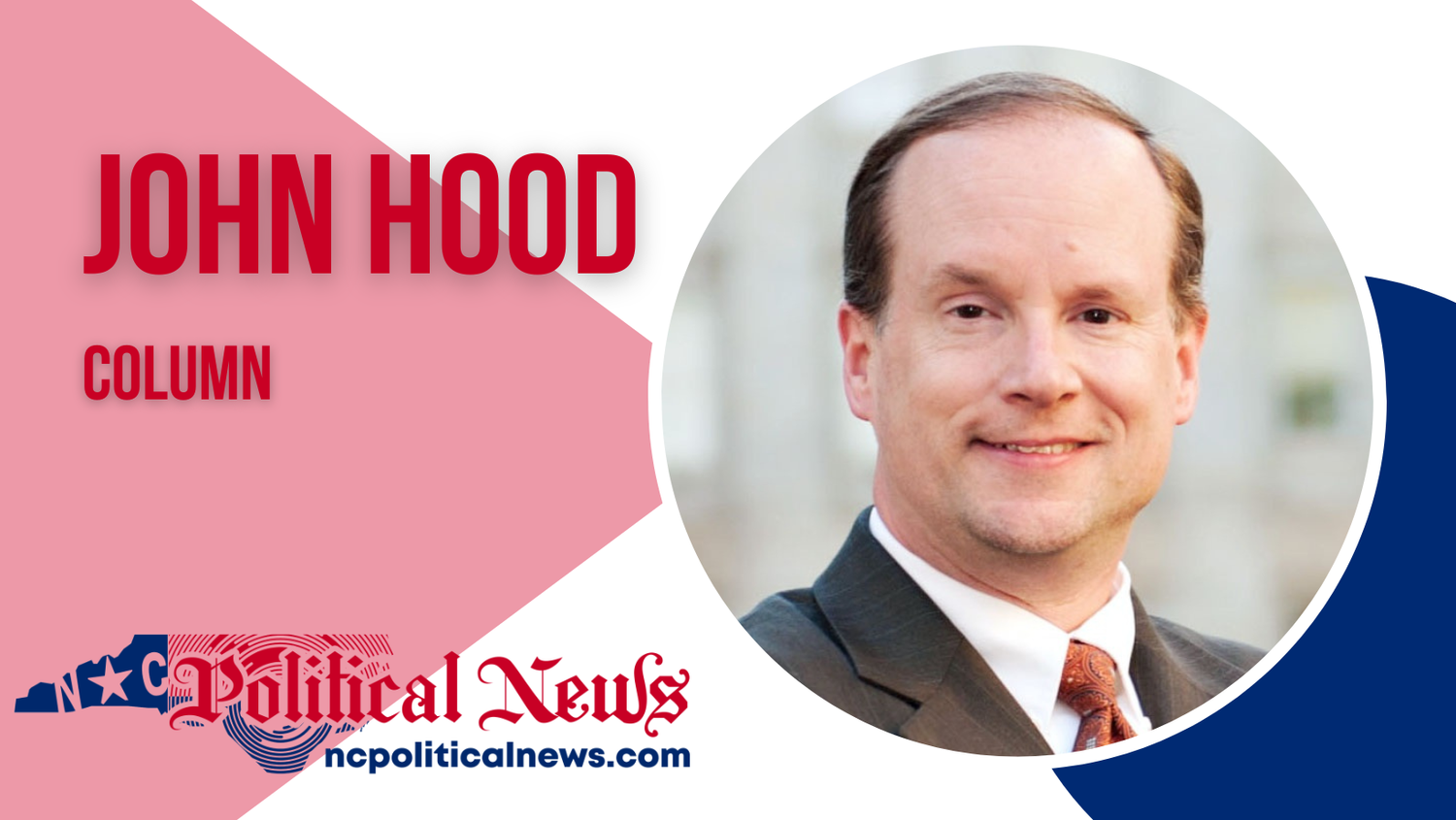
John Hood is a John Locke Foundation board member. His books Mountain Folk, Forest Folk, and Water Folk combine epic fantasy with American history (FolkloreCycle.com).
Are you tired of being bombarded by paywalls and pop-up ads when trying to read the news? Do you believe that access to reliable political news should be free and accessible to everyone? Then we urge you to support NC Political News, a weekly electronic political news outlet.
NC Political News is committed to providing high-quality, unbiased political reporting with columnists from all political sides. Unlike other news outlets, NC Political News is free to read and supported by businesses who purchase ad space on our website and in our newsletter, which goes out Monday through Friday at 7:00 am. This means that readers like you can access the news without being asked to pay a cent or dealing with frustrating advertisements.
However, to continue providing this valuable service, NC Political News needs your support. If you believe in the importance of accessible, free news, we urge you to click the image below. Any amount of support is appreciated.
Together, we can keep the news free and help ensure our state stays informed and connected.