John Hood: Choke Points Limits Economic Success
RALEIGH — While our state continues to best most others in economic performance, not all our households and communities are sharing in North Carolina’s prosperity. Some are struggling to replace lost jobs with new ones. Other folks are gainfully employed but see their real incomes being eroded by the rising costs of housing, health care, transportation, and other necessities.
Washington certainly needs to get its act together. State and local policymakers can also do more to provide the high-quality education and infrastructure needed to compete for tomorrow’s industries. But the primary drivers of a healthy economy are private, not public. And right now, too many of them are constrained, diverted, or blocked by unwise regulation.
These economic frictions — let’s call them choke points — keep existing businesses from growing and hiring, keep new businesses from starting, and keep producers and consumers from realizing the full benefits of competitive markets.
Rigid zoning and permitting delays, for example, continue to deter homebuilders from supplying enough housing stock to meet demand. Occupational licensing makes it unnecessarily expensive and time-consuming for North Carolinians to change careers or launch new enterprises. And outdated state laws limit competition among hospitals and health providers. As a result, North Carolina’s health care costs exceed those of many of our peers.
A recent report by The Charlotte Ledger spotlighted another painful choke point: car and truck prices. For decades, North Carolina law forbade automobile manufacturers from selling their products directly to their customers. Dealers insisted the result wasn’t a system rigged in their favor, since they compete intensely among themselves to sell vehicles and services to consumers.
If this were true, however, there’d be no need for such a law! If independent retailers deliver real value to motorists — a proposition that doesn’t strike me as implausible, actually — they can surely prove their worth in a fully competitive market in which consumers can choose how and from whom to purchase vehicles and services.
In 2019, the General Assembly loosened the automobile choke point, however slightly, by allowing Tesla to open five dealerships in North Carolina. Now that other new companies are entering the hybrid and electric-vehicle space, however, the Tesla exception no longer makes sense (and is vulnerable to legal challenge). Many states — including the likes of Virginia, Tennessee, and Florida — already allow all EV comers to sell directly.
North Carolina ought to join them. Indeed, I’d like to see our state eliminate the choke point entirely by repealing our dealer-franchising laws and allowing manufacturers of all vehicle classes to strike whatever distribution deals they wish. A radical suggestion? Not really. A 2022 poll found that 83% of North Carolinians favored “allowing North Carolina drivers to purchase a vehicle straight from the manufacturer, and to receive routine service and repairs on a vehicle from the manufacturer, without having to go through a dealership.”
A 2024 report for the U.S. Department of Justice projected that eliminating artificial restrictions on car sales wouldn’t just put downward pressure on prices. “Perhaps the most obvious benefit,” wrote Gerald Bodisch, an economist in DOJ’s Antitrust Division, “would be greater customer satisfaction, as auto producers better match production with consumer preferences ranging from basic attributes on standard models to meeting individual specifications for customized cars.”
As for dealer concerns about potential mistreatment, Bodisch concluded that “competition among auto manufacturers gives each manufacturer the incentive to refrain from opportunistic behavior and to work with its dealers to resolve any free-rider problems.”
“Consumers are used to the idea that they get to decide,” argued University of Michigan law professor Dan Crane. “That they get to figure out, ‘Do I prefer to bargain with a dealer on a lot or do I get to buy it directly from the manufacturer?’”
Whether in real estate, labor markets, health care, or consumer products, regulatory power ought to be used to promote transparency, combat fraud, and protect public health and safety. To go beyond these legitimate ends is to regulate too tightly. Time to loosen.
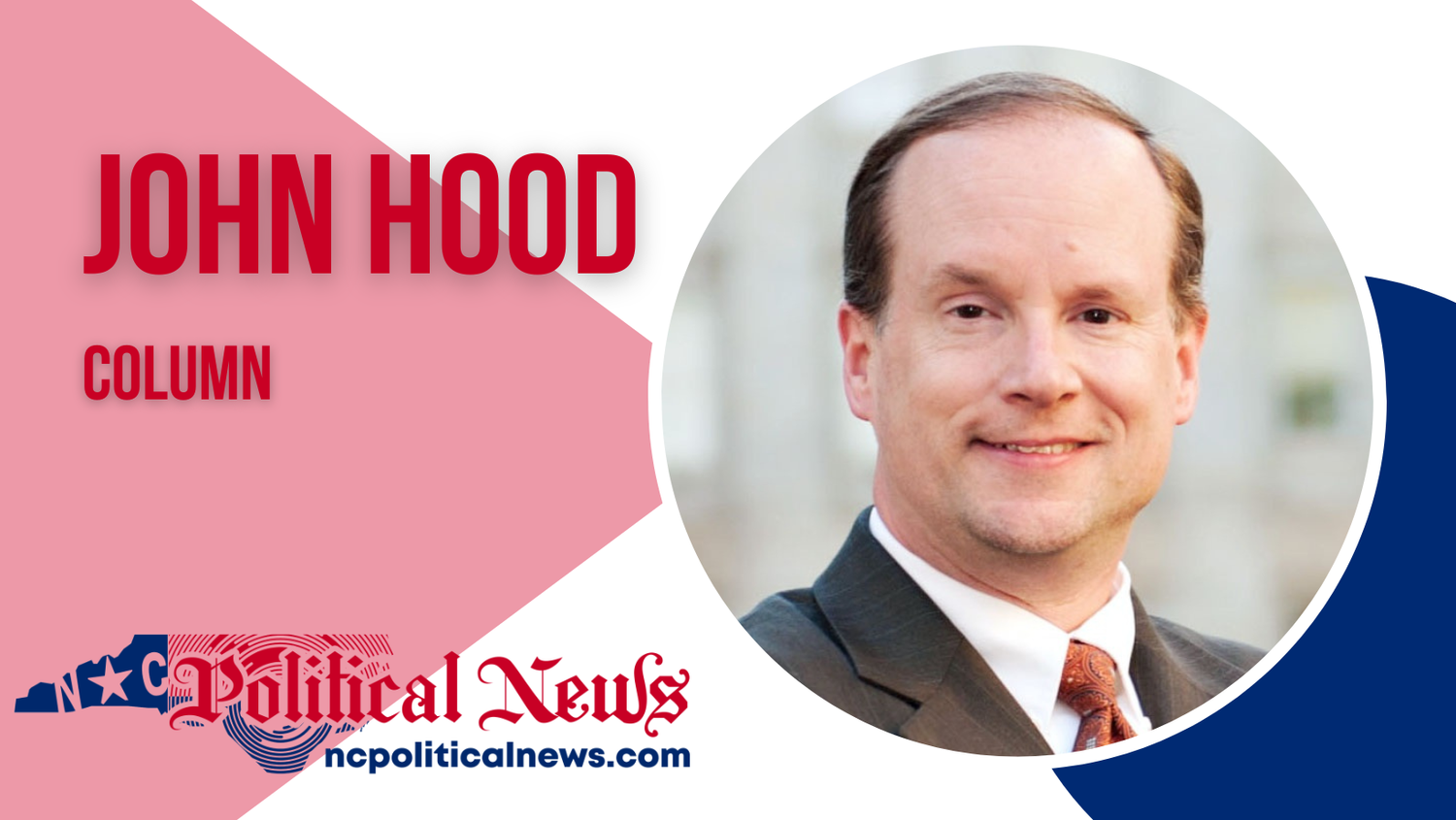
John Hood is a John Locke Foundation board member. His books Mountain Folk, Forest Folk, and Water Folk combine epic fantasy with American history (FolkloreCycle.com)
Are you tired of being bombarded by paywalls and pop-up ads when trying to read the news? Do you believe that access to reliable political news should be free and accessible to everyone? Then we urge you to support NC Political News, a weekly electronic political news outlet.
NC Political News is committed to providing high-quality, unbiased political reporting with columnists from all political sides. Unlike other news outlets, NC Political News is free to read and supported by businesses who purchase ad space on our website and in our newsletter, which goes out Monday through Friday at 7:00 am. This means that readers like you can access the news without being asked to pay a cent or dealing with frustrating advertisements.
However, to continue providing this valuable service, NC Political News needs your support. If you believe in the importance of accessible, free news, we urge you to click the image below. Any amount of support is appreciated.
Together, we can keep the news free and help ensure our state stays informed and connected.