John Hood: Ruling Could Lighten Carolinians’ Load
RALEIGH — Last week, when the U.S. Supreme Court released its long-awaited ruling in the “emergency tariff” case, President Donald Trump called the decision “ridiculous,” its reasoning “stupid,” and the justices who wrote or supported it “fools,” “lapdogs,” and the agents of nefarious foreign powers.
At the same time, Trump and other defenders of his protectionist policies insisted that the 6-3 decision was “irrelevant” and that “all of those tariffs remain,” because the administration has or will soon cite other statutory authority to reapply them.
These two sets of claims are, at best, in tension. The president does, indeed, possess some legal authority to impose taxes on imported goods, authority specifically assigned to the executive branch to address national security or concerns about illegal trade practices. But these tariff powers are more cumbersome to exercise and limited in scope than the “Liberation Day” taxes he initially sought to impose.
And the latest 15% tax on most imports Trump is now seeking to apply, to replace much of the revenue loss from the Supreme Court decision, relies on a 1974 law that gives a president the power to impose tariffs for up to 150 days to address “balance-of-payments deficits.” But the United States does not have a balance-of-payment deficit. We haven’t had such a deficit in more than 50 years, ever since we let the value of the dollar float on international currency markets rather than fixing the exchange rate to gold or some other standard.
A balance-of-payments deficit isn’t equivalent to a trade deficit. The latter exists when Americans buy more goods and services produced in other countries than Americans sell to consumers in other countries. Under floating exchange rates, the flipside of a trade deficit — formally called a current-account deficit — is almost always going to be a capital-account surplus. That is, virtually to the dollar, every $100 billion in trade deficit is offset by a net inflow of $100 billion in investment.
That’s why, contrary to popular belief, a trade deficit isn’t a signal of economic weakness. If you’re a net importer of capital investment, you will also be a net importer of goods and services. That’s what a balance of payments looks like under a system of floating exchange rates. Only when exchange rates are fixed can there be the kind of currency crisis for which the 1974 Trade Act was enacted (unnecessarily, as it turned out).
In short, Trump’s new global tariff is also illegal. When it is legally challenged, it will go poof. Ideally, the federal courts will intervene to block it.
For long-suffering North Carolina households — and for businesses that sell foreign-made goods or use them as components to produce their own goods and services — such legal relief would be most welcome. According to the Yale Budget Lab, the United States taxed imports at an average rate of about 16% before the Supreme Court ruling, generating about $2.62 trillion over the next 10 years (collected mostly from Americans in the form of higher prices and other costs). After the ruling, the average tariff rate should have dropped to 9.1%. Over time, that would have saved North Carolinians alone many billions of dollars a year.
Lower import taxes would serve our interests in other ways, as well. In a recent report published by the John Locke Foundation, North Carolina State University economist Jeffrey Dorfman observed that foreign governments often respond to American tariffs by levying their own taxes or restrictions on American imports — including pork, poultry, lumber, tobacco, cotton, sweet potatoes, and other goods produced for export by North Carolina farmers and agribusinesses. Using scenarios based on historical examples, he estimated that retaliation to American tariffs could eliminate 8,000 North Carolina jobs and impose $1.9 billion in direct and indirect costs on the state’s economy.
“The easiest way to avoid the risks from countries retaliating against the U.S. for placing restrictions on international trade,” Dorfman wrote, “is not to put restrictions on international trade in the first place.”
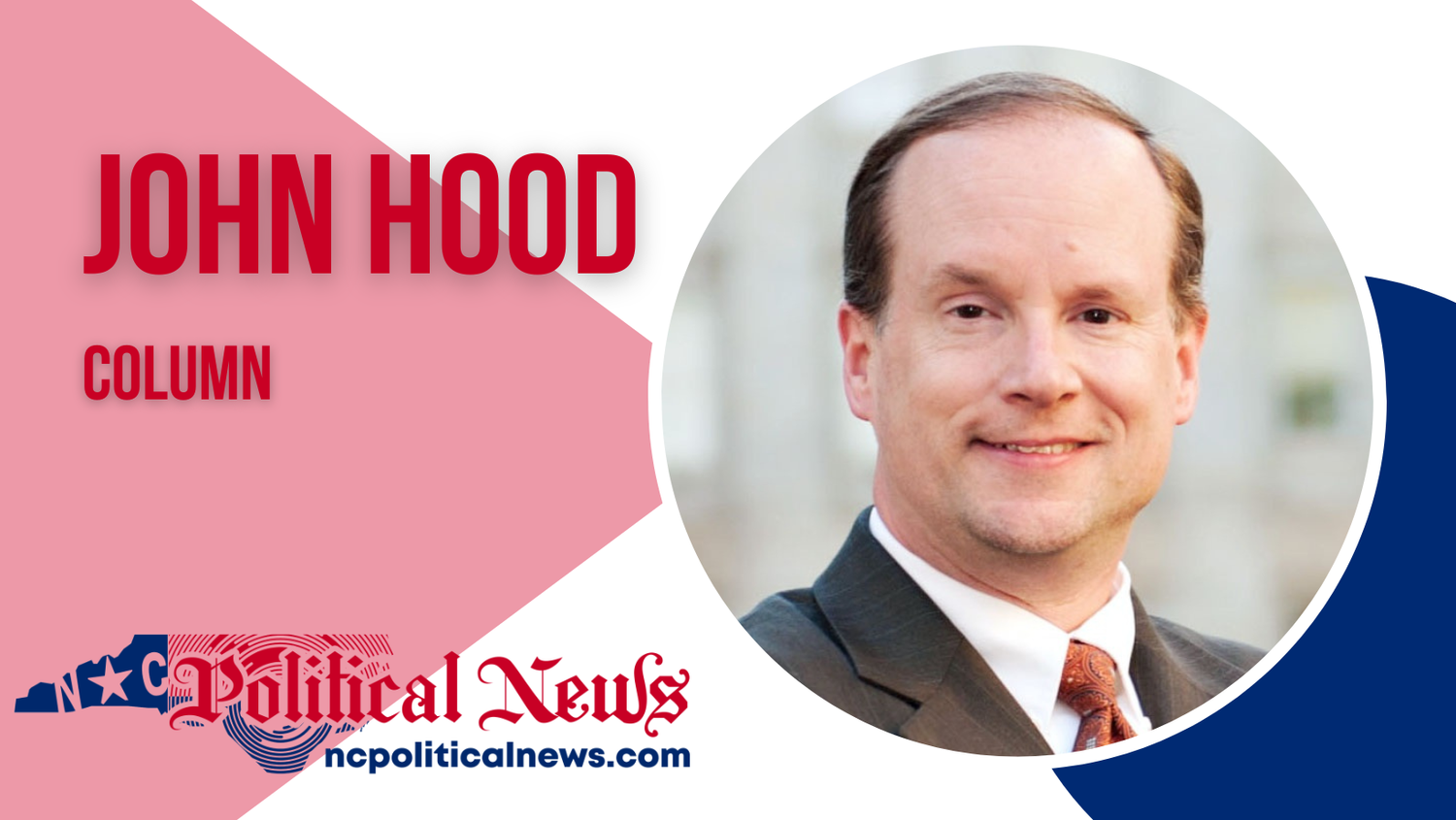
John Hood is a John Locke Foundation board member. His books Mountain Folk, Forest Folk, and Water Folk combine epic fantasy with American history (FolkloreCycle.com).
Are you tired of being bombarded by paywalls and pop-up ads when trying to read the news? Do you believe that access to reliable political news should be free and accessible to everyone? Then we urge you to support NC Political News, a weekly electronic political news outlet.
NC Political News is committed to providing high-quality, unbiased political reporting with columnists from all political sides. Unlike other news outlets, NC Political News is free to read and supported by businesses who purchase ad space on our website and in our newsletter, which goes out Monday through Friday at 7:00 am. This means that readers like you can access the news without being asked to pay a cent or dealing with frustrating advertisements.
However, to continue providing this valuable service, NC Political News needs your support. If you believe in the importance of accessible, free news, we urge you to click the image below. Any amount of support is appreciated.
Together, we can keep the news free and help ensure our state stays informed and connected.