John Hood: State shouldn’t rest on its laurels
Over the most-recent 12-month period, North Carolina’s economy expanded by an inflation-adjusted 3%. Among the 50 states, only South Carolina (3.5%) posted a significantly faster growth rate. North Carolina also continues to top CNBC’s ranking of the best states for business.
Wonderful news, to be sure, but we can’t afford to be complacent. Other states envy North Carolina’s success and are working hard to enhance their competitiveness. And despite our recent growth spurt, too many North Carolinians still struggle to achieve the American Dream. We owe it to them to make our state an even-more attractive place to live, work, invest, and create new jobs.
Besides, as Southwest Airlines co-founder Herb Kelleher so memorably put it, “If you rest on your laurels, you’ll get a thorn in your butt!”
Fortunately, my colleagues at the John Locke Foundation have just offered a plan to keep North Carolina moving forward. Its latest “North Carolina Policy Solutions” booklet contains dozens of proposed changes to the state’s fiscal and regulatory policies, education and legal systems, public-assistance programs, health care and transportation markets, and other critical institutions.
Five of its recommendations, in particular, would enhance our state’s already impressive business climate:
• Reform North Carolina’s tax code to immediately expense business investment, exclude long-term capital gains from taxable income, and index the standard deduction for inflation. As much as possible, we should finance public services with flat, broadly applied rates on consumed income while shielding saved income from double-taxation.
• Improve state government’s financial position by maintaining budget discipline, consolidating state facilities, maintaining the rest with annual appropriations for repairs and renovations, and saving more money for future pension and retiree-health benefits. North Carolina’s relatively low indebtedness has served us well.
• Refine North Carolina’s Strategic Transportation Investment Plan formula to include the total lifetime cost of roads, bridges, and other assets as well as their anticipated effects on traffic congestion. We can’t afford to spend precious resources on low-priority projects.
• Strengthen academic standards and testing programs in North Carolina’s public schools while expanding career and technical education, helping both teachers and students use artificial intelligence wisely, and giving local schools and districts more control over teacher compensation and other expenditures.
• Reduce health care costs in North Carolina by removing constraints on hospital competition, direct primary care, telehealth, and patient care by advanced-practice nurses. Other states with wiser regulatory policies have lower medical prices than we do.
Having looked carefully at the empirical evidence on economic growth, Locke Foundation analysts concluded it cannot simply be “purchased” by spending more tax dollars on either public programs or corporate subsidies. Government can both hinder economic performance — by imposing high tax burdens or costly regulatory delays — and help it by ensuring the effective provision of high-quality services such as public safety, education, and transportation.
“The starting premise behind policies to promote economic growth,” the authors wrote, “is that private entrepreneurs, using their own money or the money of voluntary investors, are best situated to know how to allocate resources efficiently.”
“Policymakers who aim to promote economic growth, then, must see to it that property rights are secure, that entrepreneurs can use their property in any way they believe will be most productive, and that tax and regulatory policies do not get in the way of this entrepreneurial process.”
None of which is to say the public sector can’t play a constructive role. In addition to protecting private property through law enforcement and courts, state and local governments can fund true public goods for which the measurable benefits to firms and households exceed the cost in taxation — and from which it is impossible to exclude non-payers. As it happens, conservatively governed states such as Florida, Texas, and the Carolinas don’t just tend to impose lower tax and regulatory burdens. They also generally deliver better public services than do high-tax states such as California, New York, and Illinois.
North Carolina already has a welcoming business climate. Let’s make it even better.
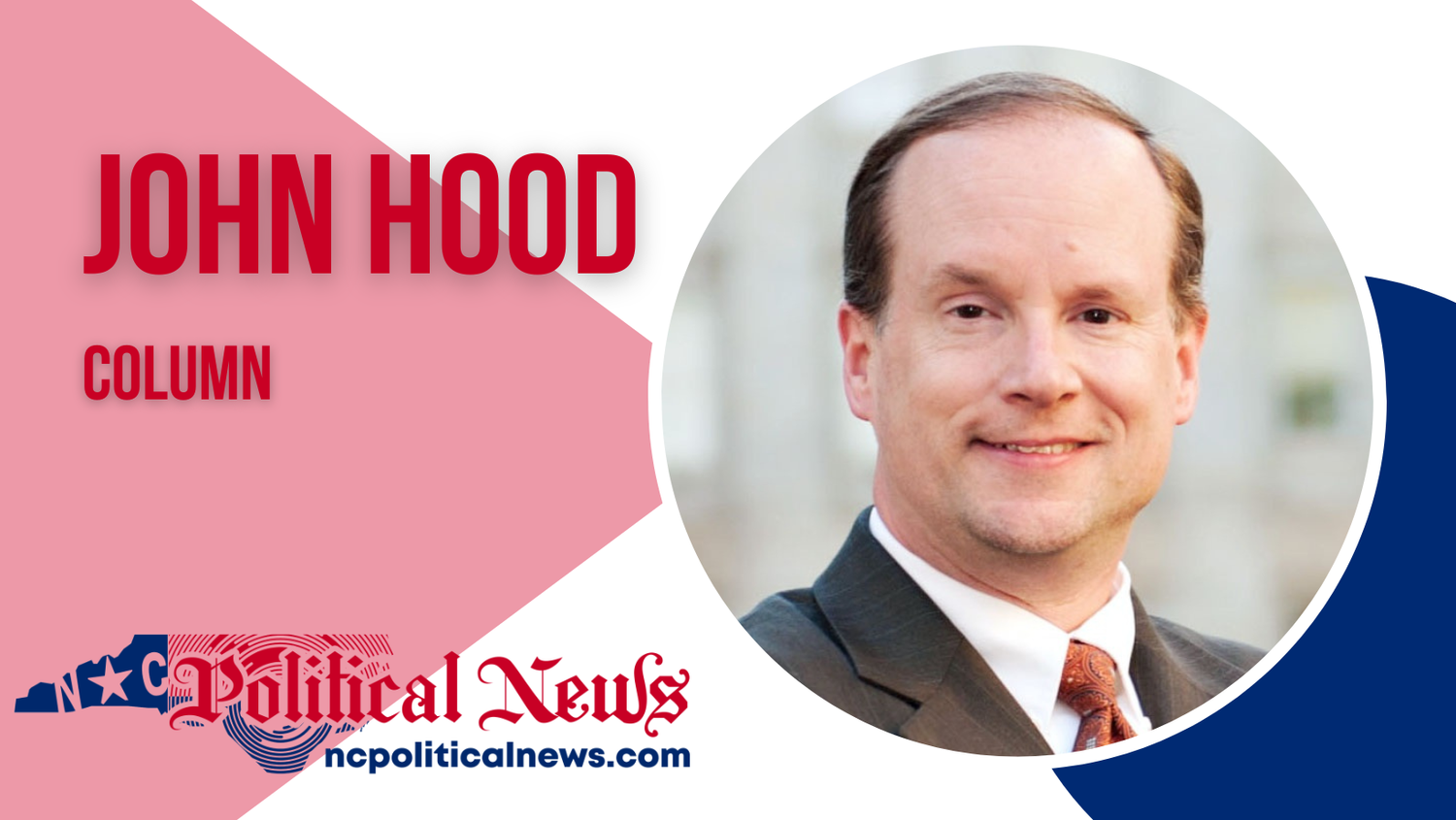
John Hood is a John Locke Foundation board member. His books Mountain Folk, Forest Folk, and Water Folk combine epic fantasy and American history.
Are you tired of being bombarded by paywalls and pop-up ads when trying to read the news? Do you believe that access to reliable political news should be free and accessible to everyone? Then we urge you to support NC Political News, a weekly electronic political news outlet.
NC Political News is committed to providing high-quality, unbiased political reporting with columnists from all political sides. Unlike other news outlets, NC Political News is free to read and supported by businesses who purchase ad space on our website and in our newsletter, which goes out Monday through Friday at 7:00 am. This means that readers like you can access the news without being asked to pay a cent or dealing with frustrating advertisements.
However, to continue providing this valuable service, NC Political News needs your support. If you believe in the importance of accessible, free news, we urge you to click the image below. Any amount of support is appreciated.
Together, we can keep the news free and help ensure our state stays informed and connected.