New North Carolina revenue forecast shows near-term surplus but signals pressure ahead
North Carolina economists are projecting a modest surplus for the current fiscal year, but the state’s new consensus revenue forecast also points to a sharper budget squeeze ahead as automatic tax cuts continue to reduce future collections.
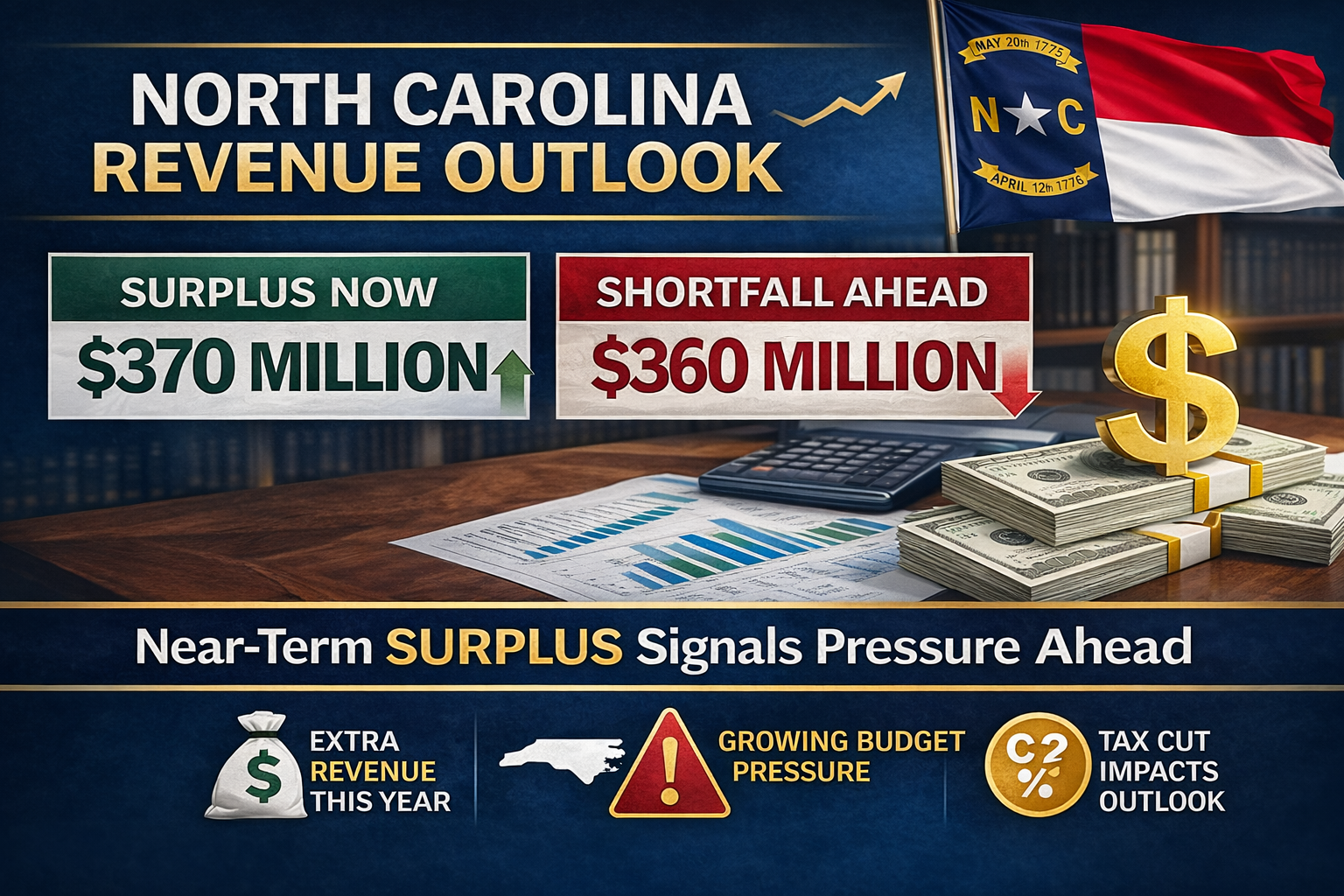
The March 2026 consensus forecast from the Office of State Budget and Management and the General Assembly’s Fiscal Research Division estimates the state will collect about $370 million more than expected in the current fiscal year. At the same time, the forecast projects General Fund revenue of about $34.7 billion in fiscal year 2026-27, which is roughly $360 million less than the previous year.
That split is what makes the new forecast politically important. North Carolina is not facing an immediate budget shortfall this year, but the state is heading into the next budget cycle with less recurring revenue expected to keep government running. That means lawmakers will be working with a more constrained outlook as they debate spending on schools, health care, public safety, salaries, infrastructure and reserves.
Governor Josh Stein used the forecast to argue that current tax policy is driving the problem. In a statement released Tuesday, Stein said the forecast shows North Carolina will have $360 million less revenue next year, and he warned that the state is likely to trigger two consecutive personal income tax cuts, which his office said would reduce revenue by $3.4 billion by fiscal year 2028.
The underlying state forecast also confirms that the tax triggers are a major factor in the decline. OSBM said the latest forecast projects General Fund net tax collections above the statutory threshold needed to automatically reduce the individual income tax rate from 3.99% to 3.49% beginning in tax year 2027. OSBM also said revenue projections make another reduction likely the following year.
That sets up a familiar but consequential fight in Raleigh. Supporters of the tax cuts can point to continued economic growth and current overcollections as evidence the state can afford lower rates. Critics are likely to argue that the forecast shows how automatic reductions will make it harder to sustain core services even when the economy is still growing. The next state budget debate is likely to turn on that tension.
The forecast is also not necessarily the final word. Fiscal officials said the consensus group could revise the outlook again in May after April income tax returns are processed, meaning the numbers now driving the debate could still shift before lawmakers finalize spending plans.
For now, the takeaway is straightforward: North Carolina has a little more money than expected in the short term, but the state is also moving toward a budget environment with less recurring revenue available next year. That makes this forecast less of a dry fiscal update than an early preview of the tax and spending battle ahead.
Editor’s note: This article was drafted with the assistance of artificial intelligence and was reviewed and fact-checked by a member of the NC Political News editorial team before publication.
Are you tired of being bombarded by paywalls and pop-up ads when trying to read the news? Do you believe that access to reliable political news should be free and accessible to everyone? Then we urge you to support NC Political News, a weekly electronic political news outlet.
NC Political News is committed to providing high-quality, unbiased political reporting with columnists from all political sides. Unlike other news outlets, NC Political News is free to read and supported by businesses who purchase ad space on our website and in our newsletter, which goes out Monday through Friday at 7:00 am. This means that readers like you can access the news without being asked to pay a cent or dealing with frustrating advertisements.
However, to continue providing this valuable service, NC Political News needs your support. If you believe in the importance of accessible, free news, we urge you to click the image below. Any amount of support is appreciated.
Together, we can keep the news free and help ensure our state stays informed and connected.