
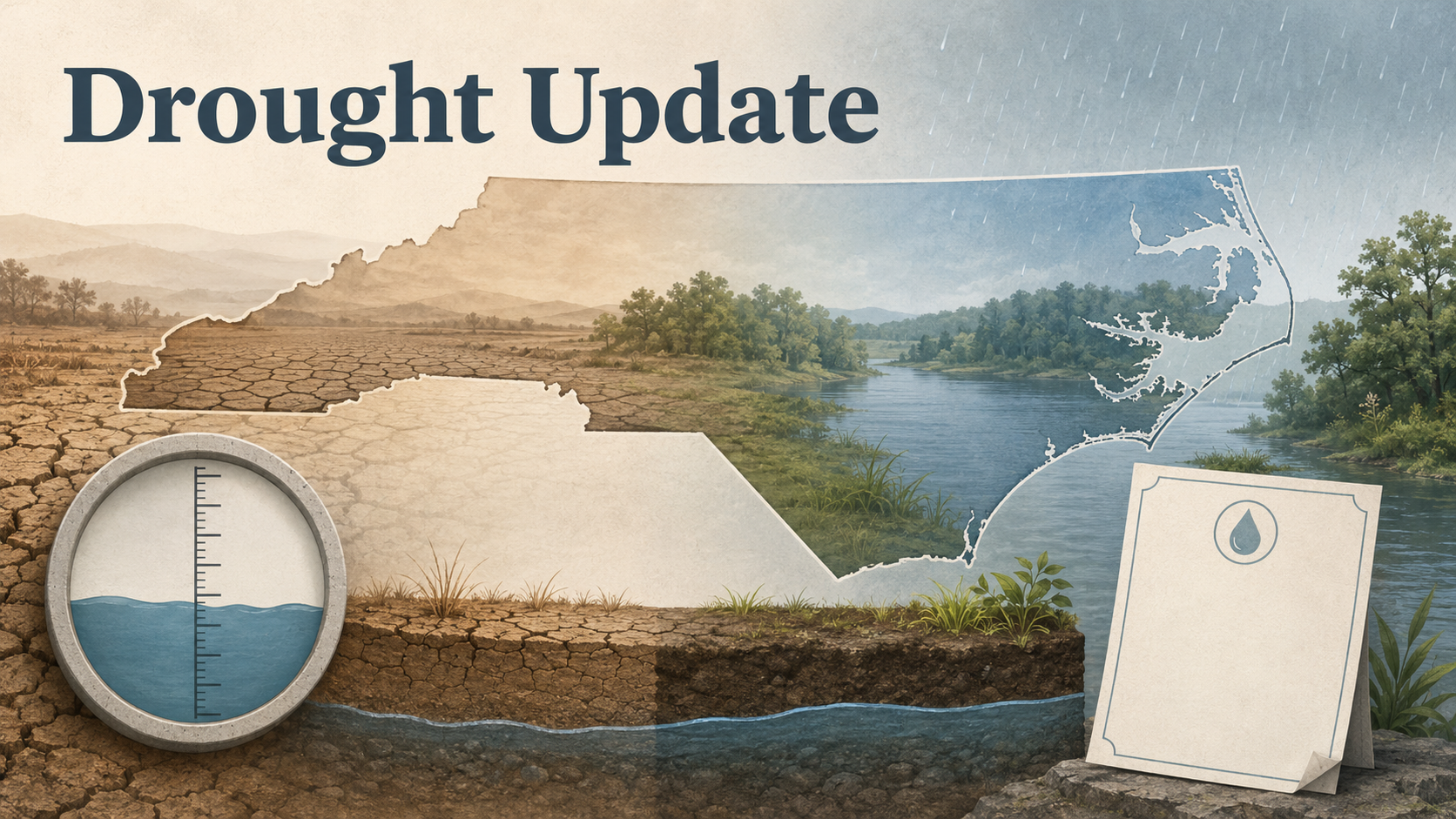
North Carolina drought persists despite July rainfall
State officials say reservoirs and groundwater remain below normal, with 70 water systems under mandatory restrictions.
RALEIGH — Recent rainfall has improved drought conditions in parts of North Carolina, but state officials say reservoirs and groundwater supplies remain below normal after months of dry weather.
Gov. Josh Stein and Department of Environmental Quality Secretary Reid Wilson provided a statewide drought update July 30, urging residents to continue following local water-conservation measures.
According to the state, 70 water systems are operating under mandatory water restrictions and another 68 have voluntary conservation measures in place.
“Although recent rainfall has made a dent in the problem, we’re not in the clear yet,” Stein said. “I encourage North Carolinians to check their local water system’s conservation status and do their part to use water wisely.”
State officials said wetter-than-normal July conditions and significant rainfall during the preceding week improved conditions in central and northeastern North Carolina. Streamflow levels have returned to near normal in most areas, but groundwater has been slower to recover.
Several reservoirs also remain below their normal seasonal levels.
Falls Lake was reported at 3.1 feet below normal, while Little River Reservoir was 12.3 feet below normal and Lake Michie was 8.8 feet below normal. Kerr Lake was 5.4 feet below its normal pool level.
Jordan Lake, which spans Durham and Chatham counties, was close to full following recent rainfall. Western North Carolina’s Wolf Creek, Bear and Tanasee Creek lakes remained below normal.
Klaus Albertin, chairman of the North Carolina Drought Management Advisory Council and a DEQ water-resources engineer, said the drier weather pattern seen since August 2025 appears to have shifted. However, he said many of the remaining drought effects are long-term and will require additional rainfall to resolve.
Water systems in areas experiencing exceptional or extreme drought are advised to follow their water-shortage response plans and report their water use and conservation status weekly.
Residents can check with their water provider for restrictions involving outdoor watering, vehicle washing and other nonessential uses.
The Drought Management Advisory Council reviews conditions weekly and submits recommendations used in updating the national drought map. North Carolina’s state drought map is updated each Thursday.
Editor’s note: This article was drafted with the assistance of artificial intelligence and was reviewed and fact-checked by a member of the NC Political News editorial team before publication.