North Carolina enacts farmland and military land ownership restrictions
The new law restricts certain adversarial foreign parties from acquiring agricultural land or property within 50 miles of a military installation.
RALEIGH — North Carolina has enacted a new law restricting certain adversarial foreign parties from acquiring agricultural land or land near military installations.
House Bill 133 became Session Law 2026-54 on July 8, according to the North Carolina General Assembly. The bill was signed by the governor July 7 after being ratified July 1 and presented to the governor July 2.
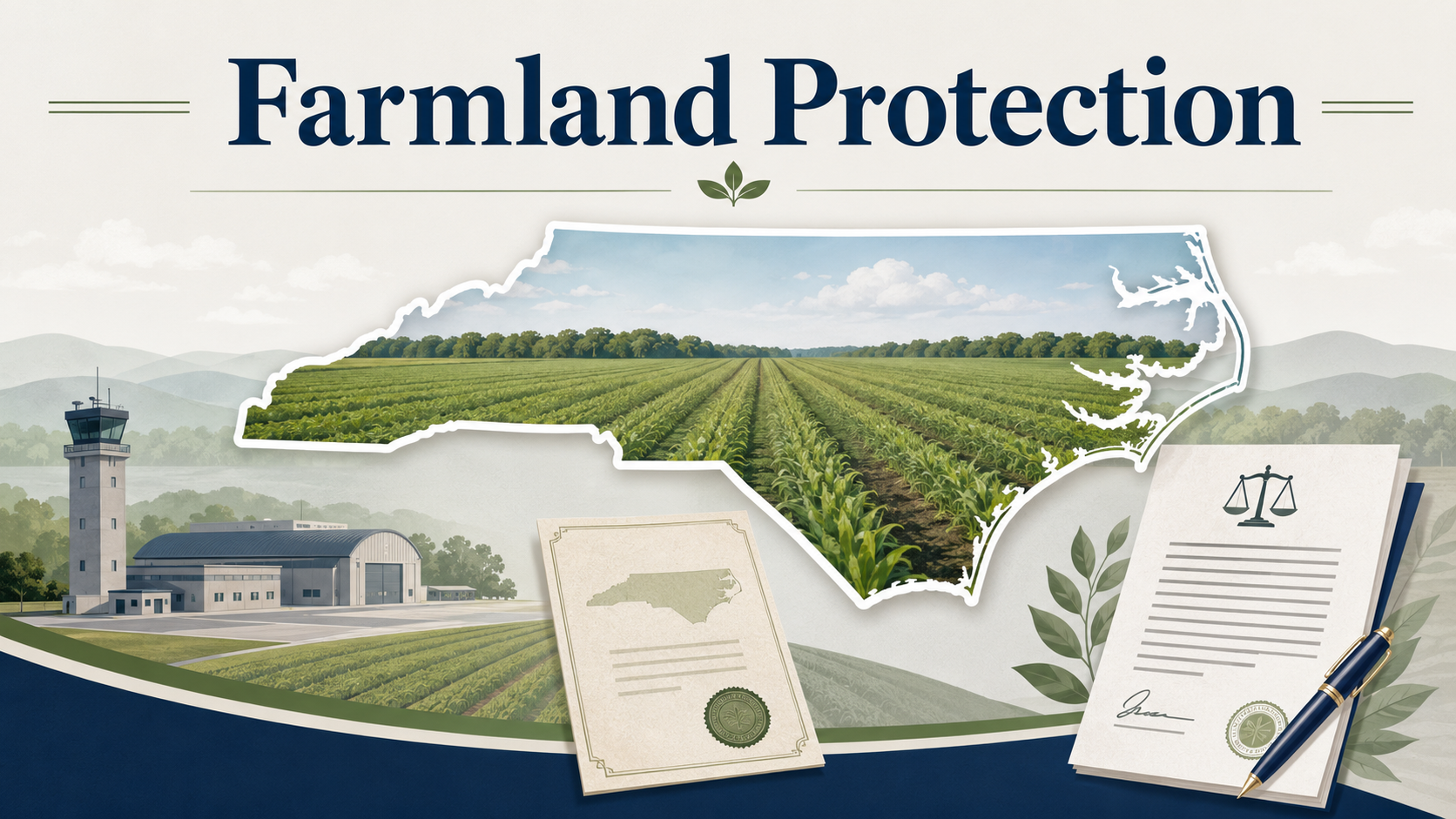
The law is titled the North Carolina Farmland and Military Protection Act. It adds a new article to Chapter 64 of the General Statutes, stating that North Carolina has a public interest in protecting agricultural land and military installations from potential adversarial foreign government control.
Under the law, a prohibited foreign party may not purchase, acquire, lease or hold a direct interest in agricultural land or property within a 50-mile radius of a military installation, except for limited de minimis interests. The law defines military installations to include Fort Bragg, Pope Army Airfield, Marine Corps Base Camp Lejeune, New River Marine Corps Air Station, Cherry Point Marine Corps Air Station, Military Ocean Terminal at Sunny Point, Coast Guard Air Station Elizabeth City, Naval Support Activity Northwest, Fort Fisher’s Air Route Surveillance Radar site, North Carolina National Guard facilities and Seymour Johnson Air Force Base, along with certain military training facilities.
The law requires prohibited foreign parties that already held covered land before the effective date to register with the secretary of state. The secretary of state must maintain a monthly public report of those registrations and provide the registry to the attorney general’s office one year from the law’s effective date and every six months after that.
A prohibited foreign party that fails to register on time is subject to a civil penalty of at least $1,000 per day. The law also directs the attorney general to investigate alleged violations and allows enforcement through receivership proceedings.
The House concurred in the Senate committee substitute 111-2 on June 30. The Senate passed the bill on second reading 42-3 on June 23, according to the bill history.
Editor’s note: This article was drafted with the assistance of artificial intelligence and was reviewed and fact-checked by a member of the NC Political News editorial team before publication.