State audit puts 2025 odd-year municipal election cost at $8.4 million
Personnel accounted for most of the reported cost, while differences in turnout produced substantial county-to-county variation in cost per vote.
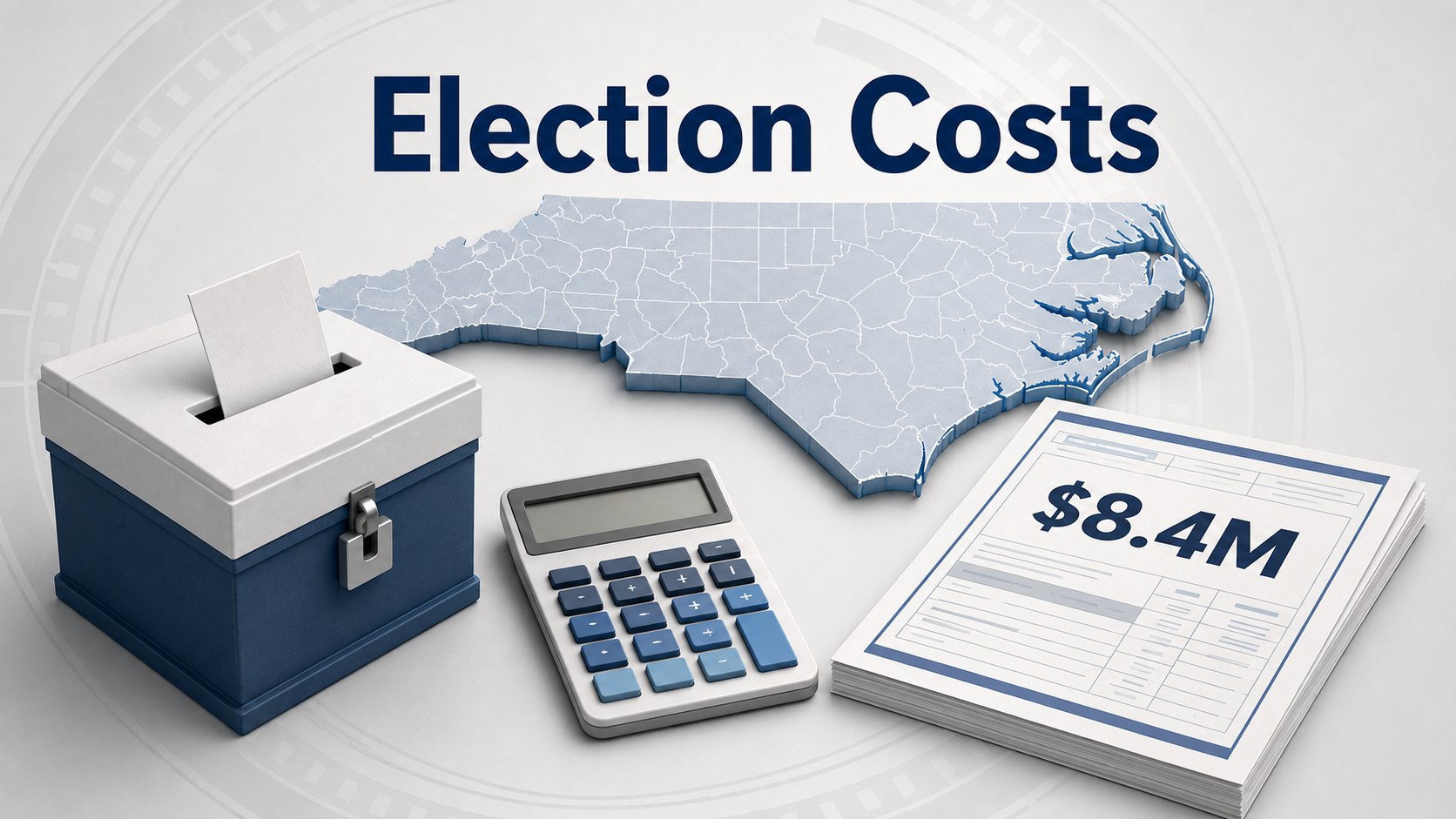
North Carolina counties reported spending approximately $8.4 million to administer the state’s 2025 odd-year municipal elections, according to a new report from the Office of the State Auditor.
The review covered 91 counties and approximately 822,000 participating voters. Personnel represented the largest expense category at about $5.1 million. Counties also reported approximately $2.1 million in operating expenses and $1.1 million for buildings and election space.
The report provides county-by-county totals and illustrates how turnout can affect the calculated cost per vote. Mecklenburg County reported the highest total cost, approximately $1.2 million, to serve 220,805 voters. That produced a reported cost of $5.83 per voter.
Camden County, by contrast, reported $7,589 in costs for an election in which five voters participated. Its calculated cost was $1,517 per voter. The audit noted that the amount should be understood in the context of very low participation rather than treated as a direct measure of overall election efficiency.
Odd-year elections in North Carolina generally involve municipal offices and are administered separately from even-year elections that include statewide and federal contests. The report was designed to establish the cost of conducting the 2025 contests and provide comparable data across counties.
The State Auditor explicitly said the work did not evaluate whether odd-year elections are necessary, whether they should be moved to even-numbered years or whether an individual county administered its elections efficiently. Those questions were outside the audit’s stated objectives.
As a result, the figures establish a fiscal baseline but do not themselves resolve potential policy debates about election scheduling. Changing the timing or structure of municipal elections would require separate action under the laws governing those contests.
The full audit data allow policymakers, county officials and residents to compare personnel, operating and facility costs across participating counties. They also show why cost-per-vote figures can fluctuate sharply when fixed election expenses are spread across a small number of ballots.
Editor’s note: This article was drafted with the assistance of artificial intelligence and was reviewed and fact-checked by a member of the NC Political News editorial team before publication.