
State Board settles disputed early-voting plans in 20 North Carolina counties
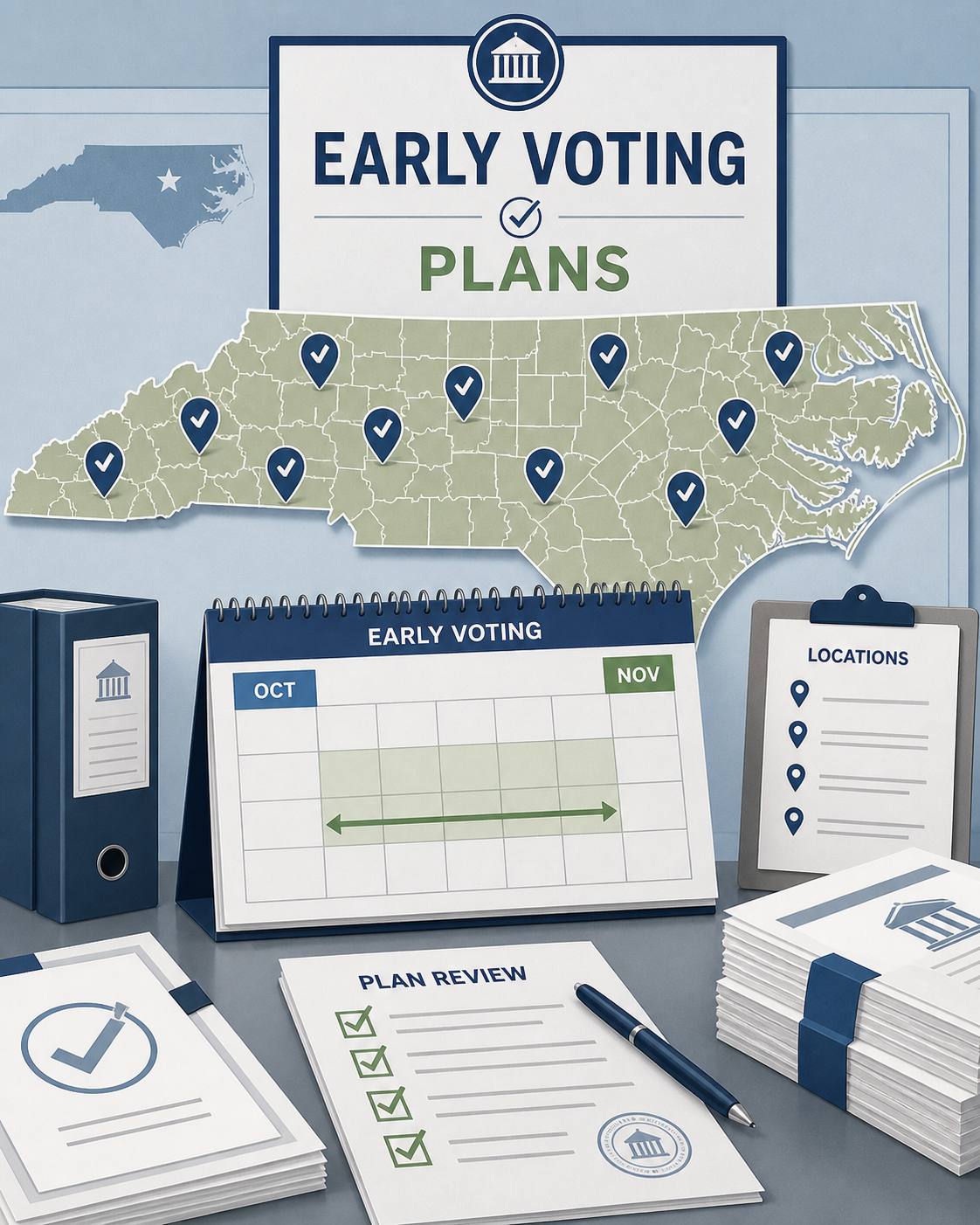
RALEIGH — The N.C. State Board of Elections resolved disputed early-voting plans Thursday for 20 counties where local election boards were unable to reach unanimous agreements over voting locations, weekend schedules and other details of the November general election.
The Aug. 20 meeting followed the State Board’s approval earlier this month of county plans that had received unanimous support locally.
Under North Carolina law, county boards of elections establish plans for in-person early voting. When members cannot unanimously agree, competing plans are forwarded to the State Board for a final decision.
Thursday’s agenda divided the disputed counties into two groups.
The morning session addressed 12 counties with disagreements involving early-voting dates or hours: Craven, Greene, Harnett, Lee, Mecklenburg, Pitt, Randolph, Rowan, Sampson, Union, Wayne and Wilson.
The afternoon session addressed eight counties where disagreements involved voting locations or a combination of locations, dates and hours: Brunswick, Cumberland, Granville, Guilford, Jackson, Lenoir, Martin and New Hanover.
Sunday voting was among the issues disputed in several counties.
In Greene County, competing plans differed over weekend voting, including whether early voting should be offered on Sunday. The State Board ultimately approved a plan without Sunday voting.
Other disputes involved the number and placement of early-voting locations.
In Lenoir County, one proposal included four early-voting sites, including the Georgia K. Battle Center in Kinston. The competing three-site proposal did not include Georgia K. Battle. The State Board approved the three-site plan.
The statewide disputes illustrate that the total number of early-voting hours is only one part of how county election plans differ. County boards also make decisions about where sites are placed, which weekends they operate and how hours are distributed across the 17-day early-voting period.
Those choices have prompted competing arguments over voter access, staffing, cost and the distribution of voting opportunities among communities.
The State Board’s decisions finalize early-voting plans for the counties that had remained unresolved following the local planning process.
North Carolina’s 2026 in-person early-voting period begins Thursday, Oct. 15, and ends at 3 p.m. Saturday, Oct. 31.
During early voting, registered voters may cast a ballot at any approved early-voting site within their county rather than being limited to their Election Day precinct.
Eligible residents who are not already registered may also register and vote during the early-voting period through same-day registration.
Election Day is Tuesday, Nov. 3.
With Thursday’s decisions, all counties can move forward with final preparations for the November general election.