As a former executive director of the North Carolina Republican Party, I have spent years talking with voters about the same basic promise: government should stand up for taxpayers, reward work and protect American strength.
All in Opinion
As a former executive director of the North Carolina Republican Party, I have spent years talking with voters about the same basic promise: government should stand up for taxpayers, reward work and protect American strength.
North Carolina has long been at the center of America's tobacco story. Today, members of our congressional delegation are helping lead an important new chapter—one focused on reducing the harm caused by smoking and ensuring adult tobacco users have access to scientifically reviewed alternatives.
When a patient walks into Matthews Drug Store in Clinton, North Carolina, they're trusting me with their health. That trust is something I take seriously, and it's why I pay close attention to anything that helps me do my job better or gets in the way.
Most Americans spend their lives working to achieve the American Dream. The idea of upward mobility, and the promise that each generation can achieve a higher standard of living and social status than the previous one, is something many people spend their lives working for.
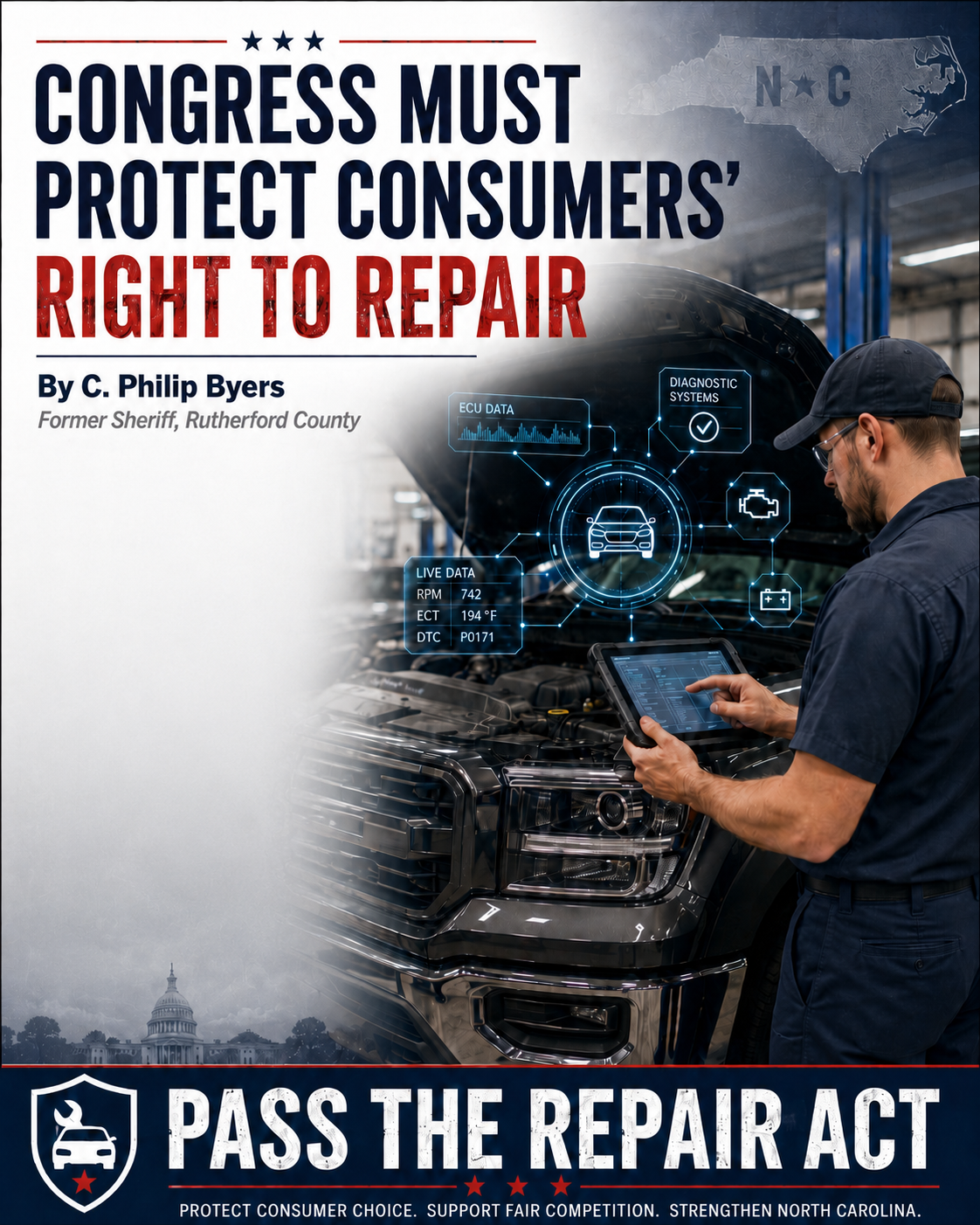
For generations, North Carolinians have believed that when you buy something, you own it. That simple principle is now under threat as automakers increasingly restrict access to the vehicle data needed to diagnose and repair modern cars and trucks.
RALEIGH — Do you or someone you know suffer from mental illness? I suspect most readers will say yes. According to the National Alliance on Mental Illness, behavioral-health disorders affect a fifth of adults and a sixth of school-aged children in North Carolina. One in 18 of us lives with a “severe mental illness,” defined as “a mental, behavioral, or emotional disorder that results in serious impairment and interferes with or limits one or more major life activities.”
RALEIGH, N.C. — A North Carolina Senate committee was scheduled Thursday to consider bills dealing with criminal law and court operations, putting both measures closer to possible Senate floor action.
RALEIGH, N.C. — A North Carolina Senate committee is scheduled to discuss a bill Wednesday that would allow residents to register as organ and tissue donors through their state income tax returns.
The North Carolina Senate has confirmed Nate Denny as secretary of the N.C. Department of Information Technology and state chief information officer.
RALEIGH — When the U.S. Supreme Court announced its 6-3 ruling in Louisiana v. Callais, placing stringent limitations on the use of race in drawing electoral districts, some friends and acquaintances of mine were shocked and outraged. The court has essentially repealed the 1964 Voting Rights Act, they alleged, forecasting grave consequences for non-white candidates running for future office.
Raleigh, N.C. — The N.C. Senate gave final approval to Senate Bill 889, which halts property tax revaluation changes in 2026. This bill freezes any proposed property value adjustments prompted by a reappraisal, but would allow those values to take effect in 2027. This pause provides the General Assembly with more time to put forward additional proposals for property tax reforms.
In February, a three-judge panel of the North Carolina Court of Appeals ruled that state regulators erred in approving a Duke Energy fuel rate adjustment. But with the passage of Senate Bill 266, over the Governor’s veto, the utility did not have to repay consumers. Lawmakers changed the law while the court handled the appeal, meaning that consumers were unable to access millions of dollars in potential refunds.
RALEIGH — Although we’re already a quarter of the way through the 21st century, much of our pop culture bears the unmistakable imprint of the previous century. You can see it in fashion, architecture, and entertainment. Check out the music even young people today are consuming. Most of the songs aren’t new, and indeed a sizable share of streamed content and movie soundtracks draw from the Great American Songbook (jazz standards and show tunes from the 1920s to the 1950s) or rock, soul, and pop songs from the 60s and 70s.
RALEIGH — All 50 states offer unemployment-insurance benefits to workers who lose their jobs through no fault of their own. Because states fund these benefits with payroll taxes, however, and must replenish exhausted UI trust funds with interest-bearing loans from the federal government, UI benefits vary according to how state legislatures weigh the resulting tradeoffs.
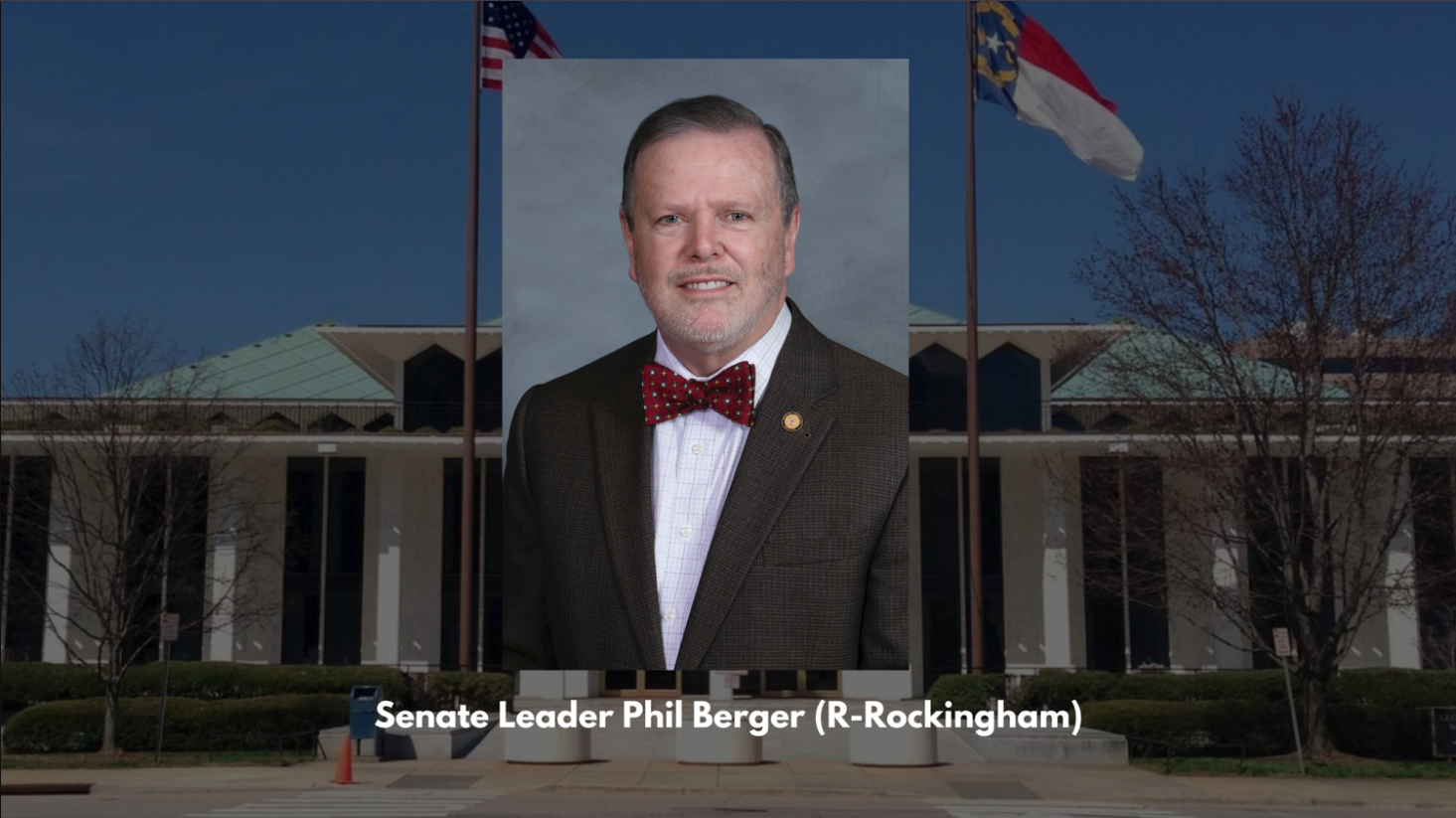
Raleigh, N.C. — Today, Senate Leader Phil Berger (R-Rockingham) filed a bill to institute a moratorium to halt all property tax revaluation changes in 2026. This bill freezes any proposed property value adjustments prompted by a county property tax revaluation, but would allow those values to take effect in 2027. This pause provides the General Assembly time to put forward additional proposals for property tax reforms.
The House Oversight Committee has once again convened in Raleigh to address what the Majority finds to be the most pressing issue facing our state. Not the absence of a budget. Not low teacher pay, public education funding, or any kind of meaningful policy. What urgent priority do they schedule for the very first week of session? A hearing on library books.